Modern e-commerce demands lightning-fast fulfilment. Brands that increase warehouse picking efficiency by up to 50% through robotics gain competitive advantage. Automation transforms logistics from cost centre to growth engine, addressing critical challenges like rising labour expenses, order accuracy, and customer satisfaction. This guide reveals how North American e-commerce brands implement automation to reduce costs, accelerate shipments, and scale operations sustainably.
Table of Contents
Key takeaways
| Point |
Details |
| Efficiency gains |
Automation boosts picking speed by 50% and slashes error rates through robotics and AI-guided workflows. |
| Core technologies |
Robotics, AI analytics, and software integrations form the foundation of modern automated logistics. |
| Debunking myths |
Automation augments human roles rather than eliminating jobs whilst remaining accessible for SMEs through scalable solutions. |
| Selection criteria |
Choose automation based on SKU diversity, order volume, integration capability, and ROI timelines. |
| Implementation success |
Phased adoption, workforce training, and continuous optimisation ensure sustainable automation benefits. |
Introduction to automation in e-commerce logistics
Logistics automation uses technology to perform warehousing tasks with minimal human intervention. It encompasses robotics for picking and packing, AI-driven analytics for demand forecasting, and software integrations that connect your e-commerce platform with courier services. These systems work together to streamline operations from inventory receipt through final shipment.
E-commerce brands face relentless pressure. Customers expect same-day delivery whilst demanding perfect order accuracy. Labour costs continue climbing, warehouse space remains expensive, and seasonal peaks strain manual operations. Traditional logistics struggles to meet these conflicting demands profitably.
Automation addresses these challenges head-on. Robotics and AI-guided workflows increase warehouse picking efficiency by up to 50%, transforming what human pickers can achieve alone. When you understand the role of logistics in e-commerce, automation emerges as essential infrastructure rather than optional upgrade.
Key technologies include:
- Automated storage and retrieval systems that maximise vertical space whilst accelerating inventory access
- AI-powered analytics predicting demand patterns and optimising stock positioning
- Software platforms integrating order management systems with warehouse execution and shipping APIs
- Robotic picking arms handling repetitive tasks with consistent accuracy
Scalability becomes achievable when automation handles volume fluctuations. During peak periods, automated systems maintain performance whilst manual operations buckle. Your brand meets customer expectations consistently, building loyalty that drives repeat purchases and positive reviews.
Types of automation technologies used in logistics
Robotics revolutionise physical warehouse tasks. Automated guided vehicles (AGVs) transport goods between zones without human drivers. Robotic arms equipped with vision systems identify products, execute picks, and place items into shipping containers. Conveyor systems move parcels through facilities at speeds manual handling cannot match.
AI-driven analytics transform decision-making. Machine learning algorithms analyse historical sales data, seasonal trends, and external factors to forecast demand with impressive accuracy. These insights guide inventory positioning, ensuring fast-moving SKUs sit near packing stations whilst slow movers occupy cheaper storage zones. Route optimisation algorithms calculate the most efficient picking paths, reducing travel time by 30% or more.
Software integration creates seamless data flows. Your e-commerce platform sends orders directly to warehouse management systems (WMS), which assign tasks to pickers or robots automatically. Real-time inventory updates prevent overselling. Shipping integrations generate labels, track parcels, and update customers without manual data entry. This connectivity eliminates errors that plague manual processes.
Automated guided vehicles deserve special attention. These intelligent machines navigate warehouses using sensors and mapping technology. They deliver raw materials to packing stations, remove completed orders, and reposition inventory based on demand patterns. Unlike human operators, AGVs work 24/7 without fatigue.
| Technology |
Primary Function |
Efficiency Gain |
| Robotic picking systems |
Item selection and placement |
40-50% faster than manual |
| AI demand forecasting |
Inventory optimisation |
25-35% stock reduction |
| Automated conveyors |
Parcel sorting and routing |
300+ parcels per hour |
| WMS integration |
Order orchestration |
95%+ accuracy rates |
Pro Tip: Start with software integration before investing in robotics. A robust WMS connected to your e-commerce platform delivers immediate gains and creates the data foundation that robotics need to perform optimally. Review your current processes using an e-commerce fulfilment checklist to identify integration opportunities.
Quantifying the benefits: efficiency, cost and customer satisfaction
Automation delivers measurable improvements across logistics performance. Warehouse picking efficiency increases by up to 50% when robotics assist human workers. Order accuracy rates climb from industry-standard 97% to 99.5% or higher, slashing costly returns and customer service contacts.
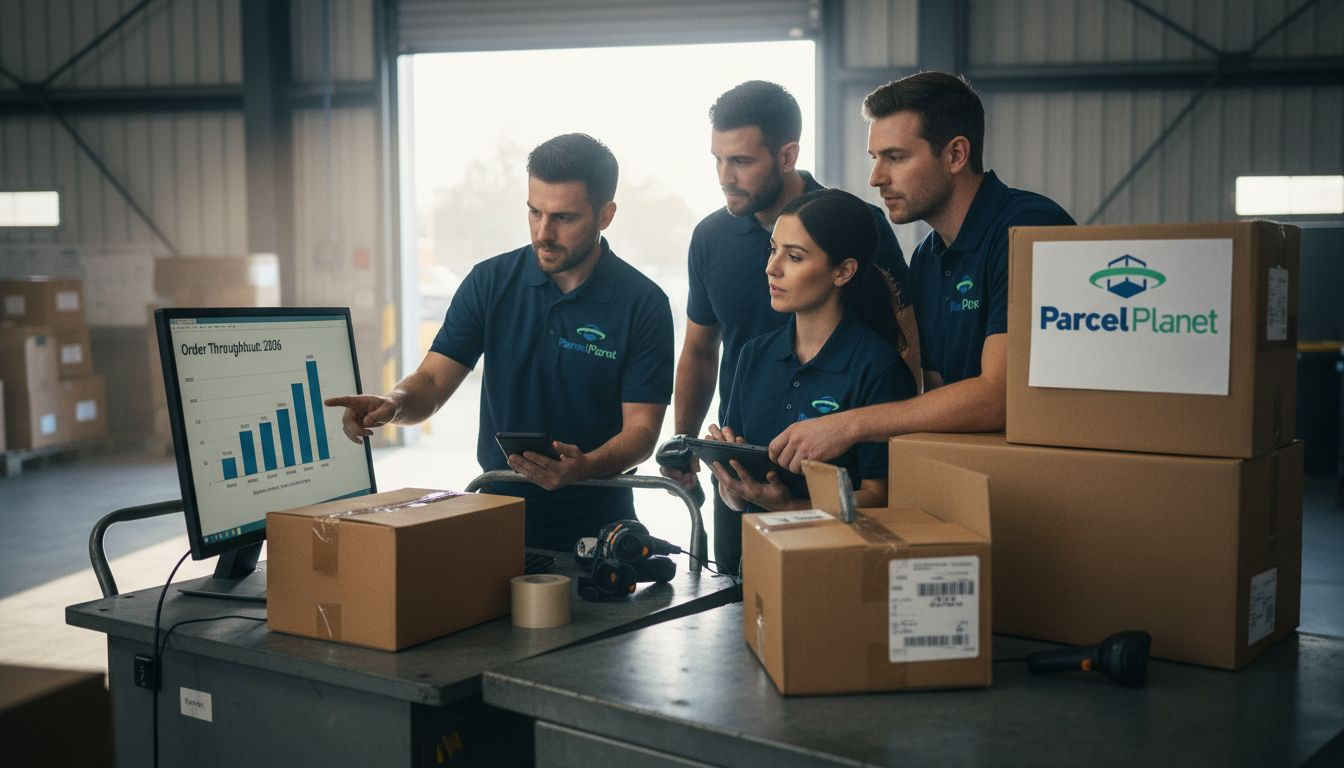
Cost reductions accumulate quickly. Labour expenses drop 20-40% as automation handles repetitive tasks, freeing staff for value-adding activities like quality control and exception handling. Energy costs decrease through optimised warehouse layouts and lighting zones that activate only when needed. Real estate efficiency improves as vertical storage systems pack more inventory into existing facilities.
Shipment speed accelerates dramatically. Automated systems process orders within hours of placement rather than the next business day. Faster fulfilment enables you to promise shorter delivery windows, meeting customer expectations that Amazon has trained shoppers to demand. This speed translates directly to higher conversion rates and cart values.
Customer satisfaction metrics tell the story:
| Metric |
Manual Operations |
Automated Operations |
Improvement |
| Order accuracy |
97.0% |
99.5% |
+2.5 percentage points |
| Same-day ship rate |
45% |
85% |
+40 percentage points |
| Customer satisfaction score |
7.2/10 |
8.9/10 |
+24% |
| Repeat purchase rate |
28% |
41% |
+46% |
Fast, accurate fulfilment builds customer loyalty. Shoppers who receive perfect orders quickly become repeat buyers. They leave positive reviews, recommend your brand, and tolerate higher prices because they trust your service. This loyalty compounds over time, reducing customer acquisition costs whilst increasing lifetime value.
Implementing a thoughtful shipping strategy workflow amplifies these benefits by ensuring automation integrates seamlessly with carrier selection and rate shopping.
Common misconceptions about automation in logistics
Automation eliminates jobs. This myth persists despite evidence showing automation augments rather than replaces human workers. Robots handle dangerous, repetitive tasks whilst humans focus on problem-solving, quality assurance, and customer service. Employment in automated warehouses often increases as facilities handle greater volumes and expand service offerings.
Small and medium brands cannot afford automation. Whilst enterprise-grade robotics require substantial capital, modular solutions and software automation remain accessible. Cloud-based WMS platforms cost hundreds monthly rather than millions upfront. Collaborative robots (cobots) designed to work alongside humans start around £25,000, delivering ROI within 18 months for many operations.
Automation cannot handle diverse SKUs or fluctuating volumes. Modern systems excel precisely because they adapt. AI algorithms learn product characteristics and adjust handling protocols automatically. Flexible robotic grippers manage everything from cosmetics to electronics. Scalable software licences let you activate additional capacity during peaks and scale down in slower periods.
Implementation always disrupts operations catastrophically. Phased rollouts prevent this outcome. You can automate one process, prove its value, then expand systematically. Starting with software integration and barcode scanning creates immediate benefits whilst building the foundation for future robotics. Many brands operate manual and automated processes side by side during transition periods.
Key realities to understand:
- Automation creates new job categories in system monitoring, maintenance, and optimisation
- Entry-level automation through software integration requires minimal capital investment
- Modern systems handle mixed SKU environments more efficiently than manual processes
- Thoughtful implementation plans maintain operations throughout transition periods
Pro Tip: Partner with experienced 3PL providers who have already invested in automation infrastructure. You gain immediate access to advanced technology without capital outlay, and you can choose an effective 3PL provider based on their automation capabilities and integration quality.
Framework for selecting and scaling automation solutions
Selecting appropriate automation requires systematic evaluation. Start by assessing your current logistics performance and future growth projections. Document average daily orders, SKU count, seasonal peak volumes, and error rates. These metrics establish your baseline and reveal which automation technologies deliver maximum impact.
Evaluation criteria matter enormously:
- Scalability ensures systems grow with your business rather than becoming constraints
- Integration capability determines how easily automation connects with existing platforms
- ROI timelines guide investment decisions and expectation setting
- Workforce adoption potential predicts implementation success and productivity gains
- Flexibility accommodates changing business models and product mixes
Trade-offs exist between automation approaches. Robotics deliver impressive speed gains but require significant capital and facility modifications. AI-driven software optimises existing processes with minimal disruption and lower investment. Many brands achieve best results combining both, using AI to orchestrate operations whilst robotics handle physical tasks.
Modular solutions offer strategic advantages. Rather than replacing entire workflows overnight, you can automate specific bottlenecks. Barcode scanning and automated label generation might come first. Conveyor systems could follow. Robotic picking arrives last, after you have proven automation value and built organisational confidence.
| Solution Type |
Best For |
Typical Investment |
ROI Timeline |
| WMS integration |
All brands |
£5,000-£50,000 |
6-12 months |
| Barcode automation |
100+ daily orders |
£10,000-£30,000 |
8-14 months |
| Conveyor systems |
500+ daily orders |
£50,000-£200,000 |
18-24 months |
| Robotic picking |
1,000+ daily orders |
£100,000-£500,000 |
24-36 months |
Phased adoption reduces risk whilst building momentum. Start with quick wins that deliver visible benefits and generate stakeholder enthusiasm. Success breeds confidence for larger investments. Document results meticulously to justify subsequent phases.
Pro Tip: Conduct pilot tests before full deployment. Automate one product category or fulfilment stream, measure performance rigorously, then refine your approach based on real data. This experimentation costs far less than mistakes made during enterprise-wide rollouts. Resources like guides on choosing automation solutions provide frameworks for evaluation.
Integration strategies with e-commerce and 3PL operations
Successful automation depends on seamless system integration. Your e-commerce platform must communicate with warehouse management systems in real time. When customers place orders, WMS receives details instantly and assigns tasks to available resources. Inventory updates flow back to prevent overselling. This bidirectional data exchange eliminates manual entry and the errors it causes.
API connections enable this integration. Modern e-commerce platforms like Shopify, WooCommerce, and Magento offer robust APIs that automation systems can access. Similarly, courier services provide APIs for rate shopping, label generation, and tracking updates. Middleware platforms orchestrate these connections, translating data formats and managing communication flows.
Real-world implementation reveals practical benefits. A cosmetics brand integrated their Shopify store with cloud WMS and carrier APIs. Orders now flow automatically from checkout through picking, packing, and shipping without human intervention. Their order processing time dropped from 18 hours to 90 minutes whilst accuracy improved from 96% to 99.7%.
Challenges emerge during integration projects:
- Legacy systems lacking modern APIs require custom development or replacement
- Data format inconsistencies between platforms demand mapping and transformation
- Real-time synchronisation needs reliable internet connectivity and fallback protocols
- Security requirements mandate encrypted connections and access controls
Overcoming these obstacles requires planning. Audit your current technology stack early, identifying API capabilities and limitations. Budget for middleware platforms or custom integration development. Establish data governance policies ensuring information accuracy and security. Test integrations thoroughly before going live, using staged rollouts to catch issues early.
Understanding logistics integration strategies helps brands avoid common pitfalls and accelerate time to value. Prioritise integrations that eliminate manual data entry first, as these deliver immediate accuracy improvements whilst reducing labour costs.
Overcoming challenges and ensuring sustainable automation adoption
Capital investment concerns dominate automation discussions. Robotics and conveyor systems require substantial upfront spending, creating cash flow challenges for growing brands. Evaluate financing options including equipment leasing, which spreads costs over time whilst preserving capital for inventory and marketing. Calculate total cost of ownership including maintenance, energy, and software licences rather than focusing solely on purchase price.
ROI timelines must align with business expectations. Software automation typically pays back within months. Physical automation requires longer horizons, often 18-36 months depending on order volumes. Build detailed financial models accounting for labour savings, error reduction, and throughput improvements. Sensitivity analysis reveals how changing assumptions affect returns.
Workforce training determines implementation success. Employees fear automation will eliminate their jobs, creating resistance that sabotages projects. Combat this through transparent communication about how automation augments rather than replaces human capabilities. Provide comprehensive training so staff feel confident operating new systems. Celebrate early wins publicly, demonstrating benefits to sceptics.
Organisational change management cannot be overlooked. Automation transforms workflows, responsibilities, and performance metrics. Update job descriptions to reflect new roles. Revise KPIs to measure what matters in automated environments. Create feedback loops so frontline workers can report issues and suggest improvements.
Common failure points include:
- Inadequate staff training leading to underutilisation of automation capabilities
- Poor system maintenance causing breakdowns that erode confidence
- Lack of continuous optimisation as business needs evolve
- Insufficient monitoring to detect and correct performance degradation
Continuous optimisation sustains automation benefits. Monitor performance metrics weekly, comparing results against targets. Analyse exceptions and errors to identify improvement opportunities. Update algorithms and configurations as product mixes and order patterns change. Schedule preventive maintenance rigorously to avoid costly breakdowns.
Pro Tip: Appoint automation champions within your team. These individuals receive advanced training and become internal experts who troubleshoot issues, train colleagues, and drive continuous improvement. Their enthusiasm and expertise accelerate adoption whilst reducing dependence on external consultants. Comprehensive resources on sustainable automation adoption guide brands through implementation challenges.
Automation represents the future of e-commerce logistics. Brands that embrace these technologies gain efficiency, reduce costs, and delight customers with fast, accurate fulfilment. Success requires thoughtful planning, phased implementation, and commitment to continuous improvement. Start with software integration to build foundations, then scale toward robotics as volumes justify investment. The competitive advantages automation delivers compound over time, separating market leaders from struggling followers in an increasingly demanding e-commerce landscape.
Enhance your e-commerce logistics with ParcelPlanet solutions
Ready to transform your fulfilment operations? ParcelPlanet combines advanced automation with expert 3PL services tailored for growing e-commerce brands.
Our integrated platforms connect seamlessly with your sales channels whilst our automation-enabled warehouses deliver the speed and accuracy your customers demand. We have invested in robotics, AI analytics, and real-time tracking so you do not have to. Discover how a 3PL provider reduces logistics costs through economies of scale and technology infrastructure. Explore our comprehensive order fulfilment services designed to scale with your growth whilst maintaining the precision and speed that build customer loyalty.
Frequently asked questions
What is the role of automation in e-commerce logistics?
Automation uses technology to perform warehousing and fulfilment tasks with minimal human intervention. It accelerates order processing, improves accuracy, and reduces costs by handling repetitive activities like picking, packing, sorting, and shipping through robotics, AI analytics, and integrated software systems.
How can e-commerce brands select the right automation technology?
Consider your order volume, SKU complexity, integration requirements, and budget when evaluating automation options. Start with software integration for immediate gains, then progress toward physical automation as volumes grow. Phased implementation manages risk whilst proving value before larger investments.
What challenges should be expected when automating logistics?
Integration complexity and workforce adaptation present the primary hurdles. Legacy systems may lack modern APIs, requiring custom development. Staff need comprehensive training to operate new technologies confidently. Continuous monitoring and proactive change management strategies improve adoption success and long-term performance.
How does automation improve customer satisfaction in e-commerce?
Faster order processing and higher accuracy rates create superior customer experiences. Automation enables same-day shipping and reduces errors that cause returns and complaints. Reliable, speedy fulfilment builds trust that increases repeat purchases and generates positive reviews, driving sustainable growth through customer loyalty.
Recommended