TL;DR:
- Mapping the entire customer journey reveals satisfaction gaps often missed when focusing only on purchase touchpoints.
- Reducing customer effort at touchpoints like returns and support improves satisfaction and retention significantly.
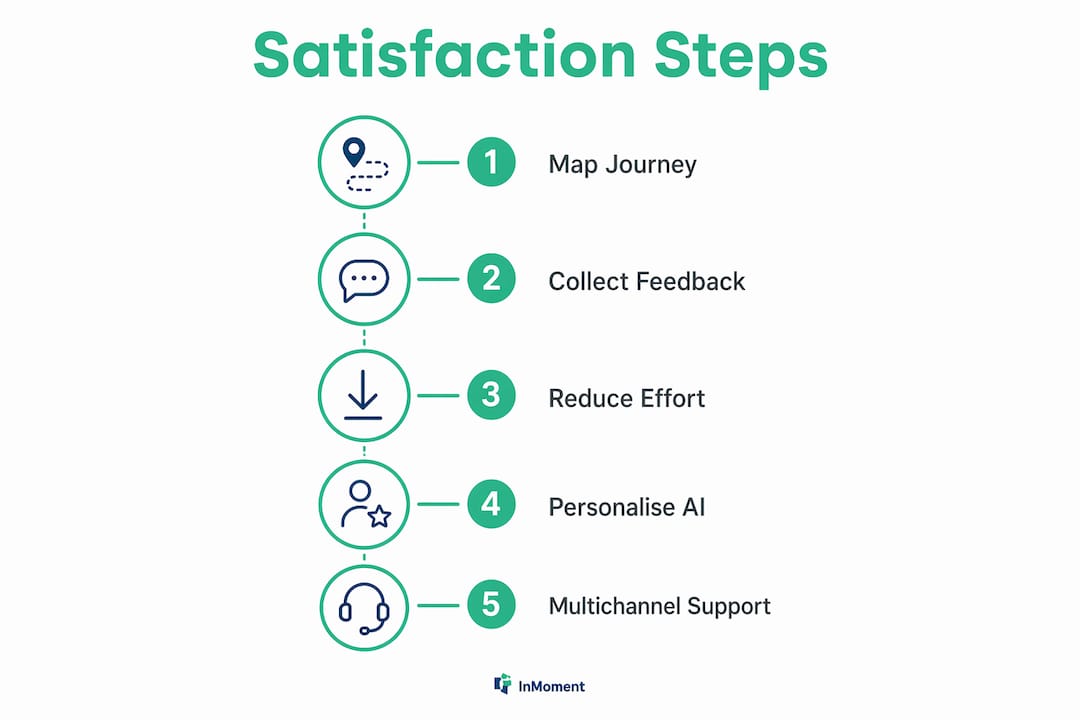
Customer satisfaction improvement is the process of systematically closing the gap between what customers expect and what they actually experience across every touchpoint. A 5% increase in retention can lift business profits by up to 95%. That single figure reframes satisfaction from a soft metric into a direct revenue driver. This customer satisfaction improvement guide covers the techniques that matter most for e-commerce and retail businesses in 2026: journey mapping, reducing customer effort, AI-driven personalisation, and multichannel support. Metrics like CSAT (Customer Satisfaction Score), CES (Customer Effort Score), and FCR (First Contact Resolution) give you the data to act with confidence.
How to map the customer journey for satisfaction gaps
Customer satisfaction rises when brands map entire journeys and act on sentiment rather than focusing on isolated touchpoints. Most businesses measure satisfaction at the point of purchase and stop there. That misses the phases where dissatisfaction actually builds: onboarding, mid-contract support, and renewal.
Start by listing every phase a customer moves through, from first discovery to post-purchase follow-up. Within each phase, identify the specific moments where your brand makes a promise and where it either keeps or breaks it. Common gap areas include:
- Onboarding: Customers receive a confirmation email but no guidance on what happens next, creating anxiety about delivery timelines.
- Support interactions: Customers repeat their issue to multiple agents because context is not passed between teams.
- Returns and renewals: The process requires too many steps, creating friction at the moment customers are already frustrated.
Collecting sentiment data is the engine of this process. Use post-interaction surveys, Net Promoter Score (NPS) follow-ups, and social listening tools to gather feedback at each phase. Do not rely on a single channel. Cross-department collaboration prevents siloed insights and gives you a fuller picture of where experience breaks down. Bring together your logistics, customer service, and marketing teams to review the same journey data. Each team sees a different slice of the customer experience, and combining those views reveals patterns no single department would spot alone.
Pro Tip: Map the journey from the customer’s perspective, not your internal process flow. The two are rarely the same, and the gaps between them are exactly where satisfaction problems hide.

How does reducing customer effort improve satisfaction?
High customer effort is one of the strongest predictors of dissatisfaction. When customers have to work hard to get help, complete a return, or track an order, they remember the friction long after the issue is resolved. The Customer Effort Score (CES) measures this directly and is one of the most reliable satisfaction metrics available.
Reducing effort requires changes at specific touchpoints rather than a general improvement mindset. The following steps address the highest-friction areas in e-commerce and retail:
- Simplify returns. A returns process with more than three steps loses customers. Provide a pre-printed label, a clear timeline, and a confirmation message when the return is received.
- Improve onboarding communications. Send a post-purchase sequence that tells customers exactly what to expect and when, reducing inbound enquiries before they happen.
- Automate high-volume, low-complexity tasks. Chatbots and automated email workflows handle order status queries and FAQ responses at scale, freeing agents for complex issues.
- Empower support agents. Agent training improves CSAT through better empathy, deeper product knowledge, and the authority to resolve issues without escalation.
- Track First Contact Resolution (FCR). FCR measures whether an issue is resolved in a single interaction. A high FCR rate directly correlates with higher satisfaction scores.
Most customer dissatisfaction arises from the last mile of service interactions. Even outstanding products cannot overcome poor support or unresolved issues. Fixing the last mile is where effort reduction pays off fastest.
Pro Tip: Run a monthly audit of your top ten most common support enquiries. If the same questions appear repeatedly, the answer belongs in your onboarding sequence, not your support queue.
Personalising customer experience with AI-driven loyalty
Generic loyalty programmes are losing ground. Effective loyalty strategies require moving beyond transactional rewards towards AI-driven personalisation and segmentation to build genuine emotional engagement. The difference between the two approaches is significant.
| Approach |
Characteristics |
Outcome |
| Transactional loyalty |
Points per purchase, blanket discounts, one-size rewards |
Short-term repeat purchases, low emotional connection |
| Experiential loyalty |
Personalised offers, behavioural triggers, tiered recognition |
Stronger retention, higher lifetime value, emotional engagement |
AI-powered segmentation keeps customer profiles current, enabling timely promotions aligned with individual purchase cycles and behaviours. A customer who buys running shoes every six months does not need a discount on yoga mats. They need a relevant offer, at the right moment, through their preferred channel.
Loyalty data is also a business asset beyond the marketing team. The purchase patterns, preference signals, and churn indicators sitting in your loyalty programme feed better decisions in product development, inventory planning, and customer service prioritisation. Customer loyalty is built on trust, relevance, and emotional connection rather than repeat purchases alone. Treating loyalty data as a company-wide resource shifts the programme from a cost centre to a growth tool.
Key actions for personalising your loyalty approach:
- Segment customers by purchase frequency, category preference, and channel behaviour.
- Use behavioural triggers (abandoned basket, post-purchase, anniversary) to send relevant communications.
- Offer tiered recognition that rewards your highest-value customers with access and experiences, not just discounts.
- Review redemption rates regularly. 40% of loyalty rewards go unredeemed due to friction, which signals that the redemption process needs simplifying.
Why does multichannel support build lasting customer trust?
Omnichannel support is not optional for e-commerce and retail businesses in 2026. Customers choose their preferred channel based on the type of issue and the urgency they feel. Forcing them onto a single channel adds effort and signals that your business prioritises its own convenience over theirs.
Transparent communication is equally important. Proactive communication outperforms reactive service in every satisfaction metric. When a delivery is delayed, telling the customer before they ask removes the frustration of uncertainty. When a product is out of stock, an honest timeline builds more trust than a vague “coming soon” message. Transparency and proactive communication about service changes or delays directly fosters trust and enhances satisfaction.
Building a consistent multichannel support model requires attention to several areas:
- Channel consistency: The answer a customer receives via live chat should match what they receive by email or phone. Inconsistency destroys trust faster than a slow response time.
- Context continuity: When a customer moves from self-service to a live agent, the agent should already have the customer’s history. Repeating information is one of the most cited frustrations in customer service research.
- Proactive outreach: Use logistics integration to trigger automatic shipping updates, reducing inbound contact volume and keeping customers informed without effort on their part.
- Feedback loops: Collect satisfaction data after every support interaction, not just at the end of a purchase cycle. Short, single-question surveys sent immediately after resolution capture the most accurate sentiment.
Avoiding siloed feedback is the structural challenge here. When marketing collects NPS, customer service tracks CSAT, and logistics monitors delivery complaints independently, no one has the full picture. A shared dashboard that surfaces all satisfaction signals in one place gives leadership the visibility to act.
Key takeaways
Sustained customer satisfaction improvement requires closing experience gaps across the full journey, reducing effort at every touchpoint, and using data to personalise engagement rather than relying on generic rewards.
| Point |
Details |
| Retention drives profit |
A 5% retention increase can raise profits by up to 95%, making satisfaction a direct financial priority. |
| Journey mapping reveals gaps |
Map every phase from discovery to renewal to find where expectations and experience diverge. |
| Reduce effort at the last mile |
Simplify returns, automate routine queries, and track FCR to cut the friction that drives dissatisfaction. |
| Personalise loyalty programmes |
Use AI segmentation and behavioural data to deliver relevant offers rather than blanket discounts. |
| Multichannel consistency builds trust |
Proactive communication and consistent answers across all channels are the foundation of long-term loyalty. |
What I have learned about making satisfaction a company-wide commitment
Most businesses treat customer satisfaction as a customer service problem. That is the wrong frame. After working with e-commerce and retail brands across multiple growth stages, the pattern is clear: satisfaction scores plateau when only one department owns them.
The businesses that improve consistently are the ones where logistics, marketing, and support teams share the same satisfaction data and act on it together. A delay in fulfilment is not just a logistics issue. It becomes a support issue, a trust issue, and eventually a retention issue. Catching it at the source requires cross-department visibility, not a better apology email.
The other pitfall I see regularly is treating loyalty programmes as a marketing initiative rather than a business-wide asset. The data inside a loyalty programme tells you who your best customers are, what they value, and when they are at risk of leaving. That information belongs in every planning conversation, from product development to warehouse capacity decisions.
Customer expectations do not stay fixed. What satisfied a customer in 2023 is now the baseline they take for granted. The brands that stay ahead are the ones that treat satisfaction improvement as a continuous process, not a project with an end date. Build the measurement habits, share the data, and adapt. That is the only approach that compounds over time.
— ChiefPlaneteer
How Parcelplanet supports your satisfaction improvement goals
Efficient order fulfilment sits at the heart of customer satisfaction for e-commerce and retail brands. When orders arrive accurately and on time, the last mile delivers on your brand promise rather than undermining it.
Parcelplanet’s order fulfilment services are built for growing brands that need reliable, accurate delivery without the overhead of managing their own warehouse operations. Real-time tracking, courier integrations, and e-commerce platform connections mean your customers receive accurate updates automatically, reducing inbound queries and building the trust that drives repeat purchases. Whether you are managing seasonal volume spikes or expanding into new regions, Parcelplanet gives your business the fulfilment infrastructure to meet rising customer expectations. Get in touch to request a tailored quote.
FAQ
What is customer satisfaction improvement?
Customer satisfaction improvement is the process of closing the gap between customer expectations and actual experience across every touchpoint. It uses metrics like CSAT, CES, and FCR to identify and fix the specific areas where experience falls short.
How does a 5% retention increase affect profits?
A 5% increase in retention can raise business profits by up to 95%. Retaining existing customers costs significantly less than acquiring new ones, making satisfaction improvement one of the highest-return investments available.
What is the Customer Effort Score and why does it matter?
The Customer Effort Score (CES) measures how much work a customer has to do to resolve an issue or complete a transaction. High effort is a strong predictor of dissatisfaction and churn, making CES one of the most reliable satisfaction metrics for e-commerce businesses.
How do AI and segmentation improve loyalty programmes?
AI-powered segmentation keeps customer profiles current and enables personalised offers aligned with individual purchase behaviour. Personalised promotions consistently outperform blanket discounts in driving emotional engagement and long-term retention.
Why is multichannel support important for customer satisfaction?
Customers choose their support channel based on urgency and preference. Restricting them to a single channel adds effort and reduces satisfaction. Consistent, proactive communication across all channels builds the trust that underpins long-term loyalty.
Recommended