Growing ecommerce brands face a turning point when internal fulfilment operations buckle under rising order volumes. Choosing the right fulfilment model demands a methodical checklist evaluating scalability, cost, technology, delivery flexibility, and compliance. This guide walks you through selection criteria, inventory management, automation advantages, delivery preferences, and model comparisons so you can partner with a third-party logistics provider that reduces operational overhead and elevates customer satisfaction.
Table of Contents
Key takeaways
| Point |
Details |
| Scalability and cost savings |
3PL adoption reduces operational overhead by 30-40% compared to in-house fulfilment, making scalability affordable for growing brands. |
| Technology integration |
Real-time tracking, automation, and platform integrations improve inventory accuracy and order speed, reducing errors by up to 15%. |
| Delivery flexibility |
70% of consumers expect delivery within two days, driving demand for same-day and scheduled options that boost retention. |
| Fulfilment model trade-offs |
In-house offers control but limited scale; 3PL balances cost, expertise, and growth; dropshipping minimises capital but sacrifices speed and oversight. |
| Cross-border compliance |
Regulatory expertise from 3PL providers prevents customs delays and penalties, essential for international expansion. |
Selection criteria for choosing fulfilment solutions
Deciding between in-house operations, third-party logistics, dropshipping, or hybrid models hinges on your business size, growth trajectory, and operational priorities. Start by assessing your current order volumes and forecasted growth. Early-stage brands with limited budgets may benefit from handling fulfilment internally to maintain tight control. As volumes climb beyond what your team can manage efficiently, 3PL adoption becomes necessary, typically reducing operational overhead by 30-40% compared to in-house solutions.
Cost transparency matters. Request detailed pricing breakdowns covering storage fees, pick-and-pack charges, shipping rates, and any hidden surcharges. Evaluate whether the pricing scales predictably as your order volumes increase. Technology compatibility is equally critical. Your fulfilment partner must integrate seamlessly with your ecommerce platform, inventory management system, and courier networks. Poor integration leads to manual data entry, order errors, and inventory discrepancies that frustrate customers and drain resources.
Regulatory compliance becomes paramount when expanding internationally. Verify that prospective partners understand customs documentation, import duties, and country-specific regulations. Non-compliance triggers shipment delays, fines, and damaged brand reputation. Finally, consider delivery flexibility. Modern consumers expect multiple shipping speeds, real-time tracking, and alternative delivery locations. Ensure your fulfilment solution supports these preferences to remain competitive.
Pro Tip: Review case studies and client testimonials to gauge how well a 3PL handles peak season surges, returns processing, and customer service escalations before signing contracts.
Key evaluation factors include:
- Business stage and order volume trajectory
- Transparent, scalable pricing structures
- Seamless technology integrations with existing platforms
- Proven regulatory compliance for target markets
- Flexible delivery options matching customer expectations
For brands considering a change, explore switching 3PL provider strategies to understand migration best practices. Compare fulfilment model options side by side, and review scalable shipping strategies to optimise delivery networks. Niche operations like merch fulfilment workflows offer insights into specialised handling requirements.
Inventory and order management processes
Accurate inventory visibility prevents stockouts and overstocking, both of which erode profitability. Real-time inventory tracking systems synchronise stock levels across all sales channels, warehouses, and retail locations. When a customer places an order on your website, the system immediately updates inventory counts to prevent overselling. Real-time inventory tracking and accurate forecasting reduce stockouts and carrying costs while improving multi-channel synchronisation.
Demand forecasting uses historical sales data, seasonal trends, and promotional calendars to predict future inventory needs. Sophisticated forecasting algorithms identify patterns invisible to manual analysis, helping you stock the right products in optimal quantities. Automated reorder triggers notify suppliers when inventory falls below predetermined thresholds, maintaining consistent availability without manual intervention.
Order processing workflows must be systematic and efficient. From the moment an order arrives, your system should route it to the appropriate warehouse, assign picking tasks, generate packing slips, and schedule shipments without human touch points. Automation reduces processing time from hours to minutes, enabling same-day or next-day dispatch for orders placed before cutoff times.
Pro Tip: Implement ABC inventory classification to prioritise high-value, fast-moving products for prime warehouse locations, reducing picker travel time and speeding fulfilment.
Essential inventory management practices:
- Deploy real-time tracking to synchronise stock across channels
- Use predictive forecasting to optimise reorder points
- Automate order routing based on warehouse location and stock availability
- Monitor inventory turnover rates to identify slow-moving SKUs
- Establish safety stock levels for high-demand products
Brands managing multiple sales channels should explore multi-channel inventory management techniques to prevent channel conflicts and maintain consistent customer experiences.
Technology and automation in fulfilment
Robotics and artificial intelligence transform warehouse operations by executing repetitive tasks faster and more accurately than human workers. Automated guided vehicles transport inventory between storage zones and packing stations, eliminating bottlenecks. AI-powered systems analyse order patterns to predict picking routes, reducing picker travel distance by up to 30%. Robotics and AI improve operational speed and accuracy, with collaborative robots assisting pickers to reduce errors and physical strain.
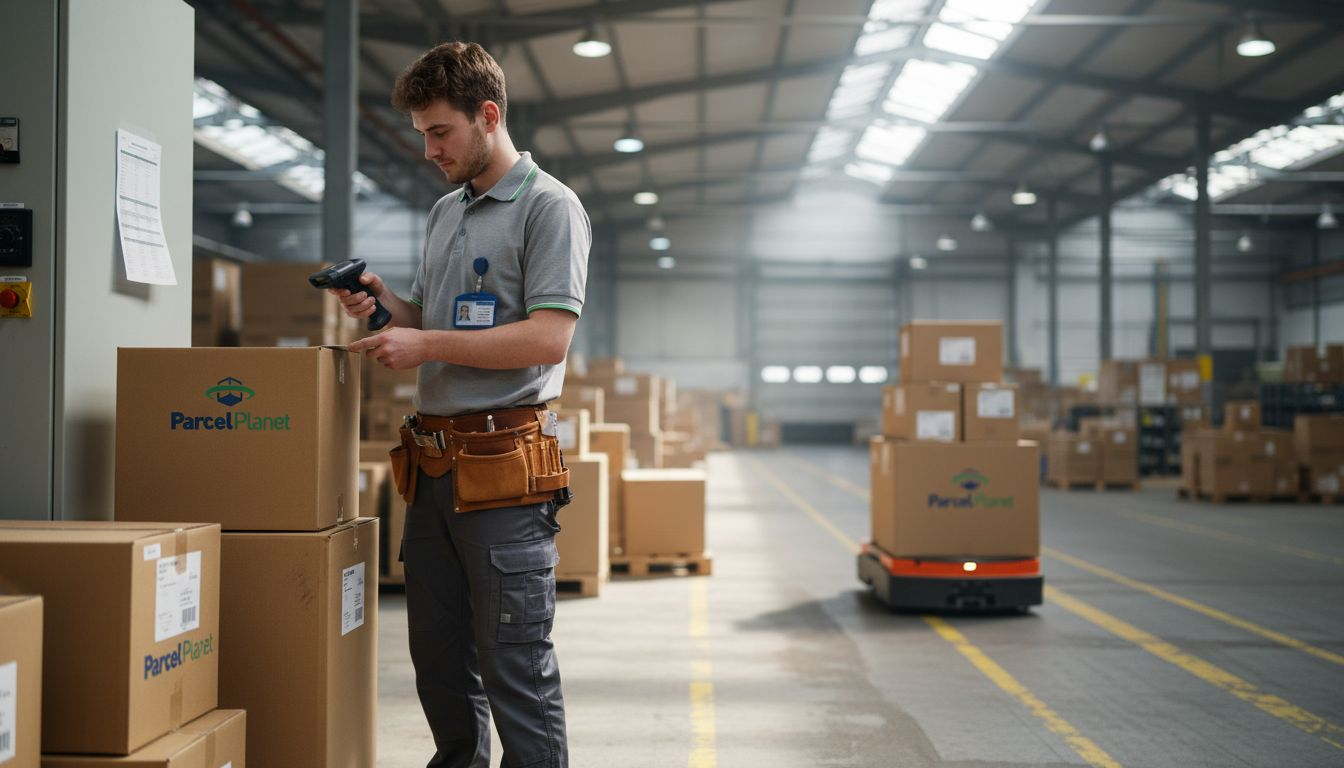
Collaborative robots, or cobots, work alongside human pickers rather than replacing them. A cobot might retrieve heavy items from high shelves, allowing the picker to focus on smaller, lighter products. This partnership reduces picker fatigue, lowers injury rates, and increases throughput during peak periods. Cobots adapt to changing warehouse layouts and product mixes without extensive reprogramming, offering flexibility in-house operations struggle to match.
Ecommerce platform integrations eliminate manual order entry and inventory updates. When a customer purchases an item, the order data flows automatically from your webstore to the warehouse management system, triggering picking and packing workflows. Real-time synchronisation ensures inventory accuracy across all channels, preventing the embarrassment of selling out-of-stock products. Automated tracking updates notify customers at every fulfilment stage, from order confirmation through delivery.
Statistic: Warehouses deploying automation technologies report 35% faster order processing and 15% fewer picking errors, directly improving customer satisfaction and reducing return rates.
Automation investments deliver measurable returns:
- Robotics handle high-volume, repetitive tasks with consistent accuracy
- AI optimises picking routes and warehouse layouts dynamically
- Cobots reduce picker fatigue and injury claims
- Platform integrations eliminate data entry errors and delays
- Real-time tracking enhances customer transparency and trust
For practical guidance, review order fulfilment efficiency tips to identify quick wins. Dive deeper into automation in ecommerce fulfilment trends shaping 2026 operations.
Order processing and packing best practices
Picking efficiency directly impacts fulfilment speed and cost. Batch picking groups multiple orders with common items, allowing a single picker to collect products for several customers in one warehouse trip. This method increases picker productivity by up to 35% compared to single-order picking. Zone picking assigns pickers to specific warehouse areas, reducing travel time and creating specialisation that improves speed and accuracy.
Quality control checkpoints catch errors before products leave the warehouse. Quality checks reduce packing errors by 15%, lowering return rates and customer complaints. Implement a two-step verification process where one team member picks items and another verifies the order against the packing slip before sealing the box. Barcode scanning at each stage creates an audit trail, making it easy to identify where errors occur and implement corrective training.
Packaging protects products during transit while reflecting your brand identity. Use appropriately sized boxes to minimise dimensional weight charges and reduce filler material. Fragile items require cushioning materials like bubble wrap or air pillows to prevent damage. Ensure packaging meets carrier requirements for weight limits and labelling standards to avoid shipment rejections.
Labelling accuracy determines whether orders reach customers on time. Clear, scannable shipping labels include recipient address, return address, tracking barcode, and carrier routing codes. Place labels on flat surfaces away from box seams where they might tear or become unreadable. Incorrect labels cause mis-deliveries and delays that erode customer trust.
Core packing process elements:
- Batch or zone picking to maximise picker efficiency
- Two-step quality verification before sealing packages
- Right-sized packaging to protect products and control costs
- Clear, accurate labelling for reliable carrier processing
- Documentation of packing errors to drive continuous improvement
Brands experiencing packing errors or customer complaints should examine signs to switch 3PL providers to determine if current partners meet quality standards.
Customer-centric delivery preferences
Consumer expectations for delivery speed and flexibility continue rising. 70% of consumers expect delivery within two days and value personalised delivery options, which increase customer loyalty. Same-day delivery appeals to urban shoppers with urgent needs, while scheduled delivery windows suit customers who want to be home when packages arrive. Offering multiple shipping speeds at checkout empowers customers to balance cost and urgency based on their individual needs.
Real-time tracking transforms delivery from a black box into a transparent, predictable experience. Customers receive notifications when orders ship, when carriers attempt delivery, and when packages arrive. Proactive communication reduces “where is my order” inquiries, freeing customer service teams to handle more complex issues. Tracking visibility builds trust and reduces anxiety, particularly for high-value purchases.
Carrier network diversity ensures you can serve customers wherever they live. Partner with multiple carriers to access different delivery capabilities. Regional carriers often provide better service and rates in specific geographies, while national carriers offer broad coverage and sophisticated tracking systems. A blended carrier strategy optimises cost and service across your entire customer base.
Brands achieving 98% on-time fulfilment see 20% higher customer retention due to improved satisfaction and reduced delivery complaints.
Delivery preferences shaping ecommerce success:
- Multiple shipping speeds from economy to same-day
- Real-time tracking with proactive status notifications
- Alternative delivery locations like lockers and pickup points
- Carbon-neutral shipping options for environmentally conscious customers
- Flexible delivery windows accommodating customer schedules
Understand how logistics in ecommerce success drives competitive advantage through superior delivery experiences.
Comparison of fulfilment models
Choosing the right fulfilment model requires understanding trade-offs between cost, control, scalability, and operational complexity. 3PL reduces operational overhead by 30-40% compared to in-house fulfilment; dropshipping has the lowest capital needs but less control; hybrid models balance control and scalability for specialised requirements.
| Model |
Cost Structure |
Control Level |
Scalability |
Operational Complexity |
Best For |
| In-house |
High fixed costs (warehouse, staff, equipment) |
Maximum control over processes and quality |
Limited by warehouse capacity and labour availability |
High complexity requiring fulfilment expertise |
Small brands with consistent, manageable volumes |
| 3PL |
Variable costs scaling with volume, lower fixed overhead |
Moderate control through SLAs and performance metrics |
Excellent scalability leveraging provider infrastructure |
Low complexity with provider managing operations |
Growing brands seeking cost-effective scale |
| Dropshipping |
Minimal upfront capital, per-unit fees to suppliers |
Low control over inventory, packing, and shipping speed |
High scalability without inventory investment |
Low complexity but dependent on supplier reliability |
Startups testing products with minimal capital |
| Hybrid |
Mixed costs combining in-house and outsourced elements |
Selective control over critical or high-value operations |
Flexible scalability adapting to business needs |
Moderate complexity coordinating multiple systems |
Brands with diverse product lines or seasonal peaks |
In-house fulfilment offers maximum control but demands significant capital investment in warehouse space, equipment, and trained staff. Fixed costs remain constant regardless of order volumes, making it inefficient during slow periods. Scalability hits hard limits when warehouse capacity or labour availability constrains growth.
Third-party logistics providers absorb fixed costs across multiple clients, converting them into variable per-unit expenses. You pay for storage, picking, packing, and shipping based on actual usage. This model scales effortlessly as your business grows, and 3PL expertise in compliance, technology, and carrier relationships delivers immediate operational advantages.
Dropshipping eliminates inventory risk entirely. Suppliers hold stock and ship directly to customers when orders arrive. Capital requirements are minimal, but you sacrifice control over product quality, packing presentation, and shipping speed. Long supplier lead times frustrate customers accustomed to two-day delivery.
Hybrid models combine elements of multiple approaches. You might handle high-value or fragile products in-house while outsourcing standard items to a 3PL. Seasonal businesses use 3PLs during peak periods and manage fulfilment internally during slower months.
Explore detailed fulfilment model comparison analysis to match your business stage and growth plans.
Regulatory and cross-border compliance
Expanding into international markets introduces complex regulatory requirements varying by country. Customs documentation must accurately declare product descriptions, values, country of origin, and harmonised tariff codes. Incorrect or incomplete paperwork triggers shipment holds, additional inspections, and potential fines. Understanding each destination country’s import regulations prevents costly delays and ensures smooth cross-border transactions.
Third-party logistics providers specialising in international fulfilment bring invaluable regulatory expertise. The World Customs Organization’s Framework supports standardisation that eases cross-border ecommerce shipments; 3PL providers often offer specialised compliance expertise. They maintain current knowledge of changing regulations, prepare accurate customs declarations, and manage duties and taxes collection on your behalf. This expertise reduces the administrative burden on your team while minimising compliance risks.
Product-specific regulations add another compliance layer. Electronics, cosmetics, food items, and textiles face varying certification and labelling requirements depending on destination markets. Some countries restrict or prohibit certain products entirely. Work with 3PL partners who understand these nuances and can advise on market entry strategies.
Compliance best practices for international expansion:
- Research destination country import regulations before launching
- Partner with 3PLs offering proven cross-border expertise
- Maintain accurate product data for customs declarations
- Stay informed about regulatory changes in target markets
- Build compliance costs into international pricing strategies
Brands planning international growth should evaluate 3PL cross-border expertise to ensure partners can navigate complex regulatory environments.
Situational recommendations and summary comparison
Your optimal fulfilment approach depends on business stage, order volumes, product characteristics, and growth ambitions. Small startups with fewer than 50 daily orders often benefit from in-house fulfilment to maintain tight quality control and build operational knowledge. This hands-on experience helps you understand customer preferences and fulfilment challenges before outsourcing.
Growing mid-sized brands processing 50 to 500 daily orders find the greatest value in partnering with established 3PL providers. The 30-40% cost savings compared to in-house operations free capital for marketing and product development. 3PL scalability accommodates seasonal peaks without hiring temporary staff or expanding warehouse space. Technology integrations and compliance expertise accelerate growth while maintaining service quality.
Hybrid models suit brands with variable order volumes or specialised product lines. Fashion retailers might handle luxury items in-house for premium packaging while outsourcing basic apparel to a 3PL. Seasonal businesses scale 3PL usage during peak periods and manage reduced volumes internally during off-seasons.
Enterprises shipping internationally require 3PL partners with cross-border expertise. Navigating customs regulations, managing international carrier relationships, and handling returns across borders demand specialised knowledge most brands lack internally.
| Decision Factor |
Checklist Considerations |
Recommended Action |
| Order Volume |
Current daily orders and 12-month growth forecast |
Under 50 orders: consider in-house; 50-500: evaluate 3PL; 500+: require enterprise 3PL |
| Technology Needs |
Platform integrations, real-time tracking, automation requirements |
Assess provider tech stack compatibility with your ecommerce platform |
| Geographic Reach |
Domestic only vs. international expansion plans |
International growth demands 3PL with cross-border compliance expertise |
| Cost Structure |
Fixed vs. variable cost tolerance and capital availability |
3PL converts fixed costs to variable, improving cash flow for growing brands |
| Control Requirements |
Quality standards, packaging presentation, fulfilment speed |
High control needs favour in-house or hybrid; scalability needs favour 3PL |
| Delivery Expectations |
Customer preferences for speed, tracking, and flexibility |
Verify provider supports required shipping speeds and carrier options |
Key selection criteria:
- Match fulfilment model to current order volumes and growth trajectory
- Prioritise technology integrations for accuracy and visibility
- Evaluate compliance expertise for target markets
- Balance cost structure with control requirements
- Ensure delivery options meet customer expectations
Access a comprehensive ecommerce logistics checklist covering warehouse selection, technology evaluation, and partner vetting processes.
Optimise your ecommerce fulfilment with ParcelPlanet
ParcelPlanet delivers scalable third-party logistics solutions tailored to growing ecommerce brands across North America. Our advanced technology integrations synchronise inventory across all your sales channels while real-time tracking keeps customers informed at every fulfilment stage. We handle the operational complexity of warehousing, picking, packing, and shipping so you can focus on product development and customer acquisition.
Our flexible delivery options meet modern consumer expectations for speed and convenience, from same-day dispatch to scheduled delivery windows. Cross-border expertise ensures your international expansion proceeds smoothly, with full regulatory compliance and efficient customs processing. Whether you’re processing 50 or 5,000 daily orders, ParcelPlanet scales with your business without requiring additional capital investment in warehouse infrastructure.
Explore ParcelPlanet order fulfilment services to discover how we streamline operations for ecommerce brands. Learn more about what order fulfilment entails and review the benefits of outsourcing fulfilment to specialist providers.
Frequently asked questions about ecommerce fulfilment checklists
What key factors are most important when choosing a 3PL partner?
Prioritise technology integration capabilities, transparent pricing, proven scalability, and regulatory compliance expertise. Verify the provider integrates seamlessly with your ecommerce platform and offers real-time inventory visibility. Request client references from brands with similar order volumes and product types to assess operational reliability.
How can technology help reduce fulfilment errors and delays?
Automation eliminates manual data entry errors whilst real-time inventory synchronisation prevents overselling. Barcode scanning at each fulfilment stage creates audit trails that identify error sources quickly. AI-powered picking route optimisation reduces picker travel time by 30%, accelerating order processing without sacrificing accuracy.
When should an ecommerce brand consider switching their fulfilment model or provider?
Switch when your current solution cannot scale with growth, costs exceed 15% of revenue, error rates surpass 2%, or delivery times fail to meet customer expectations. Frequent stockouts, poor inventory visibility, or inability to support new sales channels also signal the need for a fulfilment partner upgrade.
What delivery options are most valued by today’s ecommerce customers?
Consumers prioritise two-day delivery as the baseline expectation, with growing demand for same-day options in urban areas. Real-time tracking, flexible delivery windows, and alternative pickup locations increase satisfaction. Offering multiple shipping speeds at checkout empowers customers to balance urgency and cost based on individual needs.
How do 3PL providers support cross-border ecommerce compliance?
Specialised 3PL partners maintain current knowledge of customs regulations, prepare accurate documentation, and manage duties and taxes collection. They understand product-specific restrictions and certification requirements across different markets. This expertise prevents shipment delays, reduces compliance risks, and accelerates international market entry for growing brands.
Recommended