Selecting the right omnichannel fulfilment approach can make or break your e-commerce brand’s scalability and customer satisfaction. With 85.82% of brands selling across multiple channels, the challenge lies not in whether to adopt omnichannel fulfilment but in choosing which models deliver genuine results. This article provides a clear framework for evaluating fulfilment strategies, backed by compelling 2026 examples demonstrating measurable success. You’ll gain actionable insights into criteria that matter, real-world implementations, model comparisons, and practical steps to optimise your fulfilment strategy for sustainable growth.
Table of Contents
Key takeaways
| Point |
Details |
| Revenue impact |
Omnichannel retailers achieve 2.9x higher customer lifetime value and 40% higher revenue growth from personalisation. |
| Core models |
Ship from Store, Click & Collect, and unified inventory management deliver speed and flexibility across channels. |
| Technology enablers |
OMS and DOM systems orchestrate dynamic order routing, reducing fulfilment time and preventing stockouts. |
| Strategic partnerships |
3PL providers offer scalable warehousing and multi-channel distribution essential for cost-efficient growth. |
| Peak resilience |
Multiple fulfilment nodes and orchestration rules ensure operational continuity during high-demand periods. |
Why choosing the right omnichannel fulfilment matters
E-commerce managers face mounting pressure to deliver faster, more flexible fulfilment whilst controlling costs and maintaining service quality. The stakes are high: omnichannel retailers achieve 2.9x higher customer lifetime value and 40% higher revenue growth from personalisation compared to single-channel competitors. Yet selecting the right fulfilment approach requires careful evaluation of scalability, cost efficiency, and customer experience.
Effective omnichannel fulfilment hinges on three critical capabilities. First, real-time unified inventory visibility across all sales channels and fulfilment nodes prevents overselling and enables accurate delivery promises. Second, dynamic order routing through OMS and DOM systems optimises fulfilment location based on proximity, stock availability, and delivery speed requirements. Third, flexible fulfilment options including Ship from Store, Click & Collect, and distributed warehousing accommodate diverse customer preferences whilst maximising inventory turnover.
Common operational challenges complicate implementation:
- Inventory silos across stores, warehouses, and third-party fulfilment centres create blind spots
- Complex returns management across multiple channels strains operations
- Store compliance with fulfilment protocols varies, affecting order acceptance rates
- Peak period demand spikes expose capacity constraints
Effective OMS and DOM solutions empower retailers to activate stores as fulfilment nodes whilst maintaining orchestration rules that balance profitability, speed, and customer satisfaction.
Successful omnichannel strategies align fulfilment capabilities with business goals. Brands prioritising delivery speed may emphasise Ship from Store and micro-fulfilment centres near urban populations. Those focused on cost efficiency might consolidate inventory in regional distribution centres with dynamic routing. Peak period resilience demands multiple fulfilment nodes with clear escalation protocols. Boost e-commerce sales with omnichannel selling by matching fulfilment architecture to customer expectations and channel mix.
Successful examples of omnichannel fulfilment approaches
Real-world implementations demonstrate how leading brands leverage omnichannel fulfilment to drive measurable growth. These examples illustrate different model applications and quantified benefits that inform strategic decision-making.
Pittarello, an Italian fashion retailer, implemented OneStock’s DOM system to orchestrate orders across 120 stores and multiple warehouses. The results were dramatic: 58% online revenue increase year-on-year and Black Friday fulfilment time reduced from two weeks to four days. Dynamic order routing enabled the brand to fulfil online orders from the nearest available stock location, dramatically improving delivery speed whilst reducing warehouse pressure during peak periods.
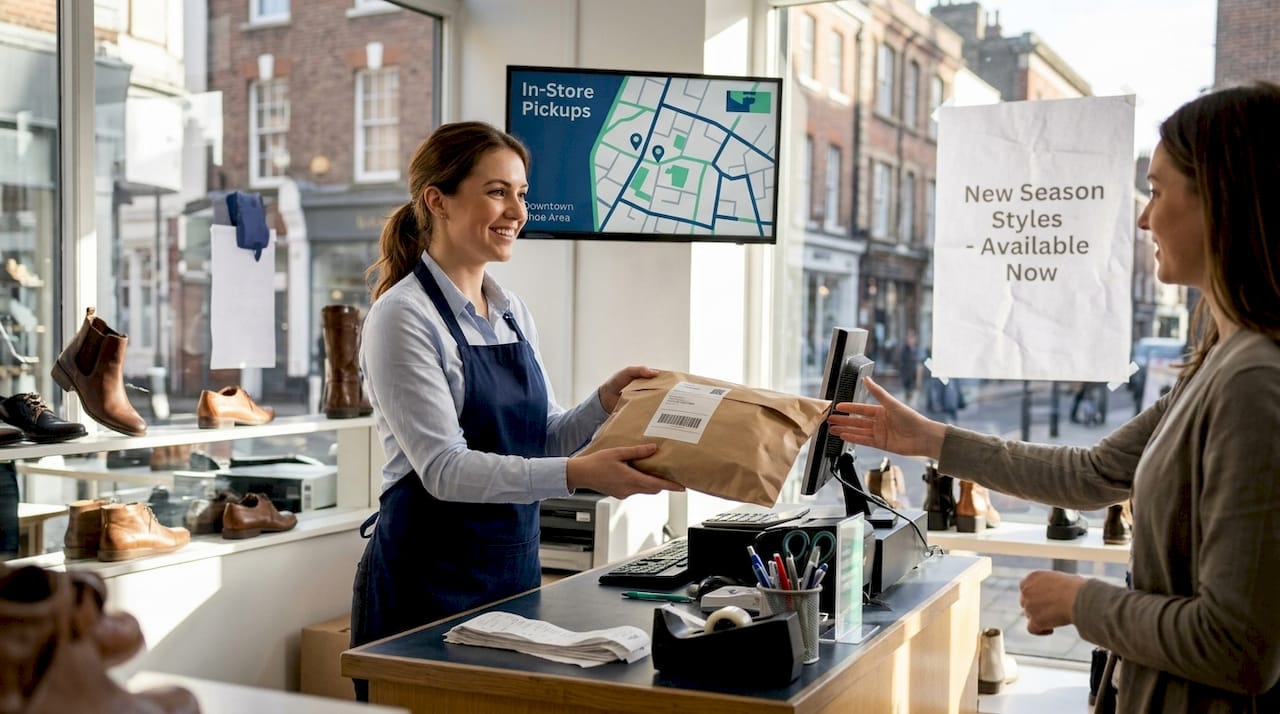
Jigsaw, a British fashion retailer, deployed Ship from Store capabilities to unify stock visibility across 80 stores and warehouses. Within 10 months, the brand achieved 32% stock turnover increase and shipped 36% of online sales directly from stores. This approach transformed stores from cost centres into revenue-generating fulfilment nodes whilst reducing markdown rates on slow-moving inventory.
Key success factors across these implementations include:
- Unified inventory platform providing real-time visibility across all nodes
- Intelligent order orchestration balancing speed, cost, and stock availability
- Store activation with clear protocols and staff training
- Performance monitoring with continuous optimisation of routing rules
These examples demonstrate that omnichannel fulfilment delivers tangible benefits when supported by robust technology and operational discipline. Scalable logistics solutions for e-commerce require careful planning but yield substantial returns in revenue, efficiency, and customer satisfaction.
Comparing omnichannel fulfilment models and their trade-offs
Understanding the strengths and limitations of each fulfilment model helps managers select approaches aligned with their operational capabilities and customer expectations. Omnichannel fulfilment models use shared inventory and dynamic routing to minimise cost-to-serve whilst maximising delivery speed.
| Model |
Speed |
Cost efficiency |
Complexity |
Best for |
| Ship from Store |
Very high |
Medium |
High |
Urban brands with dense store networks |
| Click & Collect |
High |
High |
Medium |
Retailers with strong foot traffic |
| Distributed Order Management |
High |
High |
Very high |
Multi-channel brands with varied fulfilment nodes |
| Regional distribution centres |
Medium |
Very high |
Low |
High-volume brands with predictable demand |
| Micro-fulfilment centres |
Very high |
Medium |
Medium |
Fast-growing urban e-commerce brands |
Ship from Store excels in delivery speed by leveraging proximity to customers but introduces operational complexity. Store staff must balance in-store service with fulfilment tasks, and inventory accuracy becomes critical to prevent stockouts. Brands implementing this model should establish clear order acceptance thresholds to avoid cannibalising in-store sales during peak periods.
Click & Collect reduces delivery costs whilst driving additional in-store purchases. However, it requires robust inventory management to ensure reserved items remain available and dedicated collection areas to maintain customer experience. This model works best for brands with established physical presence and loyal customer bases.
Distributed Order Management orchestrates fulfilment across multiple node types, optimising for speed, cost, and availability. The complexity lies in configuring routing rules that account for carrier zones, basket composition, and seasonal demand patterns. Pro tip: Balance order acceptance thresholds carefully. Setting thresholds too low increases cancellations and damages customer trust, whilst overly aggressive acceptance depletes store inventory and frustrates in-store shoppers.
Regional distribution centres offer economies of scale and simplified operations but sacrifice delivery speed in distant markets. This model suits brands with stable demand patterns and lower customer expectations for same-day or next-day delivery. Micro-fulfilment centres bridge the gap, providing urban speed with centralised efficiency, though they require significant capital investment.
Considerations for model selection include seasonal demand volatility, SKU rotation rates, and retailer compliance capabilities. Brands with highly seasonal demand benefit from flexible 3PL partnerships that scale capacity. Those with slow-moving SKUs should prioritise unified inventory to reduce markdown costs. Fulfilment partner selection guide provides detailed criteria for evaluating external providers.
Choosing the right omnichannel fulfilment strategy for your business
Selecting an optimal fulfilment strategy requires systematic evaluation of your business context, customer expectations, and operational capabilities. Follow this framework to align fulfilment architecture with growth objectives.
- Audit current fulfilment performance across channels, measuring delivery speed, cost per order, and customer satisfaction scores.
- Map customer expectations by segment, identifying priority delivery speeds and preferred fulfilment options.
- Assess inventory distribution and turnover rates across existing warehouses, stores, and third-party facilities.
- Evaluate technology readiness, including OMS/DOM capabilities, real-time inventory visibility, and carrier integrations.
- Model financial impact of different approaches, comparing capital requirements, operating costs, and revenue potential.
- Pilot selected models in limited markets before full rollout, gathering performance data and refining orchestration rules.
Selecting the right 3PL or 4PL partner amplifies fulfilment capabilities without requiring massive capital investment. 3PL vs 4PL fulfilment options differ in scope and control. 3PL providers handle warehousing, picking, packing, and shipping, offering flexibility and scalability. 4PL providers orchestrate entire supply chains, managing multiple 3PLs and optimising network design. Growing brands typically start with 3PL partnerships and evolve to 4PL arrangements as complexity increases.
Pro tip: Leverage multiple fulfilment centres integrated through a unified OMS to build resilience against regional disruptions, carrier delays, and demand spikes. Geographic distribution reduces shipping distances and costs whilst providing backup capacity during peak periods.
Align fulfilment approach with evolving customer expectations. Premium segments may justify expedited shipping costs, whilst price-sensitive customers accept longer delivery windows for free shipping. Customisation options like gift wrapping or personalised packaging differentiate your brand but require fulfilment capabilities to execute consistently.
Regularly revisit your strategy based on performance data and channel evolution. Quarterly reviews should assess fulfilment speed, cost trends, customer satisfaction metrics, and capacity utilisation. Adjust orchestration rules, expand fulfilment networks, or shift inventory distribution as your business scales and customer preferences shift.
Enhance your omnichannel fulfilment with ParcelPlanet solutions
Implementing effective omnichannel fulfilment demands expertise, technology, and flexible capacity. ParcelPlanet offers order fulfilment services tailored for growing e-commerce brands navigating multi-channel complexity. Our scalable 3PL solutions integrate seamlessly with your existing platforms, providing real-time tracking, accurate inventory management, and rapid order processing across channels.

Whether you need distributed warehousing, expedited shipping, or returns management, ParcelPlanet’s network and expertise reduce costs whilst maintaining delivery speed and reliability. Our team collaborates with you to design fulfilment architecture aligned with your growth trajectory and customer expectations. Explore 3PL vs 4PL fulfilment options to understand which partnership model suits your needs. Learn how 3PL providers reduce logistics costs whilst enhancing service quality. Pro tip: Collaborate early with fulfilment providers to align systems, establish realistic performance metrics, and build operational protocols that scale.
Frequently asked questions
What is Ship from Store in omnichannel fulfilment?
Ship from Store uses brick-and-mortar retail locations as fulfilment centres for online orders, enabling faster delivery by reducing shipping distances. This approach maximises inventory utilisation by making store stock available for e-commerce sales whilst transforming stores into revenue-generating fulfilment nodes.
How does Distributed Order Management improve omnichannel fulfilment?
DOM systems centralise order and inventory data across all sales channels and fulfilment locations, enabling intelligent routing based on proximity, stock availability, and delivery speed requirements. This optimisation balances cost, speed, and customer satisfaction whilst preventing oversells and reducing fulfilment delays.
What common challenges do brands face in omnichannel fulfilment?
Inventory silos, data fragmentation across systems, complex returns processing, and inconsistent store compliance with fulfilment protocols create operational friction. Addressing these challenges requires integrated OMS and DOM platforms with well-designed orchestration rules that balance profitability and service quality.
Why are 3PL providers important for omnichannel fulfilment?
3PL providers offer flexible warehousing, multi-channel distribution expertise, and scalable capacity essential for growing brands. They enable fast delivery through strategically located facilities whilst providing seamless integration with e-commerce platforms, marketplaces, and carrier networks, reducing operational complexity and capital requirements.
Recommended


