Scaling an e-commerce business brings exciting opportunities, but logistics challenges can quickly become bottlenecks that limit growth. Many small to medium-sized brands struggle with inefficient pick-pack-ship workflows, unpredictable return volumes, and complex international shipping regulations. These operational hurdles drain resources and frustrate customers. This guide delivers practical strategies to streamline your logistics operations, from implementing automation tools to partnering with the right fulfilment providers. You’ll discover how to reduce fulfilment times, manage demand fluctuations, and expand internationally with confidence. Whether you’re handling 100 orders monthly or scaling to thousands, these insights will help you build logistics infrastructure that supports sustainable growth.
Table of Contents
Key takeaways
| Point |
Details |
| Speed improvement |
Workflow optimisation can improve fulfilment speed by 30% through strategic automation |
| Scalability tools |
Leveraging 3PLs and AI-driven route planning enables flexible capacity without capital investment |
| International expansion |
Managing HS code accuracy and customs procedures reduces cross-border shipping delays significantly |
| Demand management |
Real-time inventory tracking and automation help navigate peak seasons without overstaffing |
| Sustainability gains |
AI frameworks reduce carbon footprint by 14.3% whilst improving operational efficiency |
Understanding logistics challenges for SMB e-commerce
Small to medium-sized e-commerce businesses face distinct operational pain points that larger enterprises can absorb through economies of scale. Managing accurate pick-pack-ship workflows becomes increasingly complex as product catalogues expand and order volumes fluctuate. You need pinpoint inventory accuracy whilst juggling multiple sales channels, each with different packaging requirements and shipping expectations.
Return rates present another significant challenge. High return rates reaching 30% combined with customs delays create substantial operational friction for brands attempting international expansion. Returns processing consumes warehouse space, requires quality inspection, and ties up working capital in inventory that may need refurbishment before resale.
International shipping introduces regulatory complexity that catches many growing brands unprepared. Customs documentation, harmonised system codes, and varying import regulations across markets create delays that damage customer trust. Incorrect HS code classification can trigger inspections, duties, and penalties that erode profit margins on cross-border sales.
Resource constraints force SMBs to balance competing priorities:
- Maintaining fulfilment speed without excessive labour costs
- Achieving inventory accuracy across multiple warehouse locations
- Providing tracking visibility customers expect from major retailers
- Managing seasonal demand spikes without permanent infrastructure investment
These challenges compound as you scale. What works for 50 daily orders creates chaos at 500. The ecommerce logistics checklist helps identify which operational gaps require immediate attention versus long-term strategic planning. Understanding these pain points positions you to implement targeted solutions rather than generic optimisation advice that doesn’t address your specific bottlenecks.
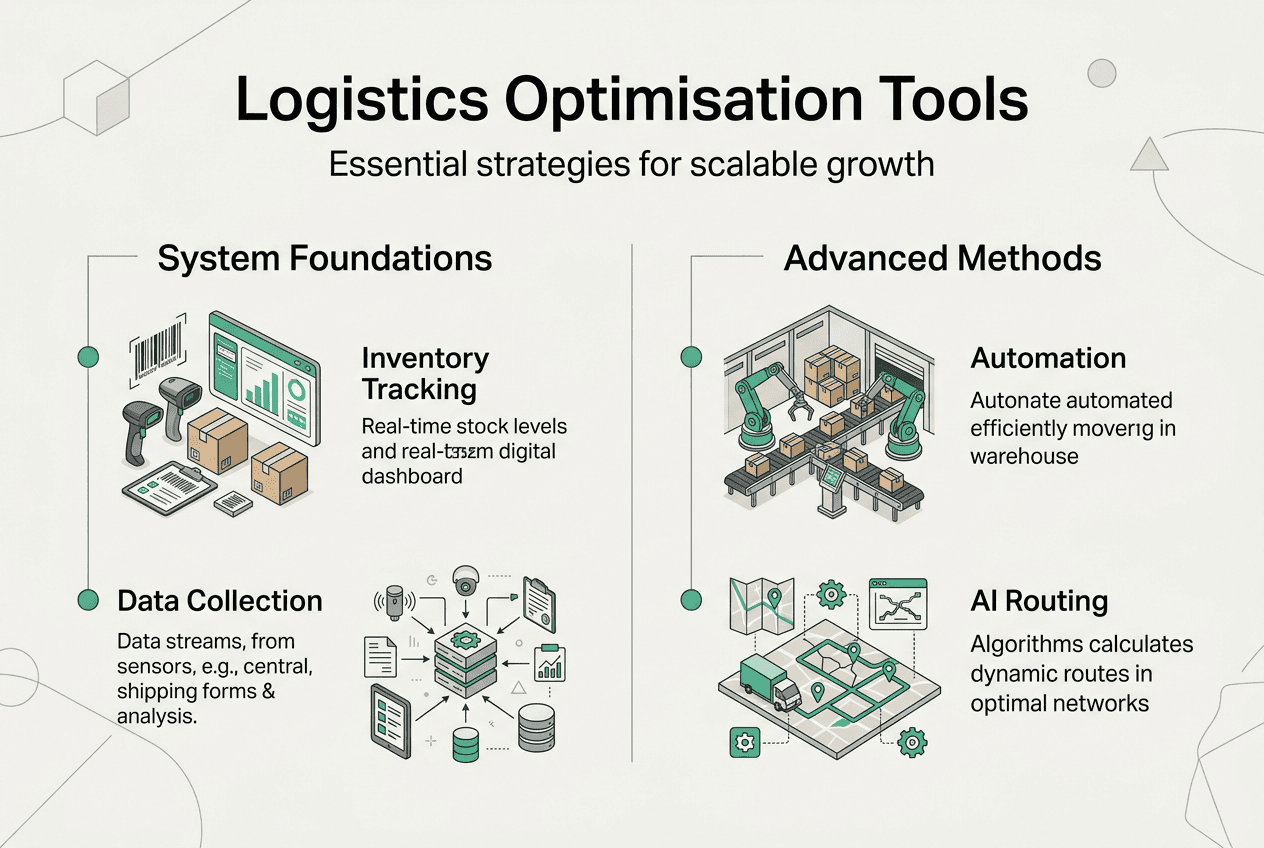
Successful logistics optimisation requires foundational systems before implementing advanced strategies. Real-time inventory tracking forms the cornerstone of efficient operations. Without accurate stock visibility across locations, you’ll struggle with overselling, emergency reorders, and disappointed customers. Modern warehouse management systems synchronise inventory levels across sales channels instantly, preventing the costly errors that damage brand reputation.
Warehouse management software streamlines operations beyond basic inventory counts. These platforms orchestrate picking routes, assign tasks based on staff availability, and generate packing slips automatically. Integration with your e-commerce platform eliminates manual data entry, reducing errors whilst freeing staff for value-adding activities. Choose systems that scale with your business rather than requiring replacement as order volumes grow.
Automation transforms labour-intensive processes into efficient workflows. Barcode scanning ensures picking accuracy, automated label generation eliminates handwriting errors, and conveyor systems reduce walking time in larger warehouses. Prioritise automation and real-time data to handle demand fluctuations without proportional staffing increases. Even modest automation investments deliver rapid ROI through error reduction and throughput improvement.
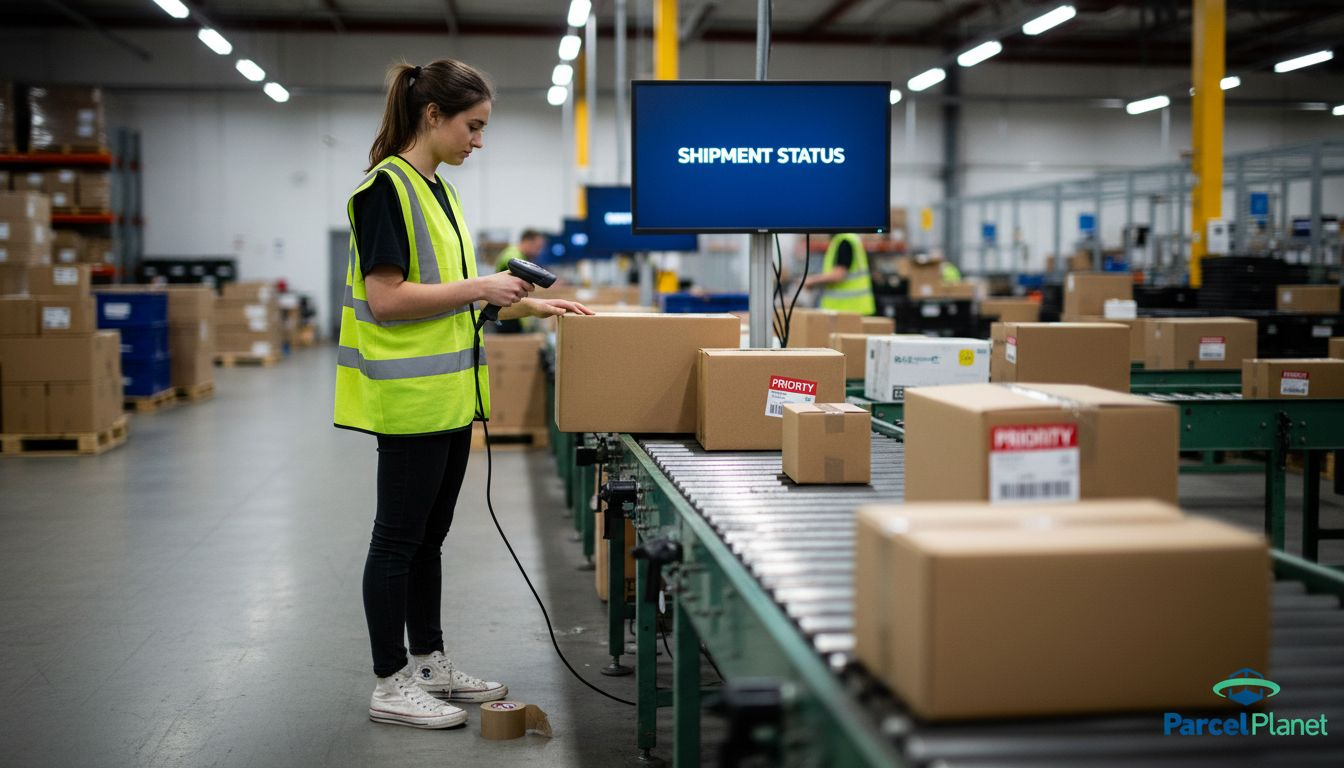
AI-driven route optimisation represents the next frontier in logistics efficiency. These tools analyse delivery addresses, traffic patterns, carrier performance, and cost structures to recommend optimal shipping methods for each order. Dynamic routing adjusts recommendations based on real-time conditions, ensuring packages arrive on schedule whilst minimising transportation costs.
| Tool category |
Primary benefit |
Implementation priority |
| Inventory tracking |
Prevents stockouts and overselling |
High |
| Warehouse management |
Streamlines picking and packing |
High |
| Automated labelling |
Reduces shipping errors |
Medium |
| Route optimisation |
Lowers delivery costs |
Medium |
| Returns processing |
Accelerates restocking |
Low to medium |
Data collection underpins continuous improvement. Establish metrics tracking from day one, even if analysis comes later. Capture fulfilment times, accuracy rates, carrier performance, and customer feedback systematically. This historical data reveals patterns that guide future optimisation decisions and justifies investment in advanced tools.
Pro Tip: Start with one automation project that addresses your biggest pain point rather than attempting comprehensive transformation. Quick wins build momentum and demonstrate ROI to stakeholders, making subsequent investments easier to justify. Review shipping optimisation tips to identify high-impact starting points for your specific operation.
Executing optimisation: practical steps to improve logistics workflows
Transforming logistics operations requires methodical execution across multiple operational areas. Warehouse layout redesign delivers immediate efficiency gains. Analyse your picking data to identify fast-moving SKUs, then position these products closest to packing stations. This zone-based approach reduces walking time, the single largest time drain in manual fulfilment operations. Pick-pack-ship workflow optimisation reduces fulfilment time by 20-30% through strategic spatial planning alone.
Implement these workflow improvements sequentially:
- Map current picking routes and measure average steps per order
- Reorganise inventory by velocity, placing high-turnover items in prime locations
- Establish dedicated packing stations with pre-positioned supplies
- Automate label generation and integrate with carrier manifesting systems
- Create quality control checkpoints before orders leave the warehouse
- Monitor performance metrics weekly and adjust processes based on data
Automated packing and label generation eliminate repetitive tasks prone to human error. Integrated systems pull order details, calculate optimal box sizes, generate shipping labels, and update tracking information without manual intervention. This automation reduces processing time per order whilst improving accuracy rates that directly impact customer satisfaction.
Multi-carrier shipping strategies balance cost and delivery speed based on each order’s characteristics. 3PL partnerships and multi-carrier shipping provide flexibility to choose optimal carriers for different destinations, package sizes, and urgency levels. Negotiating rates with multiple carriers prevents over-reliance on single providers whilst leveraging competition for better pricing.
| Optimisation area |
Implementation approach |
Expected improvement |
| Warehouse layout |
Velocity-based zoning |
25-35% faster picking |
| Label automation |
Integrated WMS systems |
90%+ accuracy rates |
| Multi-carrier strategy |
Dynamic rate shopping |
15-20% shipping cost reduction |
| 3PL partnership |
Flexible capacity model |
Scalable without capital expense |
Partnering with 3PL providers offers flexible scalability without capital investment in warehouse space and equipment. The fulfilment partner selection guide helps evaluate providers based on your specific requirements. Consider factors beyond pricing, including technology integration, geographic coverage, and specialisation in your product category.
AI tools optimise last-mile delivery, the most expensive and complex logistics segment. These systems analyse historical delivery data, traffic patterns, and carrier performance to recommend routing that balances speed and cost. Machine learning algorithms improve recommendations over time, adapting to seasonal patterns and emerging delivery trends.
Pro Tip: Evaluate 3pl vs 4pl options based on your control requirements and growth trajectory. Third-party logistics providers handle operational execution, whilst fourth-party logistics manage your entire supply chain strategy. Most SMBs benefit from 3PL partnerships initially, graduating to 4PL models as complexity increases.
Verifying results and troubleshooting common logistics issues
Post-implementation monitoring ensures optimisation efforts deliver expected results and identifies emerging issues before they impact customers. Track key performance indicators systematically, establishing baselines before changes and measuring improvements afterwards. Fulfilment time, order accuracy, return rates, and shipping cost per order provide comprehensive operational visibility.
Digital twins and AI prediction models help anticipate and mitigate peak load challenges. These technologies simulate warehouse operations under various demand scenarios, revealing capacity constraints before they cause delays. Predictive analytics forecast order volumes based on historical patterns, marketing campaigns, and seasonal trends, enabling proactive staffing and inventory decisions.
Automated returns processing manages high return volumes without proportional labour increases. Implement systems that:
- Generate return labels automatically when customers initiate returns
- Track return shipments and update inventory upon receipt
- Route returned items to quality inspection or disposal based on condition codes
- Restock sellable inventory immediately to minimise out-of-stock periods
- Analyse return reasons to identify product or fulfilment issues requiring correction
HS code accuracy prevents customs delays that frustrate international customers and increase costs. Invest time in proper classification initially rather than correcting errors after shipments are detained. Customs authorities increasingly use automated risk assessment, flagging shipments with inconsistent or incorrect codes for inspection. Accurate documentation ensures smooth clearance and predictable delivery times.
Sustainability Impact: AI frameworks reduce carbon footprint by 14.3% whilst improving energy efficiency by 19.7% in logistics operations. Environmental performance increasingly influences customer purchasing decisions, making sustainable practices both ethically sound and commercially advantageous.
Monitor these critical metrics weekly:
- Average fulfilment time from order placement to carrier pickup
- Order accuracy rate measuring correct items, quantities, and destinations
- Return rate by product category and reason code
- Shipping cost as percentage of order value
- Customer satisfaction scores related to delivery experience
- Inventory accuracy comparing system records to physical counts
Troubleshooting common issues requires systematic diagnosis. When fulfilment times increase, analyse whether delays occur in picking, packing, or carrier pickup stages. Accuracy problems may stem from unclear product labelling, inadequate training, or warehouse layout issues. Rising return rates often indicate product description mismatches or quality control gaps requiring supplier discussions.
The ecommerce fulfilment checklist provides a structured approach to identifying operational gaps and prioritising improvements. Regular audits catch drift from established procedures before performance degrades noticeably. Continuous improvement cultures treat logistics optimisation as ongoing refinement rather than one-time projects.
Explore scalable logistics support from ParcelPlanet
Implementing the strategies outlined requires expertise, technology, and operational capacity that many growing brands struggle to build internally. ParcelPlanet offers tailored 3PL support designed specifically for e-commerce businesses seeking to reduce costs whilst accelerating fulfilment speed. Our integrated warehouse management systems, multi-carrier shipping relationships, and experienced operations teams handle the complexity whilst you focus on growing your brand.
Explore the 3PL provider benefits for SMEs to understand how outsourced fulfilment delivers enterprise-grade capabilities without capital investment. Whether you’re evaluating 3PL vs 4PL fulfilment options or seeking comprehensive order fulfilment services, ParcelPlanet provides flexible solutions that scale with your business. Our real-time tracking, seamless platform integrations, and international shipping expertise help you deliver the customer experience that drives repeat purchases and sustainable growth.
Frequently asked questions
What logistics metrics should SMBs track for optimisation?
Focus on fulfilment time, order accuracy rate, shipping cost per order, and return rate initially. These core metrics reveal operational efficiency and customer satisfaction whilst remaining simple to measure. Add inventory turnover, carrying costs, and customer delivery experience scores as your analytics capabilities mature.
How can 3PLs help small businesses scale efficiently?
Third-party logistics providers offer flexible warehouse capacity, established carrier relationships, and proven fulfilment systems without capital investment. You access enterprise-grade technology and expertise whilst paying only for space and services used. This variable cost structure supports rapid scaling during growth periods and contracts during slower seasons.
What are best practices to reduce international shipping delays?
Ensure HS code accuracy through proper product classification, provide complete customs documentation with every shipment, and work with carriers experienced in your destination markets. Pre-clear shipments when possible and communicate realistic delivery timeframes to customers. Partnering with 3PLs offering international expertise significantly reduces clearance issues.
How does AI technology improve last-mile delivery?
AI analyses delivery addresses, traffic patterns, carrier performance data, and cost structures to recommend optimal routing for each package. Machine learning algorithms identify patterns humans miss, predicting delivery issues before they occur. Dynamic routing adjusts to real-time conditions, ensuring packages arrive on schedule whilst minimising transportation costs.
Improve product descriptions and imagery to set accurate customer expectations, implement quality control before shipping, and analyse return reasons to identify correctable issues. Automate returns processing to reduce handling costs, establish clear return policies that discourage abuse whilst maintaining customer satisfaction, and consider restocking fees for non-defective returns when appropriate.
Start with high-impact, low-cost automation like barcode scanning and automated label generation before investing in expensive conveyor systems or robotics. Analyse your specific bottlenecks to identify where automation delivers maximum ROI. Many growing brands benefit more from optimised processes and 3PL partnerships initially, adding sophisticated automation as volumes justify the investment.
Recommended