TL;DR:
- Handling seasonal order spikes involves proactively scaling operations without sacrificing profitability or service quality. Effective forecasting, warehouse layout optimization, and early carrier agreements are essential for success. Rapid returns processing and technology stress testing help maintain margins and customer satisfaction during peak periods.
Handling seasonal order spikes is the process of intentionally scaling e-commerce operations to meet sudden, predictable surges in customer demand without losing profitability or service quality. The industry term for this is peak season operations management. Multi-channel e-commerce sellers should prepare for a 3–10x increase in daily order volume during peak periods, with Black Friday and Cyber Monday hitting the upper end of that range. Q4 alone represents 28–34% of annual GMV, meaning a poorly managed peak season does not just cause operational headaches. It directly destroys annual profit. The brands that come through peak season stronger are those that treat it as a planned project, not an emergency.
How to forecast demand and prepare inventory for seasonal order spikes
Accurate demand forecasting is the foundation of every successful peak season. Without it, you are either sitting on excess stock that ties up cash or running out of your best sellers at the worst possible moment.
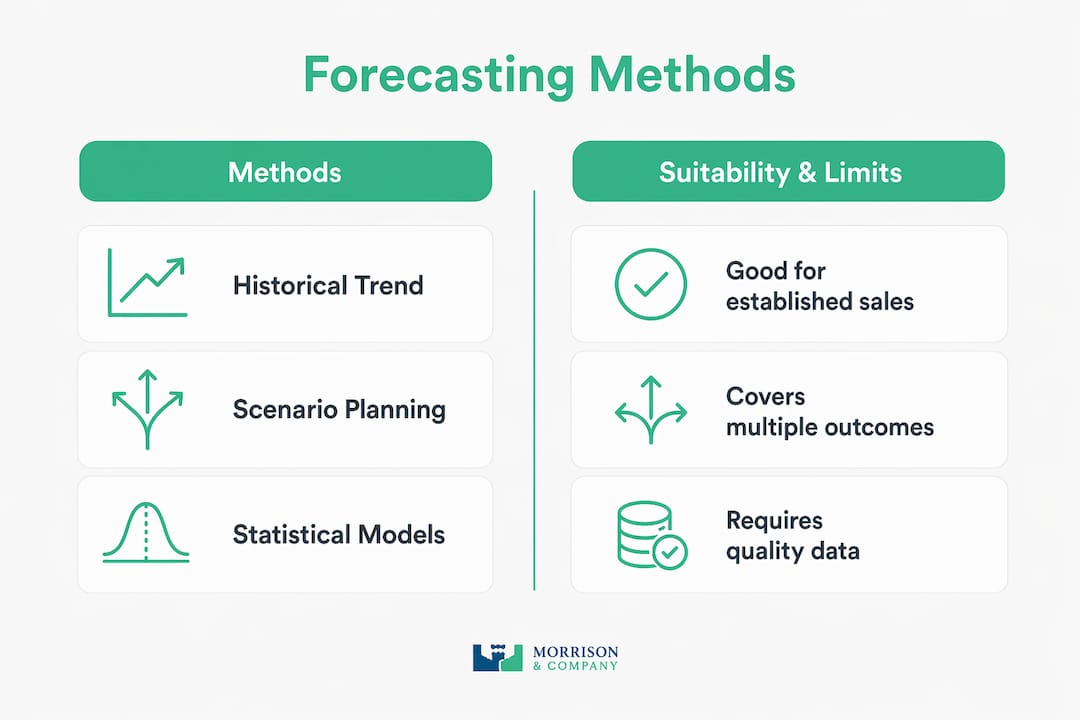
Use historical data and scenario planning
Start with at least two years of sales data, broken down by SKU, channel, and week. Look for patterns in which products spike earliest, which channels drive the most volume, and where fulfilment delays clustered. Then build three scenarios: a base case matching last year’s growth rate, an upside case assuming a stronger promotional response, and a downside case for supply disruptions. Scenario planning forces you to pre-decide your response rather than improvise under pressure.
Pre-stock high-velocity SKUs and set safety stock levels
Once you have your forecast, identify your top 20% of SKUs by volume. These are the products that will drive the majority of your peak revenue. Pre-stock them at a level that covers your upside scenario, not just your base case. Safety stock calculations should factor in supplier lead times, inbound freight delays, and the realistic possibility that your carrier will be slower than usual in november and december.
| Forecasting method |
Best suited for |
Key limitation |
| Historical trend analysis |
Established brands with 2+ years of data |
Misses new product launches |
| Market intelligence signals |
New categories or trend-driven products |
Requires external data sources |
| Scenario planning |
All business sizes |
Requires disciplined pre-season review |
| Multichannel inventory syncing |
Omnichannel sellers |
Sync latency can cause overselling |
Multichannel inventory syncing deserves particular attention. When you sell across your own website, a marketplace, and a wholesale channel simultaneously, stock levels can fall out of sync within minutes during a high-volume period. Build buffer stock specifically to absorb sync delays, and set channel-level inventory caps that prevent any single channel from draining your available stock before others can update.
Pro Tip: Set your inventory reorder triggers at 150% of your normal safety stock level during the six weeks before peak. This gives you a buffer against supplier delays that are common in october and november.
How do you scale warehouse operations during peak demand?
Warehouse capacity is the most common bottleneck during peak season. Adding more staff to a poorly organised warehouse does not fix the problem. Simply increasing labour without improving warehouse layout can worsen congestion and reduce throughput. The layout must come first.

Dynamic slotting and picking strategies
Dynamic slotting means placing your highest-turnover SKUs closest to packing stations. During peak season, your top 20% of products by volume should never require a picker to travel more than a short distance. Optimising warehouse layouts through dynamic slotting reduces wasted motion and physical strain on your team. Reslot your warehouse four to six weeks before peak based on your forecasted top sellers, not last year’s defaults.
Picking strategy also matters at scale. Batch picking groups multiple orders together so one picker collects items for several orders in a single pass. Zone picking assigns pickers to fixed areas, reducing cross-warehouse travel. Wave planning releases orders in timed batches to prevent packing station bottlenecks. Each method suits a different warehouse size and order profile. Most mid-sized operations benefit from combining zone and batch picking during peak.
Warehouse operation best practices
- Cross-train staff across picking, packing, and receiving so you can redeploy people where the bottleneck sits on any given day.
- Use staggered shift patterns to maintain throughput across longer operating hours without burning out your core team.
- Mark clear traffic lanes in the warehouse to prevent picker collisions and congestion near packing stations.
- Conduct a timed trial run of your peak workflow at least three weeks before the season starts. Fix what breaks in the trial, not on Black Friday.
- Review your holiday fulfilment strategy to align warehouse workflows with your promotional calendar.
Pro Tip: Photograph your warehouse layout before and after reslotting. When you run your post-season review, the visual comparison makes it far easier to identify what worked and what to change for next year.
What technology do you need to handle increased orders accurately?
Technology failures during peak season are disproportionately costly. A one-hour outage on Black Friday can cost more revenue than a week of normal trading. The systems that matter most are your Order Management System (OMS), Warehouse Management System (WMS), and Transport Management System (TMS).
Stress test your systems before peak season
Inventory sync latency during peak order surges can cause overselling. The fix is to stress test your OMS at 5–10x your normal webhook volume before the season begins. Simulating this load exposes API rate limits and queue bottlenecks that only appear under pressure. Fix them in september or october, not in december.
Technology readiness checklist
- Audit your OMS for inventory sync frequency. If it updates every 15 minutes, that is too slow during a spike. Push for near-real-time syncing.
- Stress test all webhooks and API connections at 5–10x normal volume. Document every failure point and resolve it before peak.
- Confirm your WMS can handle your forecasted peak pick rate per hour. If it cannot, identify the manual workaround now.
- Activate multicarrier shipping software so you can route parcels across multiple carriers automatically when one hits its volume cap.
- Set up real-time inventory dashboards visible to both your warehouse team and your customer service team. Both need the same data at the same time.
- Review your software integrations to confirm all platform connections are active and tested before peak.
Real-time inventory visibility is not a luxury during peak season. It is the difference between catching an oversell before it ships and issuing a refund after a customer complaint. Automation that flags low stock, triggers replenishment, and routes orders to the correct fulfilment location removes the human error that spikes under pressure.
How to manage carrier relations and shipping logistics during peak periods
Carrier capacity is finite, and every e-commerce brand competes for it during the same six-week window. Locking in and diversifying carrier agreements early, including contingency lanes, is the single most effective way to avoid volume caps and surcharges. Negotiate your peak season contracts in july or august, not october.
A diversified carrier mix should include full truckload (FTL) for bulk replenishment, less-than-truckload (LTL) for mid-volume lanes, and multiple parcel carriers for last-mile delivery. Relying on a single parcel carrier during peak season is a single point of failure. When that carrier hits its cap, your orders queue. Your customers notice before you do.
Carrier management and customer communication best practices:
- Agree volume commitments with each carrier in writing, including contingency lanes for overflow.
- Monitor carrier performance dashboards daily during peak and escalate delays within 24 hours.
- Publish cut-off dates for guaranteed pre-Christmas delivery on your website and in every order confirmation email. Clear communication on cut-off dates reduces panic ordering and customer service pressure.
- Send proactive shipping updates at despatch, in transit, and on the day of delivery. Customers who know where their parcel is make fewer enquiries.
- Build a shipping strategy workflow that maps each carrier to specific order types, weights, and destinations before peak begins.
Parcel surcharges during peak season can erode margins significantly if they are not factored into your pricing model. Carriers apply peak surcharges from october through january. Build these costs into your shipping rate calculations before you set your promotional pricing.
How should you handle post-peak returns and continuous improvement?
Returns are the hidden cost of a successful peak season. Post-holiday returns spike to 3–5 times year-round levels, and the speed at which you process them directly affects your available inventory and cash position. A return sitting uninspected in a cage is revenue you cannot recover.
Fast reintegration is the priority. Every inspected, resaleable return should be back in available stock within 24–48 hours of receipt. Uninspected items held too long reduce available inventory and erode margins significantly. Dedicate a returns processing team during january rather than redeploying all peak staff immediately after christmas.
| Approach |
Benefit |
Risk if neglected |
| Same-day returns inspection |
Restores inventory quickly |
Requires dedicated staffing in january |
| Automated returns portal |
Reduces customer service load |
Needs pre-season setup and testing |
| Post-season operational review |
Captures lessons for next year |
Easily skipped when teams are exhausted |
| Workflow documentation update |
Builds repeatable playbooks |
Loses value if not acted on within 30 days |
The post-season review is where most brands leave value on the table. Run a structured debrief within two weeks of peak ending. Capture what broke, what worked, and what you would do differently. Update your operational playbook immediately while the detail is fresh. Treating seasonal spikes as predictable project phases with repeatable playbooks is what separates brands that grow through peak season from those that merely survive it.
Key takeaways
Effective peak season operations management requires proactive forecasting, warehouse layout changes, technology stress testing, early carrier contracts, and fast returns processing to protect both margins and customer satisfaction.
| Point |
Details |
| Forecast with scenarios |
Build base, upside, and downside demand cases to pre-decide your response before pressure hits. |
| Reslot before peak |
Place top-selling SKUs near packing stations four to six weeks before the season starts. |
| Stress test your OMS |
Simulate 5–10x normal webhook volume to find API limits and queue failures before peak. |
| Diversify carriers early |
Lock in FTL, LTL, and parcel contracts with contingency lanes by august at the latest. |
| Process returns fast |
Inspect and reintegrate resaleable returns within 24–48 hours to recover revenue quickly. |
Spikes are not crises. They are calendared events.
The most damaging belief I see in e-commerce operations is that peak season chaos is inevitable. It is not. The brands that struggle every november and december are almost always the ones that started planning in october. The ones that come through with strong margins and good reviews started in july.
What I have found consistently is that the warehouse layout problem gets underestimated every single time. Teams hire more people, the warehouse gets more crowded, and throughput actually drops. The fix is not more bodies. It is better slotting, clearer traffic lanes, and a picking method matched to your order profile. Do that first, then scale the headcount.
Technology stress testing is the other area where I see brands take unnecessary risks. An OMS that works perfectly at normal volume can fail completely at 8x volume. That is not a software flaw. It is a configuration issue that only shows up under load. Test it. Fix it. Then go into peak season with confidence rather than hope.
The brands I respect most treat their peak season playbook as a living document. They update it within two weeks of peak ending, while the lessons are still sharp. By the time july arrives, they are refining a proven system rather than rebuilding from scratch. That compounding effect is what turns a good peak season into a genuinely great one.
— ChiefPlaneteer
How Parcelplanet supports your peak season fulfilment
Peak season puts every part of your logistics operation under pressure at once. Parcelplanet’s order fulfilment services are built to absorb that pressure on your behalf, with flexible warehousing, real-time inventory visibility, and integrations across leading e-commerce platforms and courier networks.

Whether you are managing a 3x volume increase or preparing for a 10x Black Friday spike, Parcelplanet’s team handles the pick, pack, and ship cycle so your focus stays on growth rather than operations. From multichannel inventory syncing to multicarrier despatch, the infrastructure is already in place. Get in touch with Parcelplanet to request a tailored quote and find out how scalable fulfilment can protect your peak season margins.
FAQ
What is the typical order volume increase during peak season?
Multi-channel e-commerce sellers should expect a 3–10x increase in daily order volume, with Black Friday and Cyber Monday hitting the upper end of that range.
How early should I lock in carrier contracts for peak season?
Negotiate and confirm carrier agreements, including contingency lanes, by july or august. Waiting until october leaves you competing for limited capacity at higher surcharge rates.
Why do post-peak returns cause profitability problems?
Post-holiday returns spike to 3–5 times year-round levels. Uninspected returns held in a returns queue reduce available inventory and prevent revenue recovery.
How do I prevent overselling during a high-volume spike?
Stress test your OMS at 5–10x normal webhook volume before peak season. This identifies API rate limits and sync latency issues that cause overselling under load.
When should I reslot my warehouse for peak season?
Reslot your warehouse four to six weeks before peak begins, placing your forecasted top-selling SKUs closest to packing stations to reduce picker travel time and congestion.
Recommended


