TL;DR:
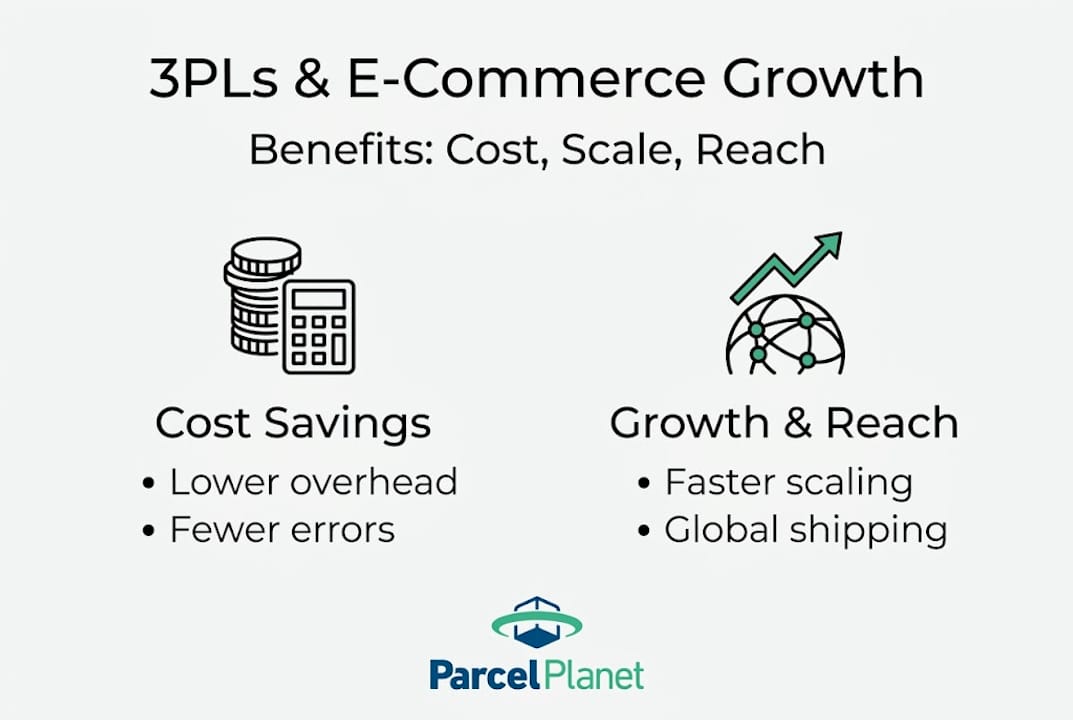
- 3PLs reduce fulfillment costs by 20 to 30% and help brands scale efficiently.
- They handle warehousing, order processing, shipping, and returns, enabling focus on core business areas.
- Strong 3PL partnerships support international growth, ensure high accuracy, and adapt to demand spikes.
Managing your own fulfilment sounds straightforward until growth hits. Warehouse space runs out, shipping costs climb, and order errors start affecting your customer reviews. The good news is that 3PLs reduce fulfilment costs by an average of 20 to 30%, with SMEs saving up to $150,000 annually in fixed costs alone. For brands processing 500 orders per month, a 3PL can be around 41% cheaper than in-house operations. This guide explains exactly how third-party logistics providers deliver those savings, how they help you scale without operational pain, and what to look for when choosing the right partner for your business.
Table of Contents
Key Takeaways
| Point |
Details |
| Major cost savings |
Switching to a 3PL typically cuts fulfilment and inventory costs by over 20%. |
| Scalable operations |
3PLs enable brands to handle growth, order spikes, and cross-border sales smoothly. |
| High reliability |
Leading 3PLs achieve 99.8% order accuracy and 95% on-time delivery for e-commerce brands. |
| SME-friendly solutions |
Small and mid-sized businesses can access advanced logistics, not just large companies. |
| More time for growth |
Partnering with a 3PL lets teams focus on expansion, products, and customers rather than back-end logistics. |
What are 3PLs and why businesses turn to them
A third-party logistics provider, or 3PL, is an outsourced partner that handles the physical and operational side of your supply chain. That includes warehousing your inventory, processing incoming orders, picking and packing products, managing courier handovers, and handling customer returns. Rather than running these operations yourself, you hand them over to a specialist who already has the infrastructure, systems, and trained staff in place.
Understanding what is 3PL is the first step many growing brands take before making the transition. At its core, the 3PL model allows you to focus on what you do best — product development, marketing, and customer acquisition — while your logistics partner manages the complexity of getting orders out the door accurately and on time.
The numbers tell a clear story about why brands are choosing this route. 75% of e-commerce businesses now outsource to 3PLs, with 68% of US shippers using a 3PL provider. Global confidence in the 3PL model is growing too. The global 3PL market stood at $1.12 trillion in 2022 and is projected to reach $2.01 trillion by 2030, growing at a compound annual rate of 8.2%. That level of market growth reflects genuine business trust, not just a passing trend.
“Outsourcing logistics to a specialist allows growing brands to access enterprise-level infrastructure without the capital investment of building it themselves.”
Here is what a strong 3PL partner typically handles on your behalf:
- Warehousing and inventory management: Storing your stock in strategically located fulfilment centres, with real-time inventory tracking integrated into your sales platforms
- Order processing: Receiving and verifying orders from multiple sales channels, whether that is your own website, a marketplace, or a wholesale account
- Picking and packing: Selecting the correct items from storage and packing them to your brand’s specifications, including branded packaging if required
- Shipping and courier management: Coordinating with courier networks to despatch orders quickly and at negotiated rates
- Returns handling: Processing customer returns efficiently, restocking usable items, and keeping your inventory records accurate
The expertise and technology that 3PLs bring are also significant. Most established 3PL providers use Warehouse Management Systems (WMS) that integrate directly with platforms like Shopify, WooCommerce, or Amazon Seller Central. This means your orders flow automatically into their system without manual intervention, reducing delays and the risk of human error. The role of 3PLs reducing SME costs extends well beyond just saving money on postage — it is about gaining access to systems and expertise that would otherwise require significant capital to build internally.
How 3PLs cut costs and boost profit margins
Now that the role of 3PLs is clear, let us examine how they directly impact your bottom line. Cost reduction is one of the most compelling reasons brands make the switch, and the savings come from multiple directions simultaneously.
Here is a breakdown of where the savings typically come from:
| Cost area |
In-house fulfilment |
With a 3PL |
Typical saving |
| Warehousing |
Lease, utilities, fit-out |
Shared space, pay per pallet |
25% lower |
| Shipping rates |
Standard carrier rates |
Negotiated bulk rates |
15 to 40% lower |
| Labour |
Fixed staff costs |
Flexible, shared workforce |
Significant reduction |
| Inventory holding |
Full carrying cost |
Optimised stock levels |
Up to 25% lower |
| Technology |
WMS investment needed |
Included in 3PL service |
No capital outlay |
The economics are stark. SMEs save an average of $150,000 annually in fixed costs by moving to a 3PL, and the return on investment typically reaches 3.5x within the first year. Shipping discounts alone range from 15 to 40%, because 3PLs consolidate volumes across many clients and negotiate preferential rates with courier networks that no individual SME could achieve independently.
The savings extend beyond direct costs. Inventory holding costs drop by around 25% when a 3PL manages your stock levels, because experienced fulfilment teams use demand data to keep your inventory lean without risking stockouts. This has a direct positive effect on your cash flow, freeing up capital you would otherwise have tied up in excess stock.
Pro Tip: When calculating whether a 3PL will save your business money, factor in not just warehouse rent and shipping costs but also the hidden expenses: staff training, warehouse equipment, insurance, and the management time you spend overseeing logistics operations. These costs often add up to more than brands initially realise.
Accuracy improvements also contribute to profitability. Fewer mis-picks and incorrect shipments mean fewer returns to process, fewer replacement orders to despatch, and fewer customers asking for refunds. A high-quality 3PL delivers 3PL cost savings in 2026 not only through negotiated rates but through the operational precision that protects your margins from avoidable errors.
- Reduced returns costs: Fewer order errors mean fewer expensive reverse logistics processes
- Lower overhead: No fixed lease commitments or equipment maintenance costs
- Flexible capacity: Pay for the space and labour you actually use, not a fixed overhead regardless of order volume
- Improved cash flow: Less capital tied up in warehouse infrastructure and excess inventory
The decision to start outsourcing fulfilment to boost growth is increasingly seen not just as a cost measure but as a strategic move that allows reinvestment into marketing, product development, and customer experience rather than logistics infrastructure.
Scaling order fulfilment for rapid and global growth
Beyond costs, let us look at how 3PLs enable seamless, scalable growth. One of the biggest operational challenges for growing e-commerce brands is managing unpredictable demand. A successful influencer collaboration, a seasonal sale, or an unexpected viral moment can triple your daily order volume overnight. If your fulfilment operation is in-house, that spike creates serious problems. Staff overtime, packaging shortages, delayed despatch, and unhappy customers can quickly follow.
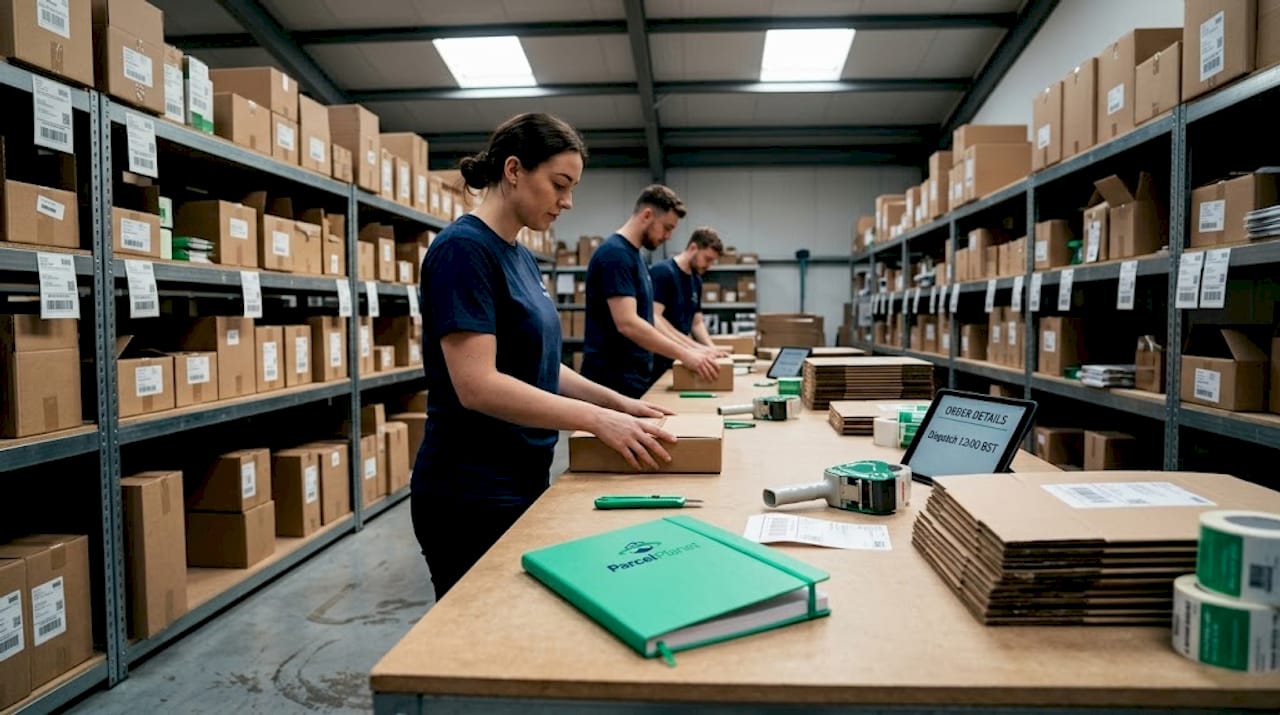
A 3PL absorbs that volatility. Because they manage fulfilment for multiple clients simultaneously, they have flexible labour pools, ample warehouse capacity, and established processes for handling sudden volume increases without the chaos that affects in-house operations.
Here is how in-house and 3PL fulfilment compare when it comes to scalability:
| Scenario |
In-house fulfilment |
3PL fulfilment |
| Black Friday spike |
Hire temps, risk errors, possible delays |
Existing flexible workforce scales up |
| International expansion |
New warehouse, local staff, import processes |
Existing global network activated |
| New product launch |
Space, staff, and process changes needed |
Seamless integration into current processes |
| Slow season |
Fixed costs remain |
Costs scale down with volume |
For international growth specifically, 3PLs offer a clear advantage. Setting up your own warehouse operation in a new country involves legal structures, local employment law, import duties, and local courier relationships. A 3PL already has this infrastructure in place. You can access it immediately.
Here is how a 3PL typically supports a cross-border expansion:
- Market assessment: Your 3PL partner advises on fulfilment locations that best serve your target markets, balancing speed and cost
- Inventory positioning: Stock is placed in the most strategically advantageous warehouse locations for your international customers
- Platform integration: Your international sales channels connect directly to the 3PL’s WMS, so orders from every market flow into one system
- Customs and compliance: Experienced 3PLs handle documentation, duties, and customs declarations for international shipments
- Local courier partnerships: Established relationships with trusted local carriers ensure reliable last-mile delivery in each market
- Real-time tracking: Customers in every market receive accurate tracking updates, improving satisfaction and reducing support queries
The reliability data supports scaling with third-party logistics as a dependable strategy. Leading 3PLs achieve fulfilment accuracy of 99.8% and on-time delivery rates of 95%, even during peak trading periods. These are standards that most in-house operations struggle to maintain consistently, particularly when order volumes surge unpredictably.
When choosing a scalable 3PL, look for a provider with documented performance metrics, a proven track record in your target markets, and the technological integrations your sales channels require. Scalability is not just about physical space; it is about systems, processes, and people that can grow alongside your brand without missing a beat.
Choosing the right 3PL for your business needs
Ready to explore 3PL partnerships? Here is how to choose the best fit for your e-commerce brand. The selection process matters enormously. A poor choice at this stage can create operational disruptions that are difficult and costly to unwind.
Start with these essential criteria when evaluating potential 3PL partners:
- Location and network: Does the 3PL have fulfilment centres that are geographically well-placed to serve your existing and planned customer base? Proximity to your customers reduces transit times and shipping costs.
- Technology and integration capability: Can their WMS integrate directly with your e-commerce platforms and marketplaces? Look for native integrations with Shopify, WooCommerce, Amazon, and any other channels you sell through.
- Sector experience: A 3PL with experience handling similar products to yours will understand your specific requirements, whether that is temperature control, fragile goods, branded unboxing experiences, or high-value items.
- Transparency and reporting: You need real-time visibility over your stock levels, order status, and despatch performance. A strong 3PL provides clear dashboards and proactive communication.
- Flexibility in contract terms: Avoid providers who lock you into rigid, long-term agreements with heavy exit penalties before you have had a chance to assess performance properly.
- Customer service quality: When issues arise, and they do in any logistics operation, how responsive and solution-focused is the team? Ask about their escalation processes and account management approach.
A common mistake brands make is choosing a 3PL based on price alone. The cheapest option rarely delivers the accuracy, reliability, or communication quality that your business needs at a growth stage. Given that ROI reaches 3.5x in the first year for brands that choose well, the selection criteria should prioritise performance over the lowest possible quote.
Pro Tip: Request a trial period or a phased onboarding process with any potential 3PL partner. This allows you to assess their operational quality, system integrations, and communication standards before committing your full inventory and order volume to them.
Another frequently overlooked factor is the contract’s SLA (Service Level Agreement) terms. Confirm exactly what performance standards your 3PL is committing to in writing, including order accuracy rates, despatch timelines, and returns processing speeds. These commitments are your protection if performance falls short of expectations, and a confident, reputable 3PL will have no difficulty putting them in writing. For a detailed evaluation framework, our in-depth guide on choosing a 3PL walks through each stage of the selection process with practical checklists and questions to ask potential partners.
A fresh perspective: what most guides miss about 3PLs
Most guides focus on numbers and processes, and those absolutely matter. But there is a dimension of 3PL partnerships that rarely gets discussed honestly: the human and cultural elements of outsourcing your fulfilment.
When you move your logistics operation out of your own hands, you are trusting another organisation with your customer’s experience. That trust takes time to build and requires active investment from both sides. Brands that treat a 3PL relationship as purely transactional often find that communication gaps emerge, and small problems escalate unnecessarily.
The brands that get the most from outsourcing fulfilment treat their 3PL as an extension of their own team. They share sales forecasts proactively. They communicate upcoming promotions well in advance. They invest time in onboarding sessions to ensure the 3PL’s team understands their brand standards and priorities.
There is also a learning curve that most brands underestimate. Aligning your internal systems with a 3PL’s WMS takes time and careful testing. Setting up automations, checking that inventory counts match in real time, and confirming that returns workflows function correctly all require attention in the early weeks. Brands that rush this phase can face a difficult first month of trading.
Our honest recommendation: prioritise relationship quality and communication standards in your selection process, alongside the technical criteria. The most accurate fulfilment data in the world means little if your account manager does not return calls promptly when something goes wrong.
How ParcelPlanet supports your e-commerce growth
If you are weighing up your options for third-party logistics, ParcelPlanet is built around the needs of growing e-commerce brands. Our order fulfilment services are designed to integrate seamlessly with your sales channels, scale alongside your order volumes, and deliver the accuracy and speed your customers expect.

Understanding what is order fulfilment and how it fits into your growth strategy is where we start every conversation. Whether you are processing hundreds of orders a week or planning a major international expansion, our team works with you to build a fulfilment solution that fits your brand and supports your next stage of growth. Get in touch today for an obligation-free quote, and let our experience work for your business.
Frequently asked questions
How much money can switching to a 3PL save my e-commerce brand?
Brands typically save 20 to 30% on fulfilment and up to $150,000 annually in fixed costs, with a typical ROI of 3.5x achieved within the first year of partnering with a 3PL.
Are 3PLs only for large retailers?
Not at all. SMEs save $150,000 annually in fixed costs by using a 3PL, gaining access to infrastructure, technology, and negotiated shipping rates that were previously only available to large-scale retailers.
How reliable are 3PLs when it comes to order accuracy and delivery?
Top-performing 3PLs achieve 99.8% order accuracy and on-time delivery rates of 95%, standards that consistently outperform most in-house fulfilment operations, particularly during peak trading periods.
Can a 3PL help my brand expand internationally?
Yes. Established 3PLs have the warehouse networks, customs knowledge, local courier relationships, and technology integrations required to support cross-border fulfilment across multiple markets simultaneously.
What is the global market size for 3PL services?
The global 3PL market is projected to grow from $1.12 trillion in 2022 to $2.01 trillion by 2030, reflecting a compound annual growth rate of 8.2% and strong, sustained confidence from businesses worldwide.
Recommended


