TL;DR:
- Order tracking is based on barcode scans at checkpoints, not real-time parcel movement, causing possible gaps.
- Modern technologies like RFID, GPS, and AI enhance visibility but complement, not replace, core scanning systems.
Most e-commerce businesses assume order tracking is a live feed showing their parcel moving in real time across a map. It is not. Understanding how order tracking works reveals a checkpoint-based system where barcode scans at specific locations generate timestamped status updates. The gap between those scans is where confusion, panicked customers, and unnecessary support tickets live. This guide walks you through the full order tracking process, from the mechanics behind the system to the technologies reshaping it in 2026, plus practical steps to use tracking as a genuine business tool.
Table of Contents
Key takeaways
| Point |
Details |
| Tracking is checkpoint-based |
Status updates fire when barcodes are scanned, not as parcels move continuously between locations. |
| Tracking gaps are normal |
Freeze periods of 24 to 48 hours between scan points are standard and do not mean a parcel is lost. |
| Technology is advancing fast |
RFID, vehicle GPS, and AI tools like Apple Wallet now complement checkpoint scanning for better visibility. |
| Tracking reduces support load |
Proactive status notifications significantly cut “Where is my order?” queries and lower support costs. |
| Integration multiplies value |
Connecting tracking with inventory, returns, and payment systems creates one reliable operational source of truth. |
How order tracking works step by step
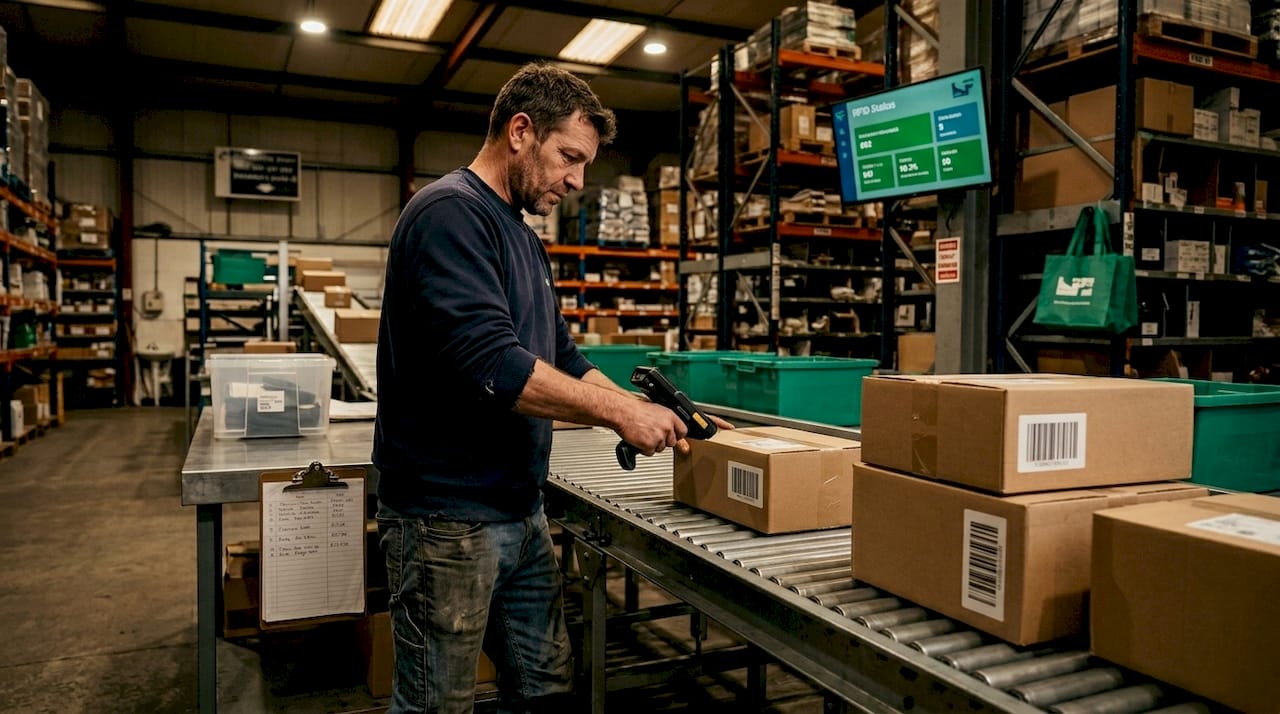
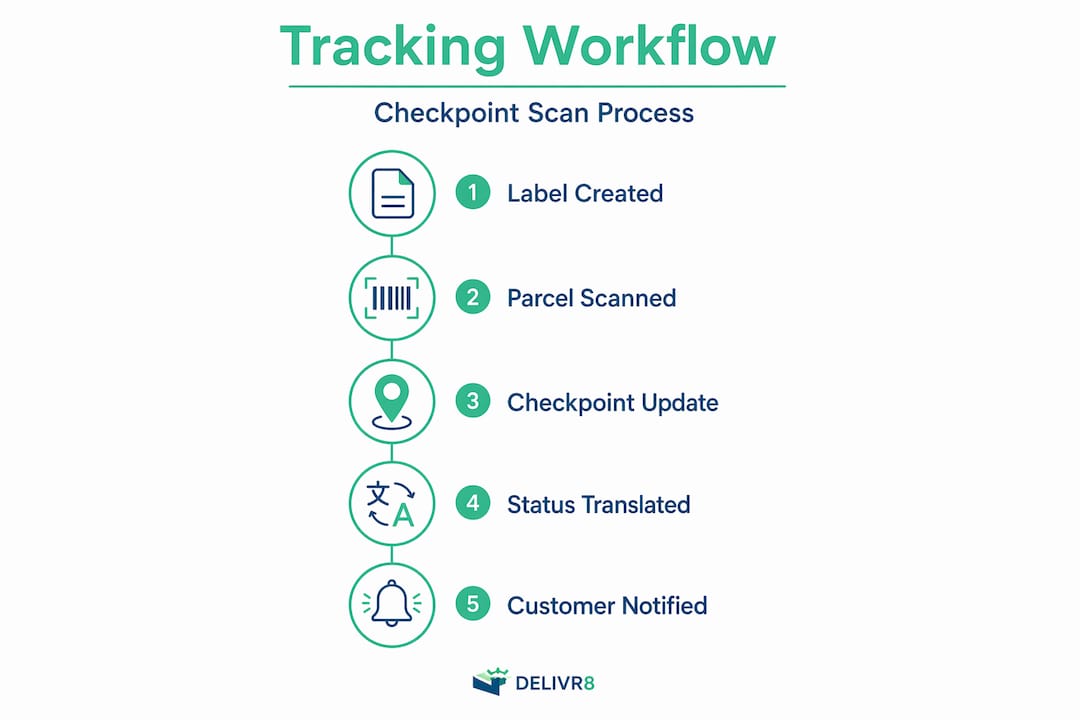
The order tracking process begins the moment a shipping label is created. That label carries a unique barcode or QR code tied to the order record in your system. Everything that follows depends on that code being scanned at the right moments.
Here is what happens at each stage of the fulfilment journey:
- Label creation. A unique tracking number is generated and assigned to the parcel. This number links to the courier’s system and becomes the identifier for all subsequent scan events.
- Carrier pickup. The courier scans the parcel at collection. This is often the first visible tracking event customers see, confirming the order has left your facility.
- Sorting hub arrival. When the parcel reaches a regional or national sorting centre, it is scanned again. This update typically shows as “in transit” or “arrived at facility.”
- Hub departure. Another scan fires when the parcel leaves the sorting hub, confirming onward movement toward the delivery region.
- Delivery station arrival. The parcel is scanned into the local delivery depot closest to the recipient. This often triggers an “out for delivery” notification the following morning.
- Final delivery. The delivery driver scans the parcel at the door, or captures a digital proof of delivery, closing the tracking loop.
The critical thing to understand is that tracking updates are triggered by scans, not by continuous movement. A parcel loaded onto a lorry at a sorting hub and driven overnight generates no new tracking event until it is scanned at the next facility. That is why customers sometimes see no movement for an extended period while their parcel is actively travelling.
Status messages also require translation. Raw scan data from a courier system uses internal codes that need mapping to readable customer-facing language. If your order management system does not handle this translation well, customers receive cryptic updates that generate more confusion than clarity.
Pro Tip: Set customer expectations on your order confirmation email by explaining that tracking updates appear at scan points, not continuously. A single sentence here reduces a significant volume of “Where is my order?” contacts.
Modern technologies improving tracking visibility
Checkpoint scanning remains the backbone of the order tracking system explained above, but several technologies now sit alongside it to fill the gaps and improve both operational and customer visibility.
- RFID at sorting centres. RFID gates scan multiple packages simultaneously as they pass through, removing the bottleneck of individual barcode scanning at high-volume hubs. This means tracking data updates faster during peak periods when manual scanning falls behind.
- Vehicle GPS for ETA accuracy. Delivery vehicles carry GPS units that feed location data into courier platforms. This does not track your parcel directly. Standard parcels do not carry GPS. Instead, vehicle location data is used to calculate dynamic ETAs, which is why some carriers can now give a delivery window of one to two hours rather than a full day.
- AI-powered consumer tracking. One of the more notable developments in 2026 is Apple Wallet’s on-device AI parsing shipping confirmation emails automatically to surface order status without any direct API setup from the merchant. Customers using iOS 26 can enable this via the Mail (Beta) toggle and see tracking details appear in Wallet without the retailer doing anything differently. This matters for merchants because it raises the baseline expectation customers have for tracking visibility, regardless of platform.
- AI in logistics more broadly. Beyond consumer-facing tools, AI applications in e-commerce are increasingly used to predict delivery exceptions before they happen, allowing operations teams to act proactively rather than reactively.
None of these technologies replace checkpoint scanning. They complement it by providing better data in the spaces between scan events and by surfacing that data more intelligently to end users.
Pro Tip: If you work with multiple carriers, verify which ones use RFID at their sorting hubs. Carriers without RFID may show longer tracking gaps during peak volume periods, and knowing this helps you set accurate customer expectations by carrier.
The business benefits of strong order tracking
The benefits of order tracking go well beyond keeping customers informed. When your tracking setup is solid, it changes how your entire operation functions.
- Fewer support contacts. Proactive status updates significantly reduce the volume of “Where is my order?” queries reaching your support team. That means less labour cost, faster response times on genuine issues, and a better customer experience overall.
- Connected operational workflows. Modern tracking platforms integrate with inventory management, payment confirmation, and returns processing. When a delivery is confirmed, the system can automatically close the order, update stock levels, and trigger a review request without manual intervention.
- Better decision-making. Real-time tracking data gives logistics managers the visibility to spot bottlenecks. If parcels consistently show a long delay at one particular hub, that is data you can act on, whether by changing carrier lanes or adjusting dispatch schedules.
- Carrier accountability. When tracking data is recorded and stored, you have evidence to challenge courier performance claims. This matters at contract renewal time and when investigating lost or delayed consignments.
- Customer loyalty. Buyers who receive accurate ETAs and exception alerts when something changes report higher satisfaction and are more likely to purchase again. Tracking becomes part of the post-purchase experience, not just a logistics utility.
Tracking systems that unify workflows across finance, customer support, and fulfilment teams also reduce the manual reconciliation work that consumes significant operational time in growing businesses.
Common challenges and how to handle them
Even well-configured tracking systems run into problems. Knowing the causes means you can resolve them faster and communicate better with customers when they arise.
| Challenge |
Cause |
Best practice |
| Tracking freeze |
No scan between checkpoints |
Inform customers upfront that 24 to 48 hour gaps are normal |
| Missing scan event |
Barcode damaged or missed at hub |
Set up courier exception alerts to flag missing milestone scans |
| Customs delay |
Regulatory hold at border |
Use exception codes to surface customs status as a distinct update |
| Data sync lag |
API delay between courier and platform |
Monitor sync frequency; increase API polling during peak periods |
| Multi-carrier inconsistency |
Different carriers use different status codes |
Implement a unified tracking platform that normalises carrier data |
Missed scans and customs holds account for the majority of tracking complaints, but they rarely indicate a lost parcel. The problem is that customers interpret a frozen tracking page as something being wrong, which is why proactive communication matters so much.
Standardising exception codes and milestone models across your carrier portfolio is one of the highest-value operational changes you can make. When every carrier’s data maps to the same internal status model, your customer notifications become consistent regardless of which courier handled the parcel.
Pro Tip: Connect your tracking platform to your order management system so that exception events trigger automated customer notifications. A proactive “your parcel is experiencing a short delay” message sent before the customer notices is far better for retention than a support ticket filed after hours of silence.
Choosing and scaling an order tracking system
Once you understand the order tracking process, the next step is applying that knowledge to select or upgrade the tools supporting it. The right system depends on your order volume, carrier mix, and the complexity of your sales channels.
Key features to evaluate when assessing order tracking software:
- Carrier integrations. Does the platform connect to all the couriers you use, including regional carriers for international markets?
- Inventory and returns links. Can confirmed deliveries and failed attempts automatically update your stock and returns workflows?
- Customer-facing notifications. Does the platform send branded, plain-language updates by email and SMS at key milestones?
- Exception management. Can you configure alerts for specific events like missed scans, customs holds, or delivery failures?
- Multichannel support. If you sell across multiple platforms, does the tracking layer consolidate data from all channels into one view?
For growing businesses, the shift toward centralised tracking and fulfilment platforms becomes critical at around the point you are managing several hundred orders a day across more than two carriers. Below that threshold, manual processes are manageable. Above it, they become a liability.
Effective tracking requires integration across fulfilment, CRM, ERP, and financial systems to create a single source of truth and remove the manual data reconciliation that slows operations. Evaluating a software tool purely on its tracking UI misses this point. The connections it makes with the rest of your stack are where the real operational value sits.
A ShipStation integration, for example, can consolidate post-purchase tracking and returns in one environment, which makes scaling multichannel operations considerably more manageable.
My take on what most businesses get wrong
I have worked with enough e-commerce operations to notice a consistent pattern. When tracking goes quiet for 36 hours, someone internally raises an alarm. The support team starts fielding calls. The ops manager contacts the courier. And nine times out of ten, the parcel arrives the next day exactly as scheduled. The panic was caused by a normal tracking gap, not a lost shipment.
The real cost is not the parcel. It is the time wasted and the customer trust eroded by poor communication during that gap.
What I find most telling is that businesses often invest heavily in their pre-purchase experience and almost nothing in the post-purchase communication layer. Yet the majority of customer loyalty decisions happen after the order is placed. A customer who receives a clear “your parcel is at the local depot and will be delivered tomorrow” message at 7pm feels cared for. A customer who sees no update for two days and has to chase feels abandoned.
The other misconception worth addressing directly is that tracking is a courier’s responsibility. It is not. The courier owns the scan data. You own the customer relationship. How you translate that scan data into a communication experience is entirely within your control, and the businesses that get this right build a meaningful advantage over those that do not.
The order tracking best practices that genuinely move the needle are rarely technical. They are about deciding what you want your customer to feel at each stage of the delivery journey and then building the communication layer to deliver that consistently.
— Lukasz
Take your tracking further with Parcelplanet
If this article has highlighted gaps in your current tracking setup, Parcelplanet can help you close them. As a dedicated order fulfilment partner for e-commerce and omnichannel brands, Parcelplanet handles warehousing, picking, packing, and shipping with tracking visibility built in from the start.
Parcelplanet’s software integrations connect your e-commerce platforms and courier services to a unified fulfilment workflow, giving you automated tracking updates, multichannel coordination, and consistent customer communications without the operational overhead of managing it in-house. Whether you are scaling rapidly or looking to remove fulfilment complexity from your plate, Parcelplanet’s team brings the infrastructure and expertise to support reliable, accurate delivery at every stage. Get in touch for a tailored quote.
FAQ
What is the order tracking process from start to finish?
The order tracking process starts when a shipping label with a unique barcode is created. The parcel is then scanned at each stage of its journey including pickup, sorting hubs, and delivery depots, with each scan generating a timestamped status update visible to the customer.
Why does my order tracking show no movement for days?
Tracking updates only appear when a barcode is scanned, so a parcel actively travelling between scan points will show no update for 24 to 48 hours. This is normal and does not indicate a problem.
How do I track my order across multiple carriers?
Using a centralised tracking platform that normalises data from multiple carriers into a consistent status model is the most reliable approach. This gives you and your customers a uniform experience regardless of which courier is handling the parcel.
What are the main benefits of order tracking for e-commerce businesses?
The core benefits of order tracking include reduced customer support contacts, better operational visibility, carrier accountability, and improved post-purchase customer experience. These collectively contribute to higher customer retention and lower operational costs.
Does order tracking use GPS to show live parcel location?
Standard parcels do not carry GPS devices. Vehicle GPS is used by couriers to calculate ETAs, but the parcel-level tracking you see is generated by barcode scans at fixed checkpoints, not continuous location monitoring.
Recommended