TL;DR:
- The key fulfillment trends in 2026 include AI-powered warehouse automation, micro-fulfillment centers, strategic 3PL integration, and rising returns costs. These operational realities are shaping how e-commerce brands optimize speed, efficiency, and margins in a highly competitive environment. Prioritizing data quality and collaborative planning is essential to fully leverage these technological and strategic advancements.
The latest fulfilment trends in 2026 are defined by four converging forces: AI-powered warehouse automation, micro-fulfilment network expansion, strategic 3PL integration, and a reverse logistics crisis that is actively eroding margins. These are not emerging concepts on the horizon. They are operational realities reshaping how e-commerce brands pick, pack, ship, and recover goods right now. If you are a logistics manager or supply chain strategist, understanding each of these shifts, and how they interact, is the difference between a profitable peak season and a costly one.
What are the latest fulfilment trends in 2026?
The four trends dominating 2026 fulfilment strategy are warehouse AI adoption, micro-fulfilment centre growth, 3PL network embedding, and the rising cost of returns. Each is data-backed and already influencing how leading brands structure their operations. According to a survey of logistics leaders, 93% are redesigning their fulfilment operations this year, while 38% are actively recalibrating customer expectations toward slower delivery windows. That figure signals a sector under genuine structural pressure, not merely incremental change.
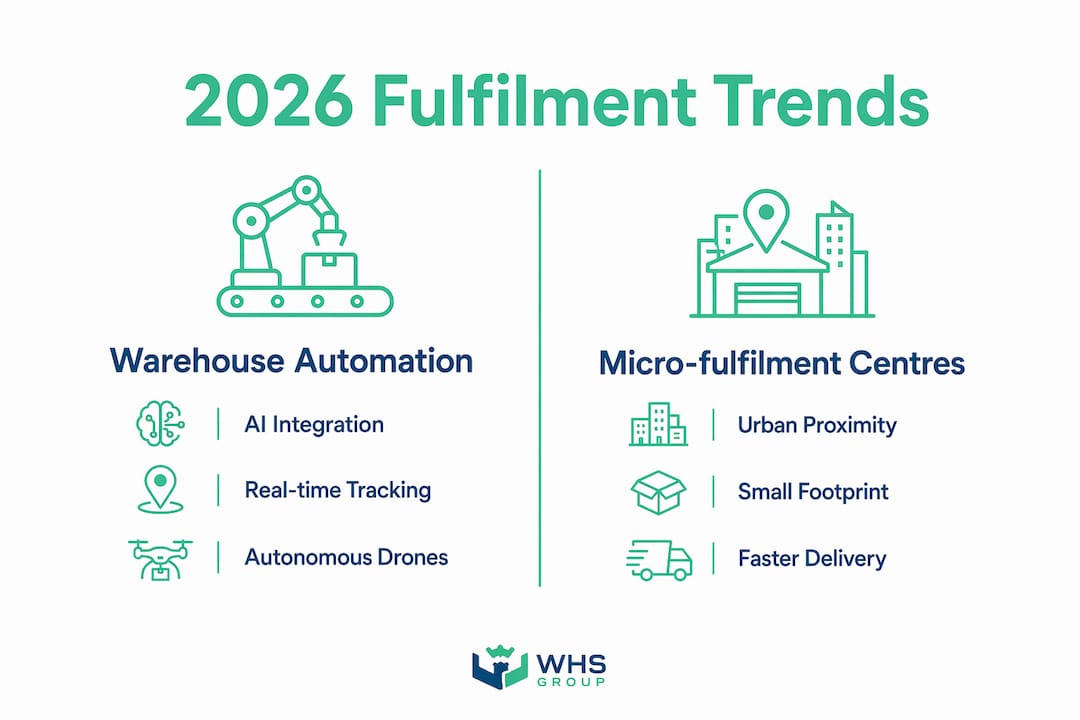
KNAPP, one of the most cited names in warehouse technology, has published research showing AI is now embedded as a co-pilot in warehouse execution systems (WES) and warehouse management systems (WMS). The micro-fulfilment market is projected to reach $13.13B in 2026, growing at a 43.9% compound annual growth rate. Meanwhile, returns processing costs have jumped sharply, creating a new financial pressure point for 3PLs and the brands they serve. These are the numbers that should be shaping your planning conversations today.
AI in warehouse logistics has moved well beyond predictive analytics dashboards. In 2026, AI acts as a co-pilot in WES and WMS platforms, autonomously balancing workloads, prioritising orders, and managing exceptions in real time. This shift from passive reporting to active execution is the most significant change in warehouse management in a decade.
The specific technologies driving this change include:
- Computer vision and zero-touch quality control. AI-powered cameras now inspect goods at the point of receipt and during returns processing, reducing manual grading errors and speeding up inbound workflows without adding headcount.
- Swarm intelligence for robotic fleets. Multi-agent AI systems coordinate groups of autonomous mobile robots (AMRs), dynamically re-routing units based on live order priority and congestion data.
- AI-powered demand forecasting. Machine learning models analyse historical sales, promotional calendars, and external signals to anticipate volume surges before they hit the warehouse floor.
- Digital twins for scenario planning. Digital twins enable proactive self-optimising platforms, allowing operations teams to simulate layout changes and throughput scenarios before committing to physical adjustments. Siemens and KION Group are actively deploying this capability across major distribution centres.
- Robotics as a Service (RaaS). Subscription-based robotic deployment removes the capital expenditure barrier, making automation accessible to mid-market brands that previously could not justify the upfront cost.
A pilot in a 50,000 sqm Singapore cargo yard is already using Dassault Systèmes 3DEXPERIENCE alongside autonomous drones and rovers to deliver real-time asset visibility. This is not a future concept. It is a working model. For a deeper look at how automation is reshaping logistics operations, the 2026 automation guide from Parcelplanet covers the practical implementation steps in detail.
Pro Tip: AI is only as accurate as the data feeding it. Before deploying any AI-driven forecasting or quality control tool, audit your inventory data for completeness, consistency, and real-time accuracy. Poor data quality is the single most common reason AI warehouse projects underdeliver.
Why are micro-fulfilment centres growing so fast?
Micro-fulfilment centres (MFCs) are defined as small-format warehouses, typically 5,000 to 15,000 square feet, positioned close to urban demand centres to enable ultra-fast last-mile delivery. Micro-warehouses have grown 340% since early 2024, and 67% of e-commerce orders now ship within two hours in 2026. That speed benchmark is rapidly becoming a baseline customer expectation rather than a premium differentiator.
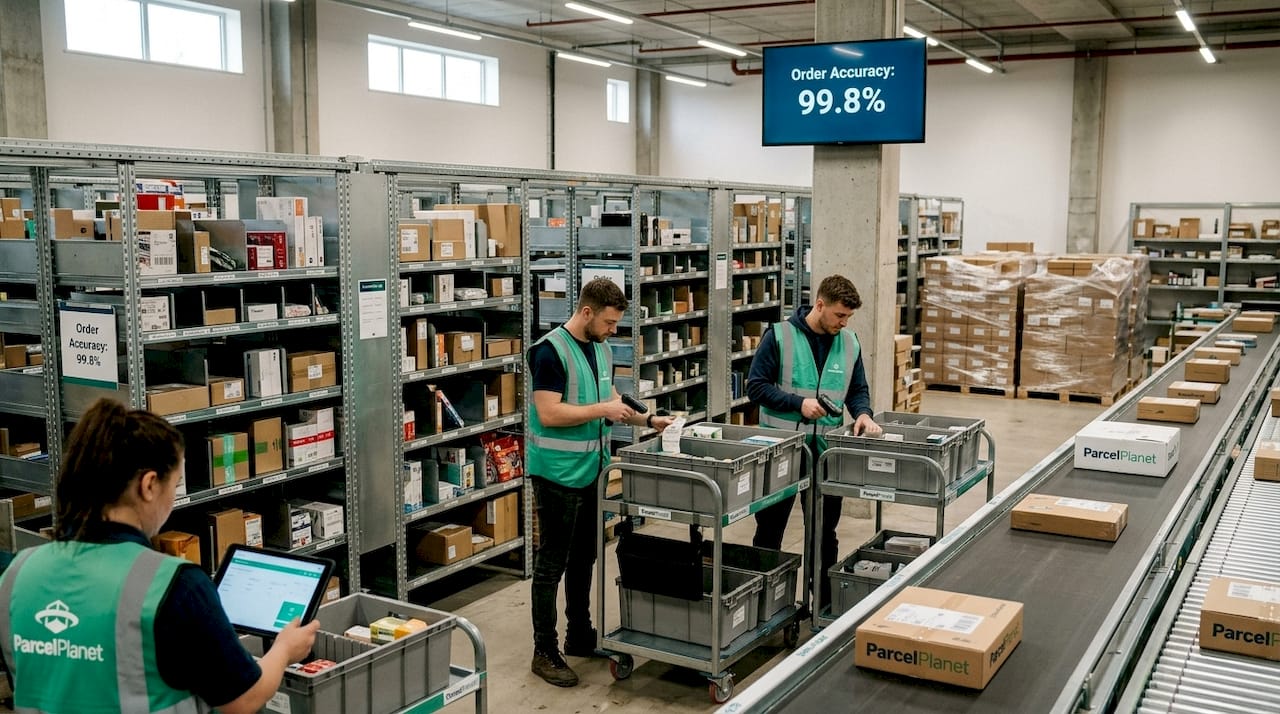
Mid-market retailers are adopting MFCs fastest, with a 73% adoption rate among that segment. The economics are compelling: mid-market DTC brands using robotic fulfilment saw average shipping and handling costs drop 31% compared to traditional warehouses, with brands carrying fewer than 500 SKUs and average order values between £35 and £150 achieving 34% savings on average.
The table below compares traditional distribution centre models against micro-fulfilment operations across the metrics that matter most to logistics planners.
| Metric |
Traditional distribution centre |
Micro-fulfilment centre |
| Facility size |
100,000+ sq ft |
5,000–15,000 sq ft |
| Delivery speed |
Next day to 3 days |
Same day to 2 hours |
| Staffing model |
Large permanent workforce |
Lean team with robotics |
| SKU capacity |
High (broad catalogue) |
Focused (fast-moving SKUs) |
| Setup cost |
High capital investment |
Lower, especially with RaaS |
| Urban penetration |
Low (edge of city) |
High (within city) |
The critical lesson from early MFC deployments is that hardware is not the hard part. Micro-fulfilment ROI depends more on effective operational orchestration, including slotting logic, dispatch sequencing, and peak throttling, than on the robotics themselves. Brands that treat an MFC as a plug-and-play solution without investing in orchestration software consistently underperform against their projections.
How should you manage rising returns costs in 2026?
Returns processing is now one of the most financially damaging areas of e-commerce fulfilment. The average cost to process a returned unit at a US 3PL rose to $11.42 in Q1 2026, up from $7.80 in early 2024. That is a 46% increase in under two years, driven by labour costs, carrier surcharges, and the operational complexity of inspecting and regrading returned goods.
The cost pressure is not evenly distributed. Apparel brands face return rates of 25% to 35%, making returns a structural cost rather than an exception. Many 3PLs have responded by adding surcharges specifically for inspection and repackaging, which means brands that previously absorbed returns costs within standard fulfilment rates are now facing line-item charges they had not budgeted for.
Strategic responses being adopted by leading brands include:
- AI-driven returns deflection. Chatbot and post-purchase tools that resolve customer issues without triggering a physical return, reducing volume before it reaches the warehouse.
- Dedicated returns workflows. Successful reverse logistics requires distinct inbound process design, including condition grading, inspection routing, and tighter inventory integration. Extending outbound workflows to handle returns is a proven path to inefficiency.
- Regional returns hubs. Consolidating international returns into regional processing centres reduces per-unit carrier costs and speeds up restocking cycles.
- Stricter returns policies. Shortening return windows and introducing restocking fees for certain categories, particularly in fashion and electronics, is becoming standard practice among DTC brands protecting margins.
Pro Tip: Conduct a SKU-level returns cost audit before making blanket policy changes. You will almost certainly find that 20% of your SKUs are generating 60% or more of your returns costs. Targeted policy adjustments on high-return SKUs protect customer experience on the rest of your catalogue while recovering meaningful margin.
How do integrated 3PL partnerships build peak season resilience?
Peak season planning in 2026 has shifted from a logistics exercise to a strategic one. Despite 96% of logistics leaders planning earlier for peak fulfilment, 79% still expect to make reactive decisions during volume surges. That gap between preparation and execution is where integrated 3PL partnerships deliver the most value.
The survey data also shows that real-time visibility is mission-critical for 93% of logistics leaders, with automation concentrated on order routing, inventory allocation, and carrier selection. These are precisely the functions where a well-integrated 3PL partner, embedded into your planning cycle rather than activated only at peak, can make the difference between absorbing a surge and losing fulfilment accuracy under pressure.
The table below contrasts traditional transactional 3PL relationships with the integrated partnership model that is defining best practice in 2026.
| Dimension |
Traditional 3PL model |
Integrated 3PL partnership |
| Planning involvement |
Reactive, post-decision |
Embedded in pre-season planning |
| Data sharing |
Periodic reporting |
Real-time inventory and order visibility |
| Carrier strategy |
Single or dual carrier |
Diversified carrier network |
| Peak handling |
Volume-based SLAs |
Dynamic capacity with pre-agreed buffers |
| Technology integration |
Basic WMS connection |
Full platform integration with brand systems |
| Relationship type |
Transactional vendor |
Strategic operational partner |
Carrier diversification is a specific area where brands are taking action. Relying on one or two carriers creates a single point of failure during peak periods when capacity constraints are most acute. Brands working with Parcelplanet benefit from multi-courier integrations that distribute volume intelligently across networks, reducing exposure to any single carrier’s capacity limits or surcharge policies. For a broader view of how these trends connect, the e-commerce manager’s guide to 2026 logistics covers the full picture.
Key takeaways
The four defining forces of 2026 fulfilment, AI automation, micro-fulfilment growth, integrated 3PL partnerships, and rising returns costs, require simultaneous attention rather than sequential prioritisation.
| Point |
Details |
| AI as active execution |
Warehouse AI now manages workloads and exceptions in real time, not just reports on them. |
| Micro-fulfilment speed |
67% of e-commerce orders ship within two hours in 2026, making MFCs a competitive necessity. |
| Returns cost surge |
Returns processing costs rose 46% since 2024, requiring dedicated workflows and SKU-level audits. |
| 3PL integration depth |
Embedding 3PLs into pre-season planning, not just peak operations, closes the reactive decision gap. |
| Data quality as foundation |
AI, digital twins, and real-time visibility all depend on clean, consistent inventory data to function. |
What I have learned from watching these trends unfold
The brands that are genuinely ahead in 2026 are not the ones that adopted the most technology. They are the ones that got their data right first. I have seen AI forecasting projects stall for months because the underlying inventory data was inconsistent across channels. The technology was sound. The foundation was not.
Micro-fulfilment is another area where I would push back against the prevailing enthusiasm. The 340% growth figure is real, but many of those deployments are underperforming because operators underestimated the orchestration complexity. Slotting a micro-warehouse correctly, deciding which SKUs live there and in what quantities, is a continuous analytical task, not a one-time setup decision. Brands that treat it as the latter are leaving the speed gains on the table.
On returns, the honest truth is that most brands are still treating reverse logistics as an afterthought bolted onto outbound operations. The cost data from 2026 makes that approach financially untenable. Building a dedicated returns workflow, with its own condition grading logic and inventory routing rules, is not optional any more. It is a margin protection measure.
Finally, the 3PL relationship conversation has genuinely matured. The brands I see performing well are treating their 3PL partners as operational co-planners, sharing demand forecasts, promotional calendars, and SKU-level data months in advance. That level of transparency is what turns a reactive peak season into a managed one.
— Lukasz
How Parcelplanet supports your 2026 fulfilment strategy
The trends covered in this article, from warehouse automation to multi-carrier resilience and returns management, require a fulfilment partner that is already operating at that level. Parcelplanet’s order fulfilment services are built for e-commerce brands that need real-time inventory visibility, flexible SKU handling, and integrations across leading e-commerce platforms and courier networks.

Whether you are managing seasonal volume surges, expanding into new regions, or trying to bring returns costs under control, Parcelplanet provides the operational infrastructure and partner-level planning support to make it work. Get in touch with the team today to request a tailored quote and see how Parcelplanet’s solutions align with your 2026 fulfilment goals.
FAQ
What are the biggest fulfilment trends in 2026?
The four dominant trends are AI-powered warehouse automation, micro-fulfilment centre expansion, integrated 3PL partnerships, and rising reverse logistics costs. Each is already affecting operational decisions and margin performance for e-commerce brands.
How much have returns processing costs increased?
The average cost to process a returned unit at a US 3PL rose to $11.42 in Q1 2026, up from $7.80 in early 2024. That represents a 46% increase driven by labour, carrier surcharges, and inspection complexity.
What is a micro-fulfilment centre?
A micro-fulfilment centre is a small-format warehouse, typically 5,000 to 15,000 square feet, located close to urban demand centres to enable same-day or two-hour delivery. The market is projected to reach $13.13B in 2026, growing at a 43.9% CAGR.
Embedding a 3PL partner into pre-season planning, rather than activating them only at peak, gives brands access to real-time inventory data, diversified carrier networks, and pre-agreed capacity buffers that reduce reactive decision-making during surges.
Why does data quality matter for warehouse AI?
AI-driven tools including demand forecasting, digital twins, and automated order routing all depend on clean, consistent inventory data. Poor data quality is the most common reason AI warehouse deployments underdeliver against their projected efficiency gains.
Recommended


