Real-time logistics data can cut last-mile delivery costs by up to 20%, directly boosting profitability for growing e-commerce brands. Many managers struggle with inefficient routing, inventory mismatches, and delayed shipments that erode customer satisfaction. Mastering logistics data transforms these challenges into opportunities, enabling smarter decisions that enhance operational efficiency and create seamless fulfilment experiences.
Table of Contents
Key takeaways
| Point |
Details |
| Data categories and sources |
Operational, transactional, and customer data from order management, IoT sensors, and courier APIs empower better fulfilment insight. |
| Real-time and predictive applications |
Dynamic routing and demand forecasting improve efficiency, reduce errors, and enhance delivery accuracy. |
| Common data misuses |
Data overload, outdated information reliance, and siloed systems cause costly errors requiring informed frameworks. |
| Technology selection criteria |
Integrated platforms offering scalability, real-time processing, and strong API connections outperform basic tracking tools. |
| Actionable KPIs and integration |
Monitoring fulfilment speed, accuracy, and costs while integrating systems drives measurable logistics improvements. |
Understanding data in e-commerce logistics
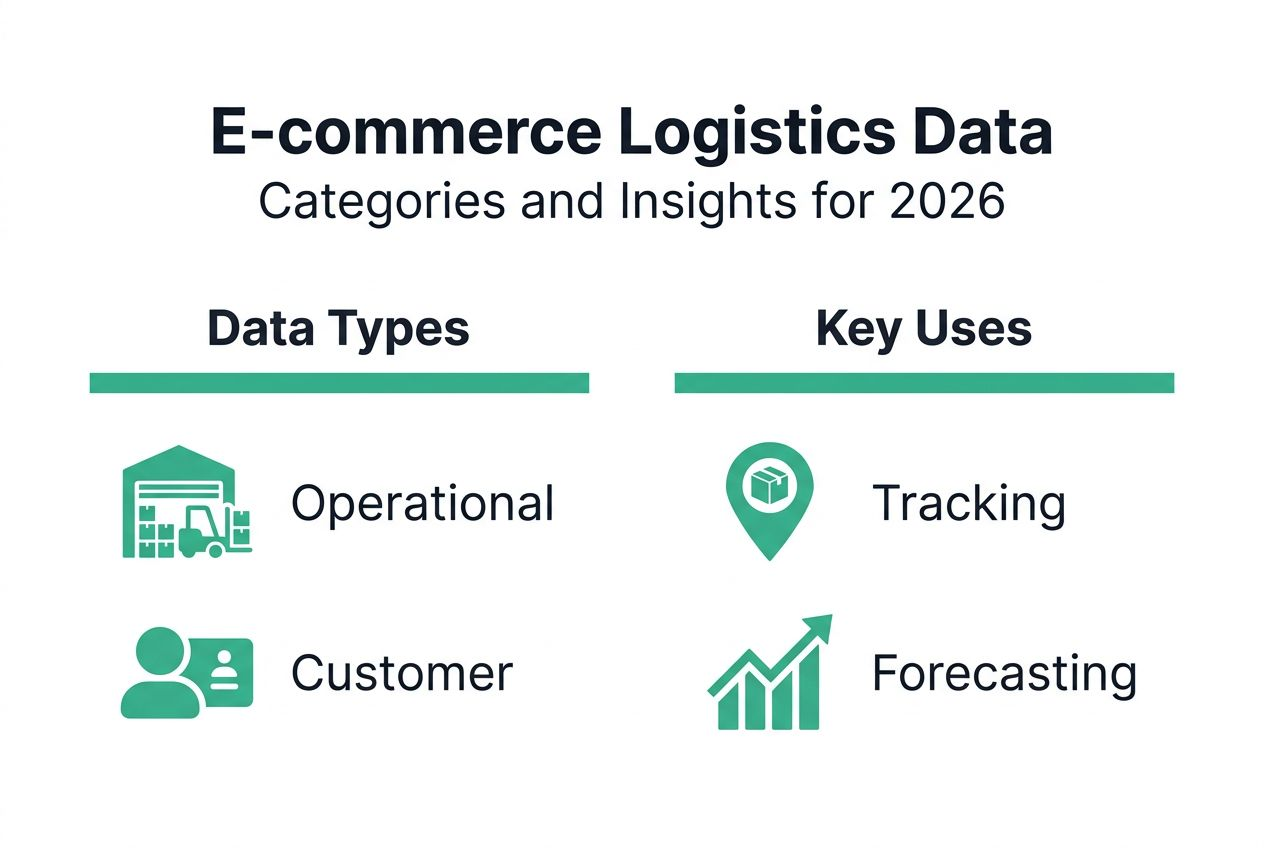
Logistics data encompasses three core categories: operational information tracking warehouse activities and shipment movements, transactional records documenting orders and payments, and customer-related insights revealing delivery preferences and satisfaction levels. Each category plays a distinct role in optimising fulfilment workflows and identifying bottlenecks that delay shipments or increase costs.
Key data sources include order management systems capturing purchase details and inventory levels, IoT sensors monitoring warehouse conditions and stock locations in real time, and courier system APIs providing tracking updates and delivery confirmations. Accurate and timely data collection from multiple systems forms the foundation for effective decision-making, enabling managers to respond quickly to shifting demand patterns and operational challenges.
Prioritising data accuracy ensures that decisions reflect current reality rather than outdated snapshots. Real-world applications demonstrate this impact clearly:
- Inventory management systems using live stock counts prevent overselling and reduce emergency reordering costs
- Delivery route optimisation based on traffic data minimises fuel expenses and improves on-time rates
- Warehouse space utilisation tracking identifies underused areas and informs layout improvements
Understanding the role of logistics in e-commerce success helps managers recognise how different data types support specific operational goals. Combining multiple data sources creates comprehensive visibility across the entire fulfilment chain, from order placement through final delivery confirmation.
How data optimises logistics operations
Real-time data visibility transforms logistics efficiency by enabling dynamic responses to changing conditions. Route optimisation algorithms analyse traffic patterns, weather conditions, and delivery windows to recommend the fastest paths for last-mile couriers. This approach reduces fuel consumption whilst improving delivery punctuality, directly enhancing customer satisfaction scores.
Predictive analytics revolutionises inventory forecasting by identifying demand trends before they impact stock levels. Brands using integrated data platforms achieve 15% faster order fulfilment speeds compared to those relying on manual processes. Machine learning models analyse historical sales patterns, seasonal fluctuations, and external factors like promotional campaigns to recommend optimal reorder points and quantities.
Data-driven warehouse management delivers measurable efficiency gains through several mechanisms:
- Labour allocation models assign staff to high-priority tasks during peak periods, reducing idle time
- Space utilisation analytics identify optimal storage locations for fast-moving products near packing stations
- Picking route optimisation minimises travel distance within warehouses, accelerating order processing
- Quality control systems flag anomalies in packing accuracy, preventing costly shipping errors
Integrating data across systems creates powerful synergies that amplify individual improvements. Understanding the role of logistics in e-commerce operations reveals how coordinated data flows eliminate information silos that slow decision-making and create inconsistencies.
Pro Tip: Balance automation with human oversight by setting alert thresholds that trigger manual review for unusual patterns, ensuring algorithms don’t perpetuate errors during edge cases.
Common misconceptions and pitfalls in logistics data use
Many managers believe that collecting more data automatically produces better decisions, but this assumption ignores the critical importance of data quality and strategic focus. Without clear objectives guiding collection efforts, organisations accumulate vast datasets that overwhelm analysis capabilities whilst providing limited actionable insights. Context transforms raw numbers into meaningful intelligence that drives improvements.
Relying solely on historical data creates blind spots when market conditions shift rapidly. Real-time updates capture emerging patterns that backward-looking reports miss entirely, such as sudden demand spikes for specific products or unexpected courier delays affecting multiple shipments. Organisations that refresh their data infrequently face higher error rates and missed optimisation opportunities.
Paralysis by analysis represents another common trap where excessive metrics distract from core performance indicators. Common pitfalls include:
- Tracking dozens of KPIs without prioritising those directly linked to customer satisfaction and profitability
- Generating elaborate reports that consume resources but never inform actual decisions
- Fragmenting data across disconnected systems that prevent holistic visibility
- Ignoring data validation processes that allow inaccurate information to corrupt analysis
Data misuse leads to 35% higher error rates in order fulfilment, directly impacting customer retention and increasing returns processing costs.
Recognising these pitfalls helps managers establish frameworks that extract genuine value from logistics data. Learning how accurate shipping cuts e-commerce errors demonstrates the tangible consequences of data quality issues and reinforces the importance of validation processes.
Successful data strategies balance comprehensiveness with focus, ensuring that collection efforts support specific operational improvements rather than creating information overload that paralyses decision-making.
Comparing data-driven logistics frameworks and technologies
Selecting appropriate technology platforms determines whether data investments deliver measurable returns or create new operational burdens. Integrated platforms connect order management, warehouse systems, and courier APIs within unified interfaces, eliminating manual data transfers that introduce errors and delays. These solutions enable real-time visibility across the entire fulfilment chain, supporting faster responses to exceptions.

Integrated data platforms enable faster decision-making and scale compared to siloed or basic systems that require manual reconciliation. Basic tracking tools offer limited functionality, typically providing static reports without predictive capabilities or automated alerting. Siloed systems compartmentalise information within individual departments, preventing holistic analysis and creating coordination challenges.
| Platform Type |
Integration Capability |
Scalability |
Real-Time Processing |
Predictive Analytics |
| Integrated platforms |
High connectivity across systems |
Excellent growth support |
Live data streams |
Advanced forecasting |
| Siloed systems |
Limited cross-system data flow |
Moderate scaling challenges |
Delayed batch updates |
Basic trending only |
| Basic tracking tools |
Manual data entry required |
Poor adaptation to growth |
Static historical reports |
None available |
Evaluating solutions requires considering specific operational needs:
- Growing brands prioritise platforms offering flexible API connections that accommodate new sales channels
- Multi-region operations require systems supporting varied courier integrations and local compliance rules
- High SKU complexity demands robust inventory tracking with location-level granularity
Predictive analytics solutions transform demand forecasting accuracy by identifying subtle patterns in historical data. Route optimisation algorithms reduce last-mile costs through intelligent delivery sequencing. Understanding automation in ecommerce logistics 2026 trends helps managers anticipate technology developments that will shape competitive advantages.
Pro Tip: Prioritise platforms offering strong e-commerce platform and courier API integration, ensuring seamless data flows without custom development overhead. Reviewing the ecommerce logistics checklist identifies essential system capabilities for effective operations.
Practical steps for e-commerce managers to leverage logistics data
Implementing data-driven logistics improvements begins with identifying key performance indicators that directly impact customer satisfaction and operational costs. Tracking key logistics KPIs and integrating data with e-commerce and courier platforms drives measurable operational improvements. Focus on metrics that reveal both efficiency and quality dimensions of fulfilment performance.
Essential KPIs for monitoring logistics success include:
- Order fulfilment speed measuring time from purchase to shipment
- Delivery accuracy tracking on-time arrivals and correct address routing
- Inventory turnover indicating stock movement efficiency and capital utilisation
- Customer satisfaction scores reflecting overall delivery experience quality
- Cost per shipment revealing profitability and efficiency trends
Integrating logistics data across systems requires systematic planning and phased implementation:
- Audit existing data sources and identify gaps in visibility or accuracy
- Select integration platform supporting required e-commerce and courier connections
- Establish data validation rules ensuring information quality from all sources
- Configure automated alerts for exceptions requiring immediate attention
- Train staff on interpreting dashboards and responding to data-driven insights
- Review KPI trends monthly and adjust operational processes based on findings
Implementing real-time tracking creates transparency that builds customer confidence and reduces support enquiries. Automated status updates inform customers about shipment progress without manual intervention, freeing staff for higher-value activities. Learning how accurate shipping cuts e-commerce errors demonstrates the compound benefits of data accuracy improvements.
Customer feedback loops complement operational data by revealing perceptions and preferences that numbers alone cannot capture. Post-delivery surveys identify service gaps and highlight successful practices worth replicating. Exploring the 5 ecommerce KPIs you should be tracking provides deeper insight into measurement frameworks.
Many growing brands discover that outsourcing ecommerce order fulfilment to experienced 3PL providers accelerates data-driven optimisation by leveraging established systems and expertise without requiring internal technology investments.
Enhance your logistics with ParcelPlanet solutions
Applying data-driven logistics principles requires robust systems and experienced operational teams. ParcelPlanet’s order fulfilment services provide growing e-commerce brands with integrated technology platforms and scalable warehouse infrastructure designed specifically for multi-channel operations.

Partnering with experienced 3PL providers eliminates the capital investment and operational complexity of building internal logistics capabilities. Understanding 3PL provider benefits for SMEs reveals how outsourcing reduces per-order costs whilst improving delivery speed and accuracy through specialised expertise and carrier relationships.
Choosing between fulfilment models depends on operational complexity and growth trajectory. Comparing 3PL vs 4PL fulfilment options clarifies which approach aligns with your brand’s specific logistics requirements and strategic objectives for expansion.
Frequently asked questions
What types of data are most important in e-commerce logistics?
Operational data tracking warehouse activities and shipment movements forms the foundation for efficiency improvements. Transactional records documenting orders, payments, and inventory changes enable accurate financial reconciliation and demand forecasting. Customer-related information revealing delivery preferences, satisfaction scores, and return patterns guides service enhancements that strengthen retention.
How can predictive analytics improve inventory management?
Predictive models analyse historical sales patterns, seasonal trends, and external factors like promotions to forecast future demand with greater accuracy than manual methods. This capability optimises reorder timing and quantities, reducing both stockout incidents that lose sales and overstock situations that tie up capital unnecessarily.
What are common mistakes when using logistics data?
Ignoring real-time updates in favour of outdated historical reports creates blind spots when conditions change rapidly. Data overload without strategic focus overwhelms analysis capacity and distracts from actionable insights. Siloed systems that fragment information across disconnected platforms prevent holistic visibility and create reconciliation challenges.
Which KPIs should e-commerce managers track for logistics success?
Order fulfilment speed measuring time from purchase to shipment reveals operational efficiency. Delivery accuracy tracking on-time arrivals and correct routing indicates service quality. Inventory turnover shows stock movement efficiency. Customer satisfaction scores reflect overall delivery experience. Cost per shipment reveals profitability trends and identifies optimisation opportunities.
Recommended


