E-commerce brands lose up to 30% of revenue when logistics systems fail to communicate properly. The culprit is not a lack of technology, but fragmented tools that operate in isolation. Seamless logistics integration transforms this chaos into a coordinated system where inventory, fulfilment, and delivery work in harmony. This guide reveals how to unify your supply chain, reduce costs, and deliver the transparent customer experience that builds loyalty and drives growth.
Table of Contents
Key Takeaways
| Point |
Details |
| Integration boosts efficiency |
Unifying logistic processes eliminates silos and drives cost savings and growth for e-commerce brands. |
| Customer experience impact |
Brands that deliver real-time order visibility and seamless fulfilment report up to 24% higher customer satisfaction scores. |
| Choose the right model |
3PL, in-house, or hybrid integration suits different business stages—evaluate your needs before committing. |
| Start with core systems |
Begin with essential integrations like store, carrier, and warehouse before expanding to full omnichannel networks. |
| Watch industry trends |
Stay ahead with orchestration, AI-driven exception handling, and consolidated flows for a competitive edge. |
What is logistics integration?
Logistics integration connects every stage of your supply chain through shared data and coordinated workflows. Instead of managing separate systems for warehousing, inventory, and shipping, integration creates a unified flow where information moves instantly between platforms. This coordination is what separates high-performing e-commerce operations from those struggling with delays and errors.
The role of logistics in e-commerce extends across multiple critical stages:
- Procurement and supplier management where purchase orders sync with inventory forecasts
- Warehousing operations that update stock levels across all sales channels simultaneously
- Order fulfilment where picking, packing, and shipping happen without manual data entry
- Transportation management that selects optimal carriers based on real-time conditions
- Reverse logistics handling returns with full visibility into product condition and restocking
Modern integration relies on APIs connecting your e-commerce platform to Warehouse Management Systems (WMS), Transport Management Systems (TMS), and Enterprise Resource Planning (ERP) software. AI analyses patterns to predict demand spikes, while IoT sensors track inventory movement and environmental conditions in real time. This technology stack eliminates the manual updates and spreadsheet transfers that cause costly mistakes.
Fragmented approaches force staff to toggle between systems, manually reconcile data, and react to problems after customers complain. Integrated systems prevent issues before they occur by sharing information the moment it changes. When a product sells on your website, your warehouse knows instantly. When a shipment encounters delays, your customer service team receives alerts before the buyer does. This proactive coordination is what supply chain security experts identify as essential for protecting both operations and customer trust.
Key benefits of logistics integration in e-commerce
Integration delivers measurable improvements across efficiency, cost control, and customer satisfaction. Companies implementing proper logistics integration report 78% improved performance compared to those operating with disconnected systems. These gains come from eliminating the friction points that slow down every order.
On-Time In-Full (OTIF) delivery rates jump dramatically when systems communicate properly. Your warehouse receives accurate inventory counts, picks the correct items, and ships through the optimal carrier without human intervention. Each automated handoff removes opportunities for error and delay. The result is orders arriving when promised, in perfect condition.
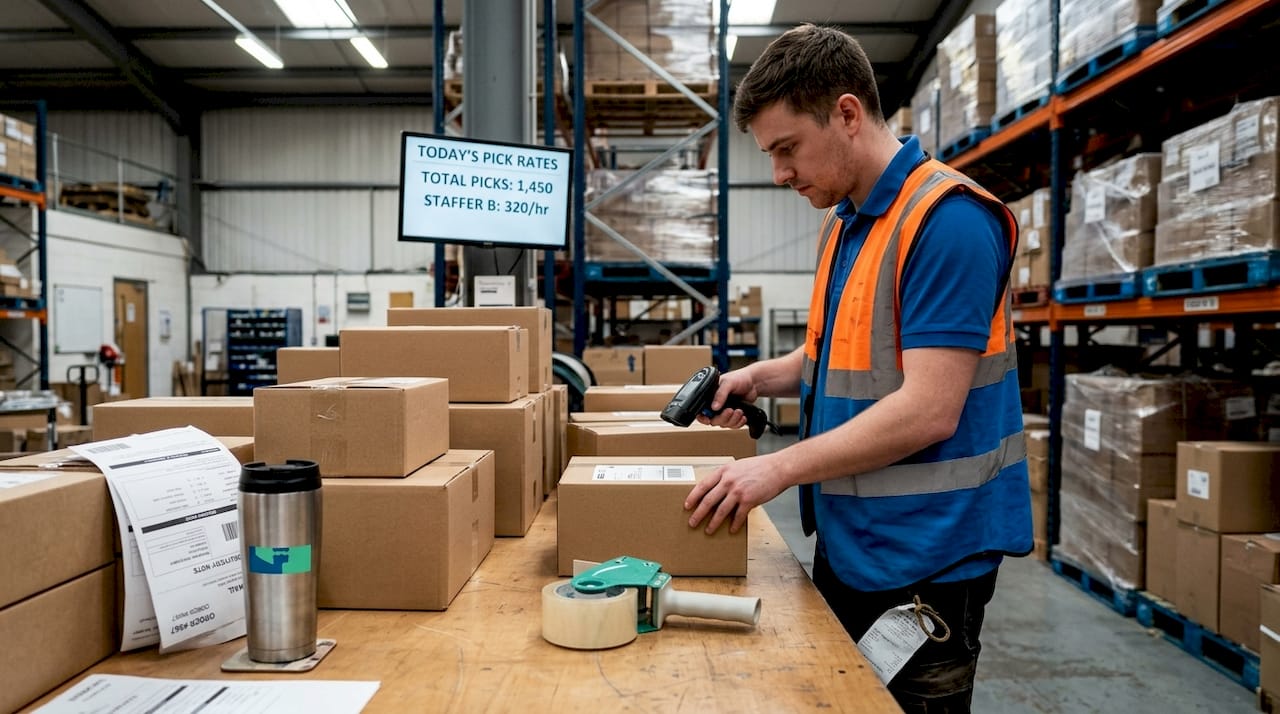
Cost per order drops as integration removes duplicate data entry, reduces picking errors, and optimises carrier selection. You stop paying for expedited shipping to fix mistakes or placate frustrated customers. Consolidated workflows mean fewer staff hours spent reconciling systems or hunting for information. These savings compound with every order processed.
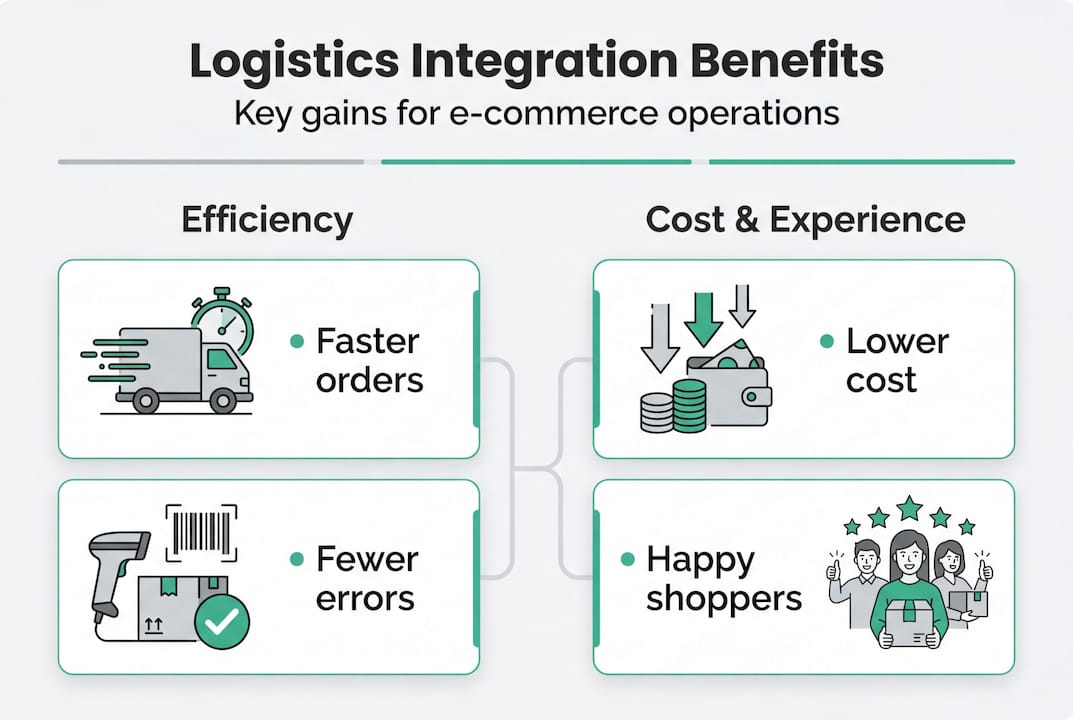
Customer experience transforms when shoppers receive real-time tracking from checkout through delivery. Leading retailers achieve 24% higher customer satisfaction by providing visibility into every stage of fulfilment. Customers check order status themselves rather than contacting support. They receive proactive updates about delays before frustration builds. This transparency builds trust that converts one-time buyers into repeat customers.
Omnichannel flexibility becomes possible when a single inventory system serves your website, marketplace listings, and retail locations. You can fulfil online orders from store stock or offer in-store pickup for web purchases. Scalable logistics for growth means adding new sales channels without creating new operational headaches.
Integration impact by metric:
- OTIF rates increase from industry average 85% to best-in-class 95%+ through automated coordination
- Cost per order decreases 15-25% by eliminating errors and optimising carrier selection
- Customer satisfaction scores rise 20-30% when shoppers receive proactive communication
- Inventory accuracy improves to 99%+ as systems update in real time across channels
- Returns processing time drops 40% with integrated reverse logistics workflows
Sustainability improves through consolidated shipping and optimised routes rather than rushed individual deliveries. Integration lets you batch orders intelligently and select eco-friendly carriers when timing permits. These environmental benefits align with customer values while reducing costs.
Common challenges and pitfalls of logistics integration
Implementation costs create the first barrier, particularly for small and medium brands. Enterprise-grade integration platforms carry substantial licensing fees, implementation services, and ongoing maintenance expenses. High implementation costs for SMBs often exceed £50,000 before accounting for staff training and process redesign. Larger brands spread these investments across higher order volumes, but growing businesses must carefully evaluate return on investment.
Organisational silos present obstacles even when budget exists. Your warehouse team uses systems they trust, your marketing department has different priorities, and your finance team requires specific reporting formats. Legacy technology compounds this challenge when older systems lack modern APIs or require expensive custom development to connect with newer platforms.
“Poor integration silently erodes up to 30% of revenue through missed orders, shipping errors, and customer churn that never appears in obvious metrics.”
Hybrid approaches combining in-house fulfilment with 3PL for scalable logistics create integration complexity. You need systems that work across both environments while maintaining consistent data and processes. Many brands underestimate the coordination required to manage inventory split between their warehouse and external partners.
Change management failures doom technically sound integrations. Staff resist new workflows, especially when they have mastered workarounds for existing systems. Without proper training and clear communication about benefits, your team will find ways to bypass integrated processes and return to familiar manual methods.
Pro Tip: Start integration projects with a pilot covering one sales channel or product category. Prove value with measurable results before expanding scope. This approach builds internal support while limiting risk and investment.
Data quality issues surface when integration connects previously isolated systems. You discover duplicate SKUs, inconsistent product descriptions, and conflicting inventory counts. Cleaning this data before integration prevents garbage-in, garbage-out scenarios where automated systems propagate errors faster than manual processes ever could.
Vendor lock-in becomes a concern when proprietary platforms make switching costly. Evaluate integration solutions based on open standards and API flexibility. You want the ability to swap components as your needs evolve without rebuilding your entire technology stack. The automation in logistics landscape changes rapidly, and your integration architecture must adapt.
Choosing the right integration model: 3PL, in-house, or hybrid?
Your integration approach depends on order volume, growth trajectory, and operational complexity. Each model offers distinct advantages for different business stages. Brands handling more than 500 orders monthly typically find 3PL integration more cost-effective than building in-house capabilities.
| Model |
Best for |
Integration complexity |
Scalability |
Control level |
Typical cost range |
| In-house |
Under 500 orders/month, unique products |
High (build everything) |
Limited by space/staff |
Complete |
£30k-100k+ setup |
| 3PL |
500-5000+ orders/month, standard products |
Medium (connect to provider) |
Excellent |
Shared |
Pay per order |
| Hybrid |
Seasonal peaks, testing new markets |
Very high (dual systems) |
Flexible |
Split |
Variable |
In-house integration gives you complete control over processes, data, and customer experience. You can customise workflows precisely to your brand requirements and respond immediately to issues. However, you bear full responsibility for technology investment, warehouse space, staff hiring, and carrier negotiations. This model works when your products require specialised handling or your margins support the overhead.
3PL integration transfers fulfilment operations to specialists who already maintain integrated systems. You connect your e-commerce platform to their WMS through established APIs, gaining immediate access to optimised processes and carrier relationships. Using third-party logistics eliminates the need to build integration infrastructure while providing scalability for growth. The trade-off is less direct control over daily operations and dependence on your provider’s capabilities.
Hybrid models combine in-house fulfilment for core products with 3PL support for overflow, seasonal peaks, or geographic expansion. This approach offers flexibility but requires sophisticated integration to maintain consistent inventory visibility and customer experience across both channels. You need systems that route orders intelligently based on stock location, shipping costs, and delivery timeframes.
Decision framework by business stage:
- Startup (under 200 orders/month): Start in-house with basic integration between your e-commerce platform and shipping software. Complexity does not justify 3PL costs yet.
- Growth (200-500 orders/month): Evaluate 3PL options as integration complexity and space constraints emerge. Calculate break-even point between in-house costs and 3PL fees.
- Scaling (500-2000 orders/month): 3PL integration typically delivers better ROI through established systems and carrier rates. Focus your resources on marketing and product development.
- Established (2000+ orders/month): Consider hybrid models for geographic expansion or specialised product lines while maintaining 3PL for core fulfilment.
The right choice depends on your specific circumstances rather than universal rules. Choosing a 3PL requires evaluating integration capabilities alongside fulfilment quality and pricing. Look for providers offering pre-built connections to your e-commerce platform and transparent data access through modern APIs.
Practical steps to implement seamless logistics integration
Successful integration follows a structured approach that prioritises core connections before expanding to advanced features. An API-first strategy ensures systems communicate through standardised protocols rather than custom code that breaks with every update. This foundation supports long-term flexibility as your technology stack evolves.
Begin with the essential triangle connecting your e-commerce platform, warehouse system, and primary carriers. These core integrations handle the majority of your order volume and deliver immediate value. Once this foundation operates reliably, expand to marketplace channels, additional carriers, and specialised tools for returns or international shipping.
Implementation framework:
- Audit current systems to identify data sources, manual processes, and integration gaps. Document how information flows between platforms today.
- Standardise data formats across systems before connecting them. Establish consistent SKU structures, address formats, and status definitions.
- Select integration platform based on your technical resources. Middleware solutions like integration Platform as a Service (iPaaS) simplify connections without custom development.
- Connect core systems starting with store-to-warehouse order flow. Test thoroughly with small order volumes before full deployment.
- Train staff on new workflows and monitoring tools. Create documentation for common scenarios and troubleshooting procedures.
- Monitor key metrics daily during initial rollout. Track OTIF rates, error frequencies, and processing times to identify issues quickly.
- Expand gradually to additional channels and features once core integration proves stable. Each addition increases complexity, so maintain focus on reliability.
| Integration phase |
Timeline |
Success metric |
Common pitfall |
| Planning & audit |
2-4 weeks |
Complete system inventory |
Underestimating data cleanup needs |
| Core connection |
4-8 weeks |
95%+ order sync accuracy |
Insufficient testing with edge cases |
| Staff training |
2-3 weeks |
Zero manual workarounds |
Skipping documentation |
| Monitoring period |
4-6 weeks |
OTIF >95%, errors <1% |
Declaring success too early |
| Channel expansion |
Ongoing |
Consistent metrics across channels |
Adding complexity before stability |
Benchmark your performance against industry leaders who maintain OTIF rates above 95% and cost per order reductions of 15-25%. These targets are achievable with proper integration but require ongoing optimisation. Review metrics weekly to identify trends before they impact customer experience.
Pro Tip: Create a dedicated Slack channel or communication hub for integration issues during rollout. Quick coordination between technical, warehouse, and customer service teams prevents small problems from becoming customer-facing disasters.
Invest in change management alongside technical implementation. Your staff must understand why integration matters and how it makes their work easier. Celebrate early wins publicly and address concerns transparently. The best integration technology fails without team buy-in and proper training. Scalable logistics solutions require both technical excellence and operational discipline.
Emerging trends: visibility, orchestration, and AI in logistics integration
The logistics landscape is shifting from basic automation to intelligent orchestration that coordinates complex decisions across your entire supply chain. Orchestration excels at exceptions like inventory shortages, carrier delays, or sudden demand spikes that simple automation cannot handle. This distinction matters because e-commerce operations face constant variability that rigid workflows manage poorly.
AI-powered systems analyse patterns across thousands of orders to predict optimal inventory placement, carrier selection, and fulfilment routing. When a shipment encounters delays, AI automatically reroutes subsequent orders and notifies affected customers with realistic delivery estimates. This proactive management prevents the cascading failures that occur when one problem triggers multiple downstream issues.
Real-time visibility extends beyond simple tracking numbers to comprehensive supply chain awareness. You see inventory in transit between suppliers and warehouses, orders moving through fulfilment stages, and potential disruptions before they impact delivery dates. This transparency enables better decisions about inventory allocation, promotional timing, and customer communication.
Multi-marketplace management becomes feasible when AI handles the complexity of different requirements, shipping expectations, and customer service standards across platforms. Your system automatically adjusts fulfilment priorities based on marketplace penalties, customer value, and delivery commitments. This intelligent coordination is what separates brands successfully managing Amazon, eBay, and their own website from those struggling with channel conflicts.
Leading retailers like Nike demonstrate integration excellence through unified inventory systems serving retail stores, e-commerce, and mobile apps simultaneously. The Shopify ecosystem provides smaller brands with similar capabilities through pre-built integrations and app marketplaces. These success cases prove that sophisticated integration is no longer exclusive to enterprise retailers.
- Dynamic routing selects fulfilment locations and carriers based on real-time inventory, shipping costs, and delivery timeframes rather than static rules
- Exception handling automatically resolves common issues like address corrections or out-of-stock items without human intervention
- Predictive analytics forecast demand patterns to optimise inventory placement and prevent stockouts during peak periods
- Sustainability tracking measures carbon footprint across shipping methods and suggests eco-friendly alternatives when delivery timing permits
Sustainability improvements come from consolidated flows that batch orders intelligently rather than rushing individual shipments. Integration enables you to offer customers the choice between faster delivery and lower environmental impact. This transparency aligns with growing consumer expectations while reducing costs through optimised shipping.
The future of logistics integration lies in systems that learn from every order, adapt to changing conditions, and coordinate decisions across your entire operation. Automation in logistics continues advancing, but the real competitive advantage comes from orchestration that handles complexity rather than just speed. Brands investing in these capabilities today position themselves to meet rising customer expectations while controlling costs.
Supercharge your logistics integration with expert partnership
Implementing sophisticated logistics integration requires expertise that most e-commerce brands lack in-house. The technical complexity, ongoing optimisation, and operational discipline needed for success often exceed internal capabilities, particularly for growing businesses focused on product development and marketing.
ParcelPlanet’s order fulfilment services provide fully integrated logistics from a single partner. We connect seamlessly with your e-commerce platform, manage inventory across channels, and coordinate shipping through optimal carriers. Our systems handle the integration complexity while you focus on growing your brand.

Our approach eliminates the fragmented workflows that cause delays and errors. Real-time inventory updates flow between your store and our warehouse automatically. Orders route to the fastest fulfilment location based on stock availability and delivery requirements. Customers receive tracking information the moment shipments leave our facility. This coordination is what order fulfilment should deliver but rarely does without proper integration.
Whether you are processing 500 orders monthly or scaling to thousands, our integrated platform adapts to your volume. You gain enterprise-grade logistics capabilities without enterprise-level investment or complexity. We handle the technology, processes, and carrier relationships while providing the visibility and control you need to serve customers brilliantly.
Frequently asked questions
How does logistics integration improve customer satisfaction in e-commerce?
Integration provides shoppers with real-time visibility into order status, faster fulfilment through coordinated workflows, and accurate delivery estimates that build trust. These improvements translate directly to higher satisfaction scores and repeat purchases.
What are the biggest risks of not integrating logistics systems properly?
Disconnected systems cause picking errors, shipping delays, and inventory discrepancies that erode up to 30% of revenue through lost sales and customer churn. Manual processes cannot scale reliably as order volume grows.
Is 3PL integration better than in-house for small brands?
3PL providers typically deliver better value for brands shipping over 500 orders monthly through established systems and carrier relationships. Hybrid models suit fast-growing businesses needing flexibility during expansion.
Which KPIs should I track to measure logistics integration success?
Monitor OTIF delivery rates above 95%, cost per order reductions of 15-25%, and customer satisfaction improvements of 20%+ as primary indicators. Error rates below 1% confirm operational excellence.
Recommended


