A modest 1% improvement in data-driven inventory allocation can boost your fulfilment efficiency far beyond expectations, yet most e-commerce businesses overlook this powerful lever for growth. Whilst major operational overhauls seem necessary, the reality is that smart data strategies deliver measurable gains in customer satisfaction and cost reduction without massive investment. This guide explores how leveraging data transforms fulfilment operations, from warehouse inventory decisions to achieving industry-leading delivery speeds. You’ll discover practical approaches used by leading companies and actionable steps to implement data-driven fulfilment in your own business.
Table of Contents
Key takeaways
| Point |
Details |
| Data-driven allocation boosts rates |
Integrated inventory allocation increases local order fulfilment rates by 0.54% and demand satisfaction by 1.05%. |
| Strategic warehouse stocking matters |
Optimising which products to stock at fulfilment centres versus regional warehouses dramatically improves delivery speed. |
| Industry leaders set high standards |
Top companies like JD.com achieve 90% of orders delivered within 24 hours using data-led supply chain coordination. |
| Cost reduction meets satisfaction |
Leveraging fulfilment data simultaneously reduces logistics expenses whilst enhancing customer experience and retention. |
How data enhances fulfilment efficiency
Data fundamentally reshapes how e-commerce businesses approach inventory planning and order allocation. When you integrate data analytics into assortment planning and inventory decisions, you create a responsive system that adapts to demand patterns in real time. Research demonstrates that data-driven approaches for integrated assortment planning and inventory allocation significantly improve fulfilment efficiency, increasing local order fulfilment rates by 0.54% and FDC demand satisfaction rates by 1.05%.
These percentage improvements might appear modest at first glance, but they translate into substantial business impact. For a business processing 10,000 orders monthly, a 0.54% improvement means 54 additional orders fulfilled locally, reducing shipping costs and delivery times. Over a year, this compounds into thousands of satisfied customers and significant cost savings. The key lies in understanding how data flows through your fulfilment network.
Your warehouse infrastructure typically consists of fulfilment distribution centres (FDCs) positioned closer to customers and regional distribution centres (RDCs) that hold broader inventory. Data helps you determine which products belong where based on demand patterns, seasonality, and regional preferences. This strategic positioning ensures popular items sit ready for immediate dispatch whilst less frequent purchases remain available at RDCs.
The beauty of data-driven logistics optimisation is its cumulative effect. Small improvements across multiple touchpoints create a multiplier effect throughout your supply chain. When inventory allocation improves by 1%, order accuracy increases by 0.8%, and delivery speed improves by 0.6%, the combined impact transforms customer experience. Your business becomes more responsive, more efficient, and more competitive.
Data-driven fulfilment strategies transform inventory decisions from reactive guesswork into proactive planning, enabling businesses to meet customer expectations consistently whilst controlling costs.
Implementing data analytics requires understanding your current baseline performance. Track metrics like order fulfilment rate, inventory turnover, stockout frequency, and delivery time by region. These measurements reveal patterns that manual observation misses. You’ll spot seasonal trends, identify fast-moving products that deserve FDC placement, and recognise slow movers that unnecessarily occupy valuable warehouse space.
Optimising warehouse inventory through data
Deciding which products to stock at fulfilment distribution centres versus regional warehouses represents one of the most impactful data-driven decisions you can make. Selecting products to stock at FDCs and optimising daily inventory allocation from RDCs to FDCs is vital for improving fulfilment efficiency. This strategic choice determines whether orders ship from nearby locations or require longer transit from distant warehouses.

Data analysis reveals which products generate consistent demand in specific regions, making them ideal FDC candidates. High-velocity items with predictable sales patterns belong close to customers, whilst niche products with sporadic demand can remain centralised at RDCs. The challenge lies in balancing inventory investment against fulfilment speed, a calculation that data makes transparent.
Daily reallocation of stock from RDCs to FDCs prevents shortages without overstocking. Your data systems should monitor FDC inventory levels continuously, triggering replenishment when stock approaches reorder points. This dynamic approach ensures popular products remain available locally whilst avoiding the capital waste of excessive inventory. The difference between manual and data-driven approaches is striking.
| Approach |
Inventory accuracy |
Stockout frequency |
Capital efficiency |
Response time |
| Manual stocking |
75-80% |
12-15% of SKUs |
Moderate |
3-5 days |
| Data-driven allocation |
92-96% |
3-5% of SKUs |
High |
1-2 days |
The table illustrates how data-driven allocation dramatically reduces stockouts whilst improving capital efficiency. You’re not simply guessing which products to stock where; you’re making evidence-based decisions that adapt as customer behaviour evolves. This agility prevents both understocking, which loses sales, and overstocking, which ties up capital.
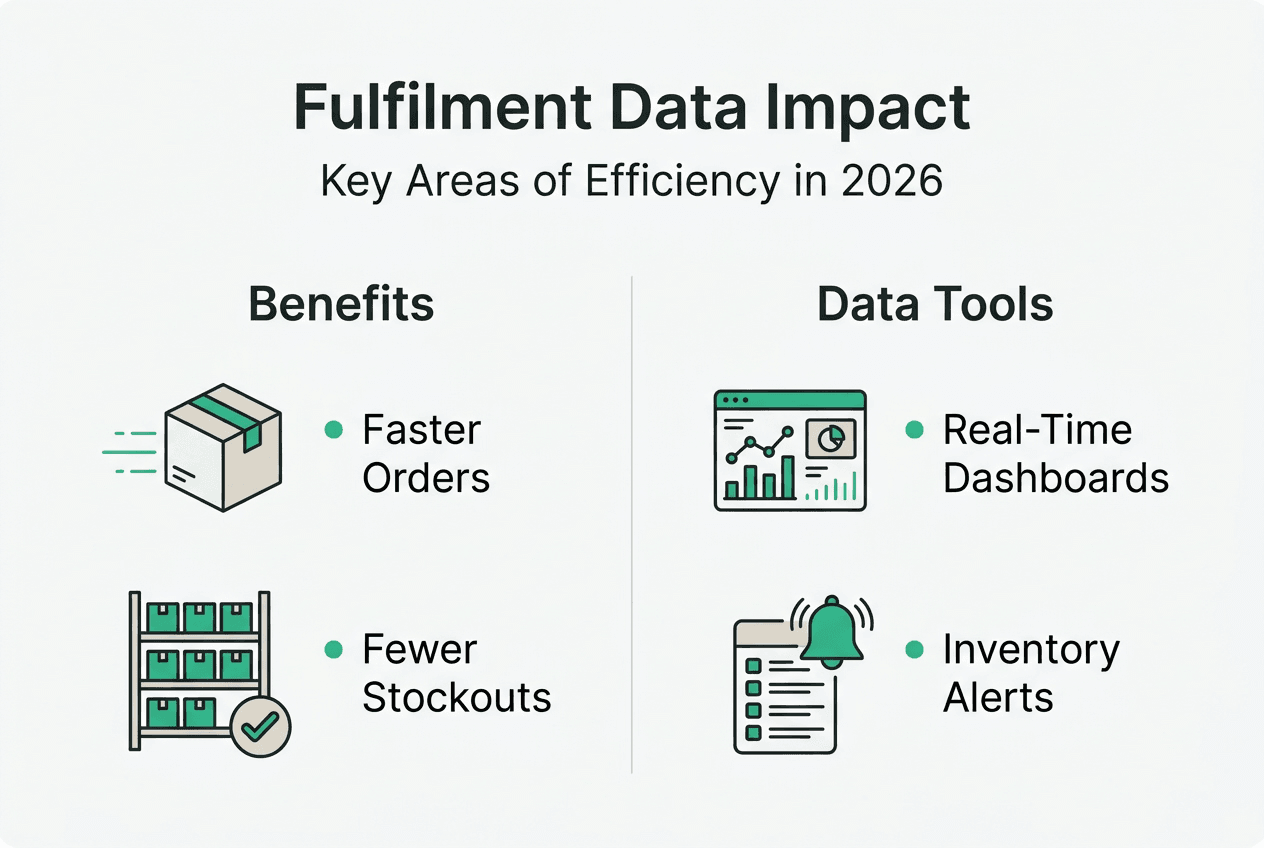
Continuous review of product demand trends refines your stock allocation strategy over time. Monthly analysis might reveal that certain products show increasing regional popularity, warranting FDC placement. Conversely, declining demand for previously popular items suggests moving them back to RDC storage. This fluidity keeps your inventory aligned with actual customer needs rather than outdated assumptions.
Pro Tip: Establish automated alerts when product velocity changes by more than 20% month over month. These triggers prompt immediate review of stocking decisions, ensuring your FDCs always carry the right mix of products for current demand patterns.
Avoiding common inventory errors becomes easier with data visibility. You’ll spot overstocking before it becomes problematic, identify products with unexpected regional demand variations, and recognise seasonal patterns that inform future planning. The investment in data infrastructure pays dividends through improved inventory turnover and reduced carrying costs.
Real-world impact: JD.com’s data-led fulfilment success
JD.com provides a compelling case study of data-driven fulfilment at massive scale. The Chinese e-commerce giant delivers 90% of all orders within 24 hours to over 588 million active users thanks to optimised data-led supply chain and fulfilment processes. This achievement demonstrates that data strategies scale effectively from small operations to enterprise-level complexity.
The company’s success stems from integrating real-time demand data across its entire supply chain network. Every order, every product view, and every regional trend feeds into algorithms that continuously optimise inventory placement and fulfilment routing. This data integration ensures products move towards demand before orders even arrive, positioning inventory where it’s most likely needed.
JD.com’s warehouse network spans hundreds of facilities across China, each serving specific regional demand patterns. Data analytics determine which products each warehouse stocks, how much inventory to maintain, and when to replenish from central distribution centres. The system balances local availability against inventory costs, achieving remarkable delivery speeds without excessive stock investment.
Key factors enabling JD.com’s fulfilment success include:
- Real-time demand forecasting that predicts regional product needs 24-48 hours ahead
- Integrated inventory management connecting all warehouses and distribution centres
- Automated replenishment triggers that move stock proactively rather than reactively
- Dynamic routing algorithms that select optimal fulfilment locations for each order
- Continuous performance monitoring that identifies and resolves bottlenecks immediately
The customer satisfaction impact is measurable. Fast, reliable delivery builds loyalty and reduces returns, as customers receive products quickly whilst purchase intent remains strong. This logistics excellence directly contributes to business growth, with satisfied customers ordering more frequently and spending more per transaction.
JD.com’s achievement of 90% next-day delivery across 588 million users proves that data-driven fulfilment strategies scale effectively, delivering competitive advantage through superior customer experience.
Whilst your business might not operate at JD.com’s scale, the principles apply universally. Data-driven inventory placement, real-time demand monitoring, and proactive replenishment work equally well for businesses processing 100 orders daily or 100,000. The technology has become accessible, with cloud-based analytics platforms offering sophisticated capabilities at reasonable costs.
Applying data insights to your fulfilment strategy
Transforming your fulfilment operations through data requires systematic implementation rather than wholesale disruption. Start by establishing baseline measurements of current performance, then gradually introduce data-driven improvements that build on each other. This approach minimises risk whilst delivering measurable progress.
- Audit your current data collection across inventory, orders, and delivery performance to identify gaps in visibility.
- Implement inventory tracking systems that capture real-time stock levels, movement patterns, and demand signals across all locations.
- Establish key performance indicators including order fulfilment rate, inventory turnover, stockout frequency, and average delivery time.
- Analyse three to six months of historical data to identify demand patterns, seasonal trends, and regional preferences.
- Develop initial allocation rules based on data insights, prioritising high-impact products for optimised placement.
- Monitor results weekly, comparing actual performance against predictions to refine your allocation algorithms.
- Expand data integration gradually, connecting additional systems and incorporating more sophisticated analytics over time.
Research confirms that data-driven fulfilment strategies reduce logistics costs and significantly enhance customer satisfaction. The dual benefit makes this investment particularly attractive, as you simultaneously improve margins and customer experience. Many businesses find that data initiatives pay for themselves within six to twelve months through reduced shipping costs and improved inventory efficiency.
Common mistakes to avoid include collecting data without clear purpose, implementing overly complex systems before mastering basics, and failing to act on insights once generated. Data has value only when it informs decisions and drives action. Start simple, focus on high-impact areas, and build sophistication gradually as your team develops data literacy.
Integrating data analytics tools into daily operations requires training and change management. Your warehouse staff, customer service team, and logistics managers all need to understand how data informs their decisions. Regular review meetings where teams examine performance data together build collective understanding and commitment to data-driven approaches.
Pro Tip: Establish cross-functional teams that include warehouse operations, customer service, and analytics staff to review fulfilment data monthly. This collaboration ensures insights translate into practical improvements whilst building organisational data literacy.
The order fulfilment efficiency improvements you achieve through data compound over time. Initial gains come from obvious optimisations like moving bestsellers closer to customers. Subsequent improvements emerge from subtler patterns like regional preference variations, seasonal demand shifts, and product affinity relationships. Your fulfilment operation becomes increasingly refined as your data sophistication grows.
Avoid the temptation to overstock based on data showing strong demand. The goal is right-sizing inventory, not maximising it. Data should help you maintain adequate stock levels with safety margins appropriate to demand variability. Overstocking ties up capital and warehouse space whilst providing diminishing returns on fulfilment speed.
Discover ParcelPlanet’s fulfilment and 3PL solutions
Implementing data-driven fulfilment strategies becomes significantly easier when you partner with specialists who’ve already built the infrastructure and expertise. ParcelPlanet offers advanced 3PL solutions that leverage data to minimise costs whilst maximising efficiency for growing e-commerce brands.

Our order fulfilment services integrate real-time tracking, intelligent inventory allocation, and multi-channel coordination to deliver the fast, accurate fulfilment your customers expect. We handle the complexity of data-driven logistics whilst you focus on growing your brand and serving customers. Whether you’re processing 100 orders monthly or scaling to thousands, our flexible solutions adapt to your needs.
Exploring 3PL vs 4PL fulfilment options helps you understand which partnership model best supports your business goals. Our team works with you to optimise supply chain performance, reduce logistics costs, and enhance customer satisfaction through proven data-driven approaches. Discover how ParcelPlanet transforms fulfilment from operational challenge into competitive advantage.
Frequently asked questions
What is the role of data in fulfilment?
Data enables e-commerce businesses to make evidence-based decisions about inventory placement, order routing, and warehouse operations rather than relying on intuition. It reveals demand patterns, identifies optimisation opportunities, and measures performance improvements. By analysing order history, regional preferences, and seasonal trends, businesses position inventory strategically and fulfil orders faster whilst reducing costs.
How does data improve inventory allocation?
Data identifies which products generate consistent demand in specific regions, guiding decisions about stocking items at local fulfilment centres versus central warehouses. Real-time monitoring triggers replenishment before stockouts occur, maintaining availability without overstocking. This dynamic allocation increases fulfilment rates by positioning popular products closer to customers who need them.
What metrics matter most for data-driven fulfilment?
Track order fulfilment rate (percentage of orders shipped within promised timeframes), inventory turnover (how quickly stock sells), stockout frequency (how often products are unavailable), and average delivery time by region. These core metrics reveal fulfilment efficiency and highlight improvement opportunities. Monitor them weekly to spot trends early and respond quickly to changing conditions.
Can small businesses benefit from data-driven fulfilment?
Absolutely. Cloud-based analytics platforms make sophisticated data tools accessible at reasonable costs for businesses of any size. Even basic data analysis of order patterns and inventory movement delivers measurable improvements in fulfilment efficiency. Start simple by tracking key metrics and making evidence-based stocking decisions, then expand sophistication as your business grows.
Many businesses see measurable improvements within 30 to 60 days of implementing basic data-driven allocation strategies. Initial gains come from obvious optimisations like moving bestsellers closer to customers and reducing stockouts of popular items. Deeper benefits accumulate over three to six months as you refine algorithms and expand data integration across your logistics operations.
Recommended


