TL;DR:
- Multi-channel fulfilment uses a central system to manage inventory and orders across multiple platforms.
- Automating and integrating tools reduces errors, improves delivery speed, and supports scalable growth.
- Continuous monitoring and cross-channel analytics optimize operations and enhance customer experience.
Selling across your own website, Amazon, eBay, and TikTok Shop simultaneously sounds like a growth strategy. But without a unified fulfilment system, it quickly becomes a source of overselling, delivery delays, and frustrated customers. Inventory tracked in separate spreadsheets, orders fulfilled from different locations with no coordination, and customers receiving inconsistent experiences depending on where they bought. This guide walks you through everything you need to know about multi-channel fulfilment: what it is, the tools required, how to set it up, and how to keep it running at peak performance so your business can scale with confidence.
Table of Contents
Key Takeaways
| Point |
Details |
| Centralise inventory |
Managing stock centrally prevents overselling and enables consistent fulfilment across all channels. |
| Adopt scalable tools |
Using integrated platforms and 3PL partners makes multi-channel fulfilment efficient and adaptable as your business grows. |
| Optimise continuously |
Regularly review KPIs, automate processes, and troubleshoot errors to keep fulfilment reliable and profitable. |
| Harness automation |
AI-driven routing and automated sync can cut costs and speed up deliveries, giving your brand a competitive edge. |
Understanding multi-channel fulfilment
Multi-channel fulfilment (MCF) is not just a logistics upgrade. It is a fundamental shift in how growing e-commerce brands manage their operations. As a logistics strategy, MCF uses a single centralised system to manage inventory and fulfil orders from multiple sales channels simultaneously. Rather than maintaining separate stock pools for each platform, every unit sits in one place, allocated dynamically as orders arrive.
The sales channels involved vary by brand, but commonly include:
- Your own website (typically Shopify or WooCommerce)
- Marketplaces such as Amazon and eBay
- Social commerce platforms like TikTok Shop and Instagram Shopping
- Wholesale or B2B portals for larger order volumes
Without centralised control, each channel operates as an island. Stock levels update manually, errors creep in, and a flash sale on one platform can wipe out inventory you had promised to customers on another. The result is overselling, refunds, and damaged brand reputation.
The commercial case for getting this right is compelling. Multi-channel brands see a 19% sales increase and 12% better inventory turnover compared to single-channel operations, and 73% of shoppers now use multiple channels before making a purchase. Ignoring this trend means leaving revenue on the table.
The table below highlights how fragmented fulfilment compares to a centralised MCF approach:
| Area |
Fragmented fulfilment |
Centralised MCF |
| Inventory visibility |
Per channel, siloed |
Real-time, unified |
| Overselling risk |
High |
Minimal |
| Delivery consistency |
Variable |
Standardised |
| Scalability |
Limited |
Built-in |
| Error rate |
Elevated |
Significantly reduced |
For brands serious about growth, adopting omnichannel fulfilment strategies is no longer optional. It is the operational foundation that makes expansion possible without chaos. And building scalable logistics for brand growth starts with this centralised model.
Now that we understand the basics, the next step is selecting the right tools and partnerships to enable multi-channel fulfilment. The technology stack you choose will either support or restrict your ability to scale, so it pays to choose carefully.
The core mechanics of MCF include centralised inventory management, real-time synchronisation across channels, order routing to optimal warehouses, pick-pack-ship operations, and integrations with platforms like Shopify and Amazon Seller Central via APIs or dedicated apps. Each of these components must work together seamlessly.

Here is a comparison of the primary tool categories and what to look for:
| Tool category |
What it does |
Examples |
| Inventory management system |
Tracks stock across all channels in real time |
Linnworks, Brightpearl |
| Order management system (OMS) |
Routes and prioritises orders across fulfilment points |
Skubana, Veeqo |
| Integration platform |
Connects sales channels to your warehouse |
Zapier, nChannel |
| Warehouse management system (WMS) |
Manages physical pick, pack, and ship operations |
SnapFulfil, Peoplevox |
| 3PL partnership |
Handles warehousing and shipping end-to-end |
ParcelPlanet |
Beyond technology, your choice of fulfilment partner matters enormously. Partnering with a third-party logistics provider (3PL) brings significant operational advantages. 3PLs reduce shipping costs by 25 to 30% and cut order errors by 40%, with documented cases showing savings of £6 per order and 88% faster shipping speeds. These are not marginal gains. They directly affect your margins and customer satisfaction scores.
When evaluating tools, prioritise the following:
- Real-time sync capability across all connected channels
- API flexibility to connect with platforms you currently use or plan to add
- Automated order routing based on proximity, stock level, or courier speed
- Scalable pricing that does not penalise you for growing
The role of automation in logistics continues to grow, and choosing tools with built-in automation features now will save significant manual effort later. When researching top 3PL companies for e-commerce, prioritise those with proven platform integrations and transparent reporting. If you are weighing up 3PL vs 4PL options, understanding the level of control and oversight you need will guide your decision.
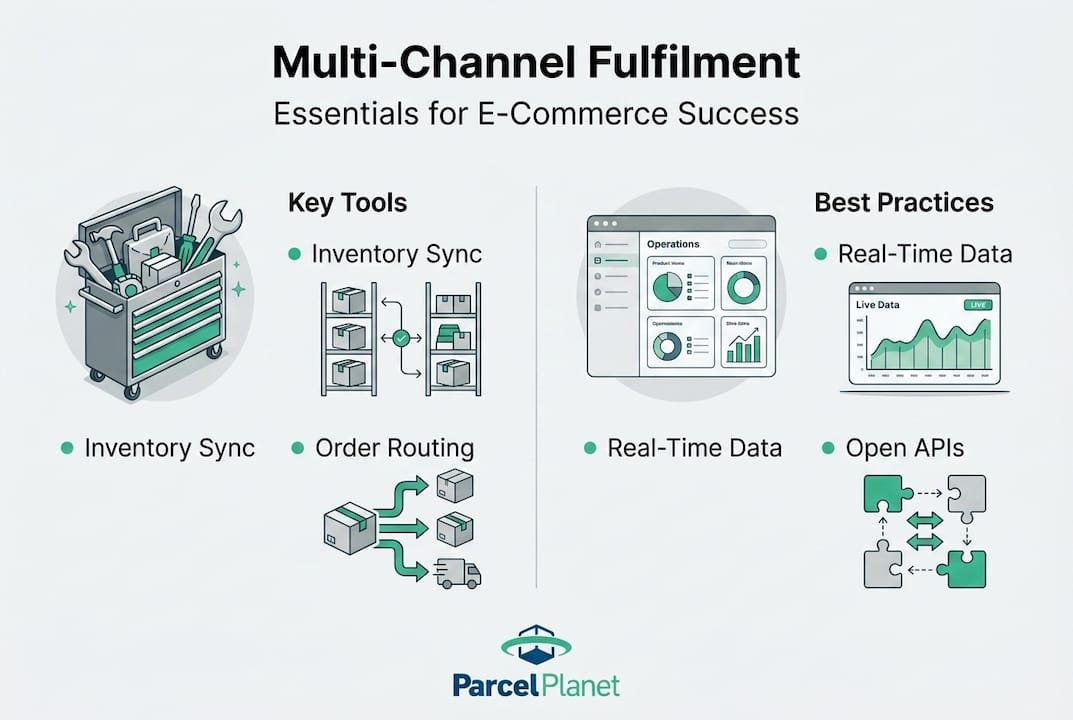
Pro Tip: Choose tools built on open APIs. Proprietary, closed systems may seem convenient initially, but they limit your options as your channel mix evolves.
Step-by-step setup for multi-channel fulfilment
With tools chosen, here is how to set up your multi-channel fulfilment in a practical, sequential way. Rushing this phase is one of the most common mistakes brands make, and it often leads to costly inventory discrepancies at launch.
Follow this proven implementation process to build a reliable foundation:
- Select your fulfilment provider or platform. Choose a scalable 3PL or service with omnichannel support. Confirm they can handle your current order volumes and your projected growth.
- Integrate your sales channels. Connect each platform (Shopify, Amazon, eBay, TikTok Shop) to your central system via API or native app. Document each connection clearly.
- Centralise your inventory. Migrate all stock data into your central inventory management system. Reconcile any discrepancies before going live.
- Configure real-time syncing. Set sync intervals to as frequent as possible. For high-volume brands, near-instant syncing is essential to prevent overselling.
- Define order routing rules. Establish logic for which warehouse or fulfilment centre handles each channel or region, factoring in shipping speed and cost.
- Monitor KPIs from day one. Track order accuracy, fulfilment speed, inventory discrepancy rates, and customer satisfaction scores from the moment you go live.
- Optimise with automation and periodic reviews. Use the data from your dashboards to identify bottlenecks and apply automation or warehouse optimisation tactics to address them.
Pro Tip: Before launching, run a full sync test across every connected channel using dummy orders. Catch integration errors in a controlled environment, not during a peak trading period.
“Brands that monitor fulfilment error rates from day one outperform those that wait for customer complaints. Proactive measurement is the difference between good and great operations.”
Common setup mistakes include skipping the inventory reconciliation step, assuming integrations work without testing, and failing to define clear routing rules before launch. Strong warehouse management practices and a well-documented shipping strategy workflow will keep your operations running smoothly from the start.
Troubleshooting and optimising multi-channel fulfilment
Once your system is live, staying ahead of errors and committing to continuous optimisation is what separates growing brands from stagnant ones. Even well-configured systems encounter issues. Knowing where to look and how to respond is essential.
The most common problem areas include:
- Sync failures between channels and your central inventory system
- Incorrect order routing sending orders to the wrong warehouse or courier
- Inventory discrepancies caused by returns not being reprocessed correctly
- Carrier delays creating mismatches between promised and actual delivery dates
- SKU mismatches when product listings differ across platforms
Addressing these requires both the right monitoring tools and a culture of regular review. Use real-time dashboards to track error rates and set automated alerts for any KPI that falls outside your defined thresholds. Do not wait for customer complaints to tell you something is wrong.
Benchmark KPIs to track regularly:
| KPI |
Target benchmark |
| Order accuracy rate |
99% or above |
| On-time delivery rate |
95% or above |
| Inventory discrepancy rate |
Below 1% |
| Average fulfilment time |
Under 24 hours |
| Return processing time |
Within 48 hours |
The efficiency gains from optimisation are significant. AI-powered order routing can reduce fulfilment costs by 30% and improve delivery speed by 43%, while 3PL partnerships consistently cut shipping costs by 25 to 30% and reduce errors by 40%. These are outcomes worth actively pursuing.
For continuous improvement, apply these strategies:
- Conduct monthly fulfilment audits comparing actual vs expected performance
- Introduce hybrid fulfilment models where slower channels use different routing logic
- Review top fulfilment strategies relevant to your category and order volumes
- Explore the full value of using third-party logistics to offload operational complexity as you scale
Our perspective: Why efficient multi-channel fulfilment is the new engine of e-commerce scale
We have worked with enough e-commerce brands to say this confidently: manual, channel-specific fulfilment is not just inefficient. It is a ceiling on your growth. Every hour your team spends reconciling stock across platforms or chasing courier updates is an hour not spent on product development, marketing, or customer relationships.
The brands that scale fastest treat fulfilment as a strategic asset, not an operational cost to be minimised. They invest in integration, automation, and proactive monitoring because they understand that customer experience is shaped at the point of delivery, not at the point of purchase. A shift to omnichannel and automation is now a fundamental requirement for competing effectively, and the market data bears this out.
The missed opportunity most brands overlook is cross-channel analytics. When you can see performance data across every channel in one place, patterns emerge that are invisible in siloed reporting. You spot which channels drive returns, which couriers underperform in specific regions, and where stock should be pre-positioned before peak periods. Investing in efficient fulfilment strategies grounded in data is what separates brands that manage fulfilment from those that use it as a competitive advantage.
Pro Tip: Set up cross-channel analytics dashboards before you need them. Waiting until you have a problem means making decisions with incomplete data.
Achieve multi-channel fulfilment success with ParcelPlanet
If this guide has highlighted gaps in your current fulfilment approach, you are not alone. Most growing brands reach a point where managing logistics in-house creates more friction than it solves.

At ParcelPlanet, we specialise in helping e-commerce brands streamline their multi-channel fulfilment operations. From warehousing and pick-pack-ship to real-time tracking and courier integrations, we handle the complexity so you can focus on growing. Explore the outsourcing fulfilment benefits and see how our partners have scaled efficiently through our client success stories. Ready to connect your sales channels seamlessly? Start by integrating your stores with our platform and take the next step towards efficient, scalable fulfilment.
Frequently asked questions
What is multi-channel fulfilment and how does it work?
Multi-channel fulfilment uses a single centralised system to manage inventory and process orders from multiple sales channels, including your own website, marketplaces, and social commerce platforms, so every order is fulfilled accurately and efficiently.
How does multi-channel fulfilment benefit e-commerce brands?
Brands that adopt MCF gain measurable commercial advantages. Multi-channel brands see a 19% sales increase and 12% better inventory turnover, while 3PL partnerships cut shipping costs by 25 to 30% and reduce errors by 40%.
You need a central inventory management system, integration tools that connect your sales channels, and ideally a 3PL partner. The core MCF mechanics also include real-time synchronisation, order routing logic, and pick-pack-ship operations supported by platform integrations.
How do you troubleshoot common multi-channel fulfilment issues?
Use real-time dashboards to monitor sync errors, inventory gaps, and delivery performance, and configure automated alerts so your team can act before small issues become customer-facing problems. AI routing tools can cut costs by 30% and improve delivery speed by 43%.
Is automation important for multi-channel fulfilment?
Absolutely. Automation reduces manual errors, speeds up order processing, and makes scaling far more manageable. AI-powered routing alone delivers a 30% cost reduction and 43% faster delivery, making it one of the highest-return investments a growing brand can make.
Recommended


