Over 80 percent of british consumers expect same-day or next-day delivery when shopping online, placing intense pressure on e-commerce logistics managers. As global brands chase customer loyalty across American and Canadian markets, the complexity of modern fulfilment demands smarter, faster solutions. This article sheds light on the advanced technologies, fulfilment models, and operational strategies that leading businesses use to meet rising expectations while controlling costs in a rapidly evolving digital marketplace.
Table of Contents
Key Takeaways
|
|
| Point |
Details |
| Importance of Logistics |
Logistics is essential in modern e-commerce, providing a competitive advantage that influences customer satisfaction and brand reputation. |
| Fulfilment Model Choices |
Businesses must assess their operational needs to select the appropriate fulfilment model, weighing control, infrastructure investments, and scalability. |
| Technological Integration |
Implementing advanced technologies like AI and real-time tracking can enhance efficiency and customer experience throughout logistics operations. |
| Cost Management Strategy |
Effective logistics cost management can either burden or enhance profitability, requiring businesses to optimise their supply chains and implement strategic reductions. |
Defining Logistics in Modern E-commerce
Logistics in e-commerce represents a comprehensive strategic framework for managing product movement and information flow across digital commerce ecosystems. Sophisticated supply chain coordination now requires intricate digital infrastructure that transforms traditional distribution models.
Modern e-commerce logistics encompasses multiple interconnected processes, including inventory management, order processing, packaging, transportation, and customer delivery. Businesses must synchronise these complex operational elements to create seamless consumer experiences. The digital transformation has dramatically shifted logistics from a purely operational function to a strategic competitive advantage that directly influences customer satisfaction and brand reputation.
E-commerce logistics integrates technological innovations like real-time tracking, automated warehousing, and predictive analytics to optimise supply chain performance. Omni-channel logistics models have emerged, enabling businesses to provide consistent shopping experiences across multiple platforms and delivery channels. These advanced systems allow companies to manage inventory dynamically, reduce shipping costs, and respond rapidly to changing market demands.
Pro tip: Invest in integrated logistics management software that provides end-to-end visibility and enables real-time decision-making across your supply chain ecosystem.
Key Fulfilment Models and Their Differences
E-commerce businesses today can choose from multiple fulfillment models, each with distinct operational characteristics and strategic implications. Warehousing trends have evolved dramatically, introducing sophisticated options like distribution centres, dark stores, and micro-fulfillment centres that cater to specific product and delivery requirements.
The primary fulfillment models include in-house fulfillment, third-party logistics (3PL), and fourth-party logistics (4PL). In-house fulfillment involves managing all logistics operations internally, providing maximum control but requiring significant infrastructure investment. Third-party logistics providers offer outsourced warehousing, packaging, and shipping services, enabling businesses to leverage external expertise and scalable infrastructure. Fourth-party logistics takes this a step further by managing entire supply chain networks, coordinating multiple 3PL providers and integrating advanced technological solutions.
Fulfillment service strategies reveal that different e-commerce businesses select models based on unique operational needs. Factors such as product complexity, shipping volume, geographical reach, and technological capabilities significantly influence model selection. Fresh product categories like groceries might require specialised refrigerated distribution networks, while digital or lightweight products could utilise more streamlined fulfillment approaches.
Here is a comparison of primary e-commerce fulfilment models and their business implications:
|
|
|
|
| Model |
Control Level |
Infrastructure Needs |
Scalability Potential |
| In-house Fulfilment |
Full oversight |
High investment required |
Limited by internal capacity |
| Third-Party Logistics (3PL) |
Moderate supervision |
External warehouse and staff |
Easily scaled via provider |
| Fourth-Party Logistics (4PL) |
Minimal direct involvement |
Integrates multiple 3PL partners |
Maximum, network-wide flexibility |
Pro tip: Conduct a comprehensive operational audit to identify which fulfillment model aligns most closely with your specific e-commerce business requirements and growth trajectory.
Technology Integration for Enhanced Operations
Artificial Intelligence and Internet of Things technologies are revolutionising e-commerce logistics, creating unprecedented opportunities for operational efficiency and customer experience. Advanced logistics technologies are transforming traditional supply chain management by introducing intelligent systems capable of predictive analytics, real-time tracking, and dynamic decision-making.
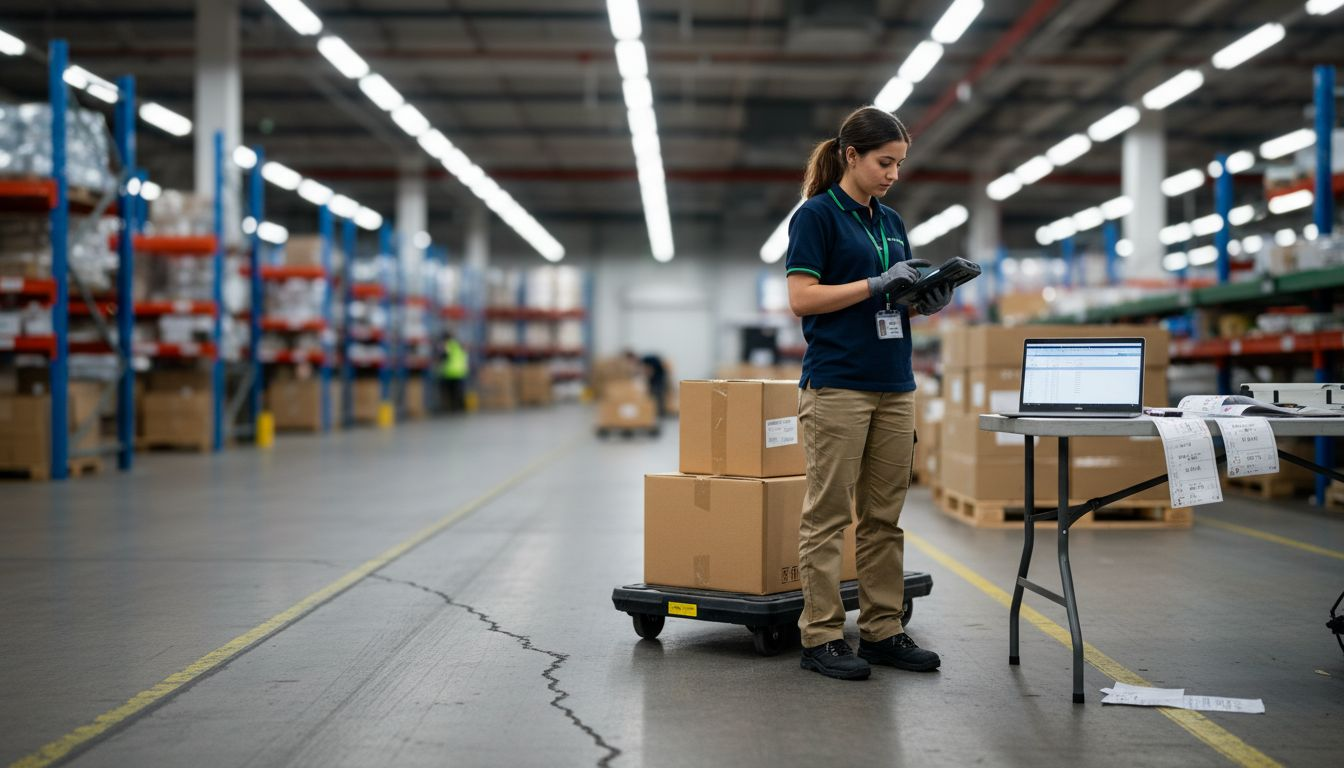
Key technological integrations include automated storage and retrieval systems, robotics, machine learning algorithms, and sophisticated data analytics platforms. These technologies enable businesses to optimise warehouse operations, reduce human error, and dramatically improve inventory management precision. Intelligent systems can predict demand patterns, automate complex sorting processes, and provide granular insights into supply chain performance that were previously impossible to obtain.
Intelligent warehousing technologies demonstrate remarkable potential for enhancing operational sustainability and cost-effectiveness. Robotics and automated systems can significantly reduce labour costs, minimise physical strain on workers, and create more environmentally friendly logistics ecosystems. Advanced algorithms enable real-time inventory tracking, predictive maintenance, and dynamic routing strategies that maximise efficiency while minimising carbon footprint.
The table below summarises key logistics technologies and their benefits in e-commerce:
|
|
|
| Technology |
Main Function |
Business Benefit |
| Predictive Analytics |
Forecasting demand patterns |
Reduces stockouts |
| Automated Warehousing |
Streamlines storage and picking |
Lowers labour costs |
| Robotics |
Automates sorting processes |
Increases order accuracy |
| Real-time Tracking |
Monitors parcels end-to-end |
Enhances customer trust |
Pro tip: Implement a phased technology integration approach, starting with pilot programmes that target specific operational bottlenecks and gradually scaling intelligent solutions across your logistics infrastructure.
Logistics Costs and Impact on Profitability
Logistics expenditure represents a critical financial component that directly influences an e-commerce enterprise’s overall profitability and competitive positioning. Logistics costs significantly impact financial performance across various operational domains, with strategic management determining whether these expenses become a burden or a competitive advantage.
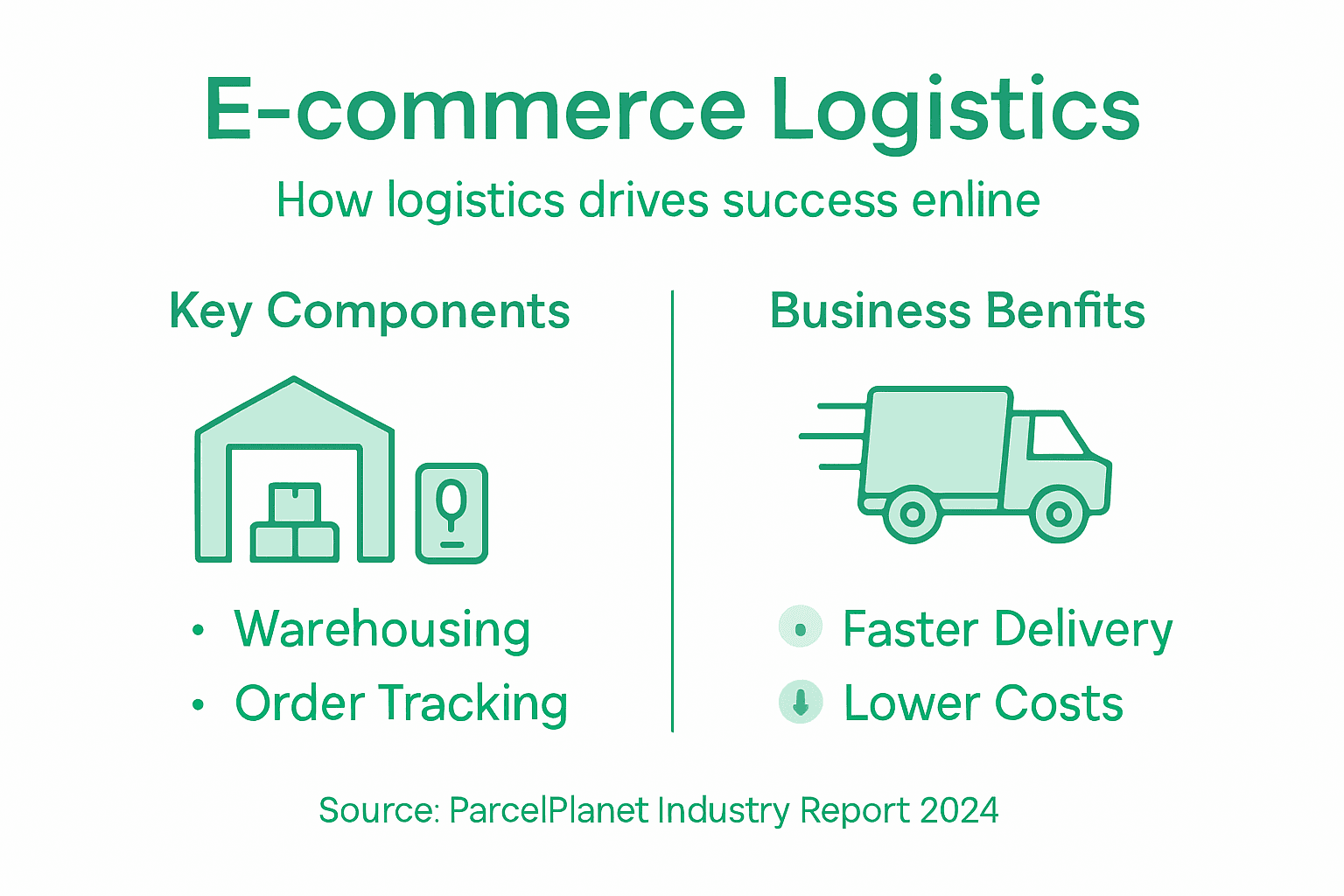
The primary cost drivers in e-commerce logistics include transportation, warehousing, inventory management, packaging, and technological infrastructure. Transportation typically constitutes the largest expense, involving fuel costs, vehicle maintenance, courier services, and last-mile delivery challenges. Warehousing expenses encompass facility rental, equipment maintenance, labour costs, and storage management systems. Advanced inventory tracking technologies and automation can help mitigate these expenditures by reducing manual interventions and minimising wastage.
Strategic cost management involves implementing efficient logistics models that balance operational expenses with service quality. Businesses can reduce logistics costs through multiple approaches, such as optimising shipping routes, negotiating bulk transportation contracts, implementing cross-docking strategies, and leveraging third-party logistics providers with established infrastructure. Technological investments in predictive analytics and real-time tracking can also help identify potential cost-saving opportunities and streamline operational processes.
Pro tip: Conduct a comprehensive logistics cost audit quarterly, identifying potential inefficiencies and implementing targeted reduction strategies across your supply chain ecosystem.
Enabling Growth and Customer Satisfaction
Customer satisfaction represents the cornerstone of sustained e-commerce success, with logistics playing a pivotal role in shaping consumer perceptions and brand loyalty. Logistics value dimensions extend far beyond simple product delivery, encompassing communication, convenience, and overall experience that directly influence customer retention and business growth.
Critical logistics factors that drive customer satisfaction include precise delivery communication, convenient receipt processes, seamless return mechanisms, and exceptional reception experiences. These elements go beyond traditional metrics like delivery speed, focusing instead on creating holistic, customer-centric logistics strategies. Businesses can differentiate themselves by developing robust communication systems that provide transparent, real-time tracking, personalised delivery options, and efficient problem resolution mechanisms.
Logistics performance enhancements directly contribute to enterprise growth by fostering customer loyalty through strategic improvements. This involves developing sustainable packaging solutions, optimising transportation networks, implementing cross-border capabilities, and investing in staff training. By treating logistics as a strategic capability rather than a mere operational necessity, e-commerce businesses can transform customer interactions into competitive advantages that drive long-term growth and market differentiation.
Pro tip: Develop a comprehensive customer feedback loop specifically focused on logistics performance, enabling continuous improvement and personalised service refinement.
Elevate Your E-commerce Success with Expert Logistics Support
Managing complex logistics challenges like limited space, high operational costs, and the need for scalable fulfilment solutions can feel overwhelming. This article highlights the critical role of third-party logistics in streamlining warehousing, picking, packing, and shipping operations, helping brands transform logistics from a cost burden into a strategic advantage. If you are seeking to enhance control, reduce expenses, and deliver seamless customer experiences across multiple channels, specialised 3PL services are the key.
Discover how ParcelPlanet empowers growing e-commerce and omnichannel brands by offering tailored fulfilment solutions with real-time tracking and efficient order management. Start your journey to faster, more accurate deliveries today by exploring our order fulfilment services, and see why trusted brands rely on ParcelPlanet to scale operations confidently. Take control of your logistics now and turn challenges into growth opportunities at ParcelPlanet.
Frequently Asked Questions
What are the key components of logistics in e-commerce?
Logistics in e-commerce includes inventory management, order processing, packaging, transportation, and customer delivery. Each of these elements must be synchronised to ensure a seamless consumer experience.
How can technology improve e-commerce logistics?
Technological innovations such as real-time tracking, automated warehousing, and predictive analytics can optimise supply chain performance, enhance operational efficiency, and improve customer satisfaction.
What are the different fulfilment models in e-commerce logistics?
The primary fulfilment models are in-house fulfilment, third-party logistics (3PL), and fourth-party logistics (4PL). Each model varies in terms of control level, infrastructure needs, and scalability potential, influencing an e-commerce business’s operational strategy.
How do logistics costs affect e-commerce profitability?
Logistics costs, including transportation, warehousing, and inventory management, significantly impact overall profitability. Efficient management of these costs through streamlined operations and technological investments is vital for maintaining a competitive advantage.
Recommended