TL;DR:
- Scalable logistics enables brands to grow order capacity without sacrificing speed or accuracy.
- Key benchmarks include over 99.5% on-time shipments and 99.68% picking accuracy.
- Choosing flexible partners with integrated technology and strategic mindset is essential for long-term growth.
As e-commerce order volumes climb year on year, the pressure on fulfilment operations has never been greater. Many growing brands find themselves stretched thin, scrambling to process orders accurately while managing warehousing costs, courier relationships, and multi-channel complexity all at once. The difference between brands that scale smoothly and those that stall often comes down to one factor: their logistics infrastructure. Best-in-class operations achieve on-time shipments above 99.5% and picking accuracy above 99.68%. This article explains what scalable logistics means, how it performs in practice, and what steps you can take to apply it to your brand.
Table of Contents
Key Takeaways
| Point |
Details |
| Clear definition |
Scalable logistics means adapting processes, technology, and partners to handle rapid growth efficiently. |
| Benchmark-driven success |
Industry benchmarks guide scalable logistics, highlighting high accuracy, speedy throughput, and robust capacity utilisation. |
| Technology enables flexibility |
Automation and real-time data integration are essential tools for efficient, scalable logistics operations. |
| Choose partners wisely |
Brands must invest in partners who offer true scalability, flexibility, and transparency in logistics. |
| Adaptability is key |
Continuous improvement and resilient workflows support sustained growth and fulfilment excellence. |
defining scalable logistics for e-commerce brands
Scalable logistics is the ability to expand your fulfilment capacity, processes, and technology as order volumes grow, without sacrificing speed or accuracy. For e-commerce brands, this is not a luxury. It is a necessity. When demand surges during a flash sale or seasonal peak, your logistics operation either keeps up or lets customers down.
The key elements of scalable logistics include:
- flexible warehousing that accommodates fluctuating stock levels and additional SKUs
- integrated technology such as warehouse management systems (WMS) that connect inventory, orders, and dispatch in real time
- agile workflows that can be adjusted quickly when volumes spike or drop
- data-informed decisions that use order history and demand signals to plan capacity ahead of time
Traditional logistics, by contrast, tends to rely on fixed processes, manual systems, and reactive planning. The table below illustrates how scalable and traditional approaches compare across core metrics.
| metric |
scalable logistics |
traditional logistics |
| Order volume flexibility |
High, adapts dynamically |
Low, fixed capacity plans |
| Technology integration |
Real-time, multi-channel |
Manual or siloed systems |
| Peak period readiness |
Built-in contingency planning |
Often reactive and strained |
| Error rate management |
Data-driven continuous improvement |
Ad hoc corrections |
| Customer communication |
Live tracking and notifications |
Limited visibility |
Several challenges push e-commerce brands towards scalable logistics solutions. Market fluctuations are unpredictable. A viral product or unexpected promotion can triple order volumes overnight. Without scalable infrastructure, fulfilment collapses under that pressure. For omnichannel retailers managing orders across their own website, marketplaces, and physical stores, the complexity multiplies further.
Understanding logistics scalability explained is the first step. The next is knowing exactly which benchmarks define success in a scalable operation, because you cannot improve what you do not measure. Best-in-class logistics achieves over 99.5% on-time shipments and 99.68% picking accuracy, setting a high bar for what your fulfilment partner should be reaching for.
With scalable logistics defined, measurable benchmarks are what separate best-in-class providers from average operations. These figures give you a concrete standard to hold your fulfilment partner accountable to.
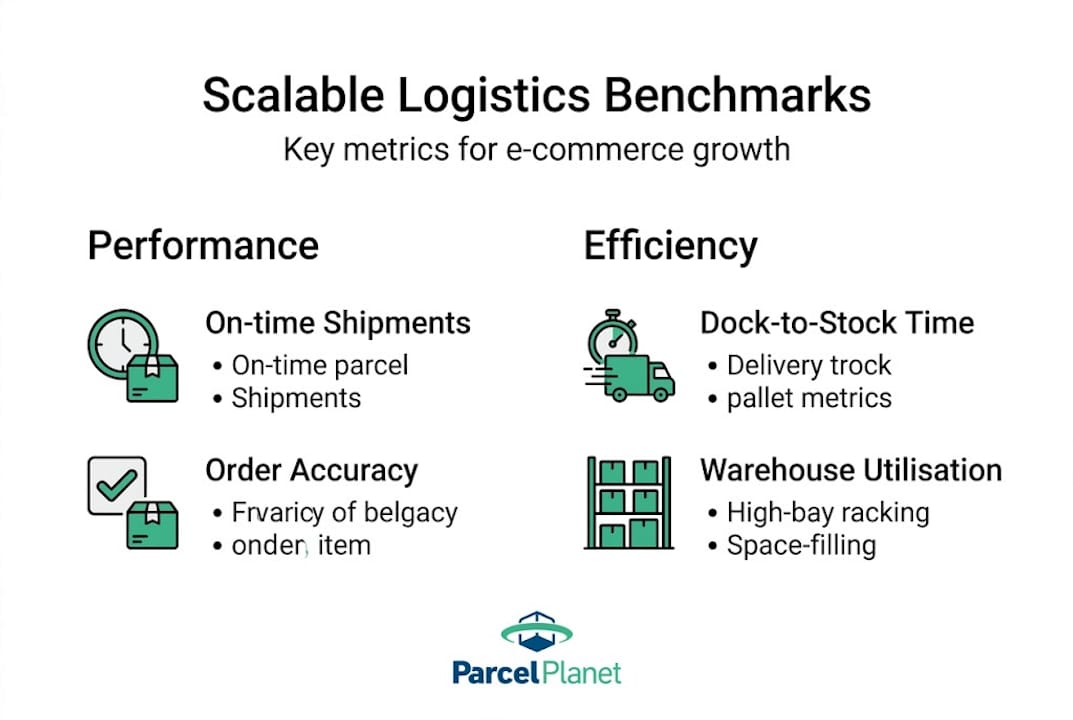
The data table below presents four key benchmarks from industry research alongside typical average performance.
| benchmark |
best-in-class |
industry average |
| On-time shipments |
>99.5% |
~95% |
| picking accuracy |
|
|
=99.68% | ~97% |
| dock-to-stock time | <3.5 hours | 8 to 12 hours |
| warehouse capacity utilised | 90% | 75 to 80% |
Industry research confirms these are the standards that distinguish scalable, efficient operations from the rest.
A picking accuracy gap of just 2% sounds small. But for a brand shipping 10,000 orders per week, that translates to 200 incorrect orders every week, each one generating a return, a customer complaint, or a lost sale.
For rapidly growing e-commerce brands, missing these benchmarks has compounding consequences. A late shipment rate of even 5% creates a significant volume of unhappy customers, negative reviews, and repeat purchase losses. Poor picking accuracy erodes trust fast. Meanwhile, a dock-to-stock time of over 8 hours means fresh inventory sits unprocessed, creating artificial stockouts even when product is physically in the building.
Scaling warehouse management to meet these benchmarks requires ongoing investment in systems and processes. warehouse optimisation techniques such as slotting frequently picked SKUs closer to dispatch zones and using barcode scanning at every pick stage are proven ways to push accuracy towards best-in-class levels.
These benchmarks are not just aspirational. They are achievable with the right infrastructure and partner, and they should be your baseline expectation when evaluating any logistics provider.
How scalable logistics solutions work in practice
Knowing what success looks like is one thing. Understanding how scalable logistics is actually put into operation is where brands gain a real advantage. The process is more structured than most people realise.
- demand forecasting Review historical order data, upcoming campaigns, and seasonal trends to project volume requirements weeks or months in advance.
- multi-channel inventory integration Connect all sales channels, your website, marketplaces, and retail partners, into a single inventory view so stock levels are accurate everywhere in real time.
- warehouse flow optimisation Design picking routes, stock locations, and packing stations around actual order patterns to reduce handling time and minimise errors.
- 3PL collaboration Work with a third-party logistics partner whose systems and capacity align with your growth projections, so you are not limited by your own warehouse footprint.
- performance monitoring Review fulfilment metrics weekly, comparing picking accuracy, shipment timeliness, and dock-to-stock performance against benchmark targets.
Pro tip: If you are heading into a high-volume period such as Black Friday or a product launch, brief your logistics partner at least six weeks in advance. This allows time for staffing, stock pre-positioning, and system testing before orders flood in.
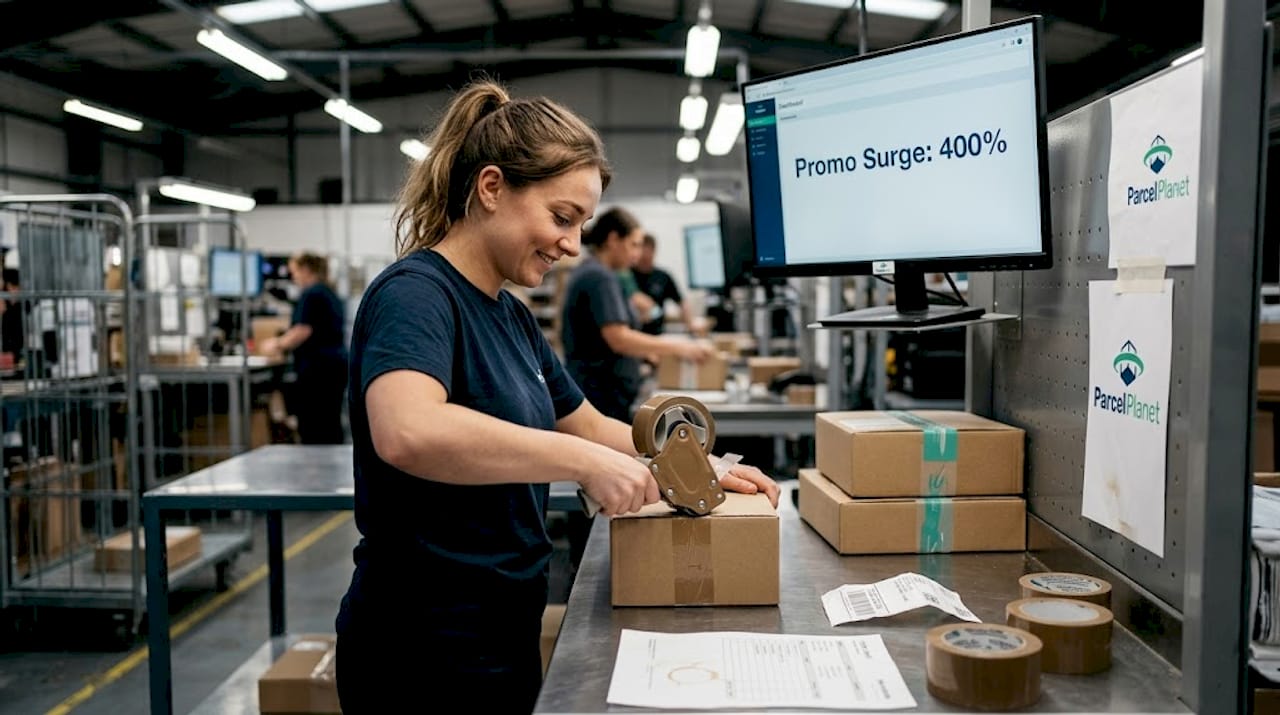
Consider this scenario. A fashion brand runs a 48-hour promotional event and order volumes jump 400% overnight. With scalable logistics in place, demand forecasting had already flagged the spike. Extra picking staff were scheduled, fast-moving SKUs were repositioned, and the WMS automatically prioritised dispatch queues. Orders shipped on time with no backlog.
Best-in-class dock-to-stock times under 3.5 hours are only possible when receiving, scanning, and putaway processes are tightly integrated and automated. automation in logistics plays a key role here, removing manual steps that introduce delays and errors. The brands that invest early in these systems are the ones that scale without breaking. Understanding scalable logistics for brand growth and optimising logistics for growth are practical next steps for building this capability into your operation.
choosing the right scalable logistics partner
Once processes and technologies are in place, your choice of logistics partner can make or break your scalability journey. Not every 3PL is built to grow with you. Here is what to look for.
What a strong scalable logistics partner offers:
- capacity flexibility: the ability to handle both your current volumes and a projected 3x to 5x increase without service degradation
- technology integration: direct connection to your e-commerce platforms, marketplaces, and courier services via APIs
- fulfilment speed: proven ability to dispatch same-day or next-day, with dock-to-stock processes that keep inventory available
- transparent reporting: real-time dashboards showing order status, accuracy rates, and inventory levels, not weekly emailed spreadsheets
- geographic coverage: warehouse locations and courier partnerships that serve your target markets efficiently
Pro tip: Ask any potential logistics partner directly: “What is your plan if our order volumes double in three months?” A confident, detailed answer signals they have genuinely thought about scalability. A vague response is a warning sign.
“The brands that scale successfully are those who treat their logistics partner as a growth partner, not just a service provider. The relationship needs to be collaborative, transparent, and built on shared performance goals.”
Best-in-class warehouse capacity utilisation sits at 90%, but flexibility to expand beyond that is what separates a scalable partner from one that will hit a ceiling just as your brand accelerates.
Common pitfalls to avoid when selecting a partner:
- choosing on price alone without evaluating performance benchmarks
- overlooking integration capability, which leads to manual order entry and errors
- failing to review the partner’s peak-season track record before committing
- ignoring contract flexibility, which may lock you into fixed volume commitments that limit growth
Reviewing guides on choosing a scalable 3PL, building robust shipping strategies for scalability, and exploring logistics outsourcing strategies will give you a fuller picture before you sign anything.
A realistic perspective: what most guides miss about scalable logistics
Most articles about scalable logistics focus on technology and process. They are not wrong, but they miss something important. True scalability is also a mindset. It requires your business to commit to ongoing investment, honest performance review, and a willingness to change what is not working, even when things appear to be going well.
Many brands underestimate the cost and disruption of adapting legacy systems. A warehouse management system bolted onto an older ERP (enterprise resource planning) tool often creates more complexity than it solves. The brands that scale most effectively build their logistics infrastructure intentionally, rather than patching problems as they grow.
“Speed and accuracy matter, but resilience is what sustains a logistics operation through uncertainty. The best logistics setups are designed to absorb shocks, not just optimise for ideal conditions.”
Adaptability and resilience are every bit as important as speed and accuracy. Reading the optimising logistics guide is a good way to build that mindset into your planning. The brands that thrive long-term are those that treat logistics as a strategic function, not a back-office cost.
scalable logistics solutions at ParcelPlanet
Ready to put scalable logistics into practice? At ParcelPlanet, we specialise in helping e-commerce and omnichannel brands build fulfilment operations that grow with them. Our parcel fulfilment services are designed around flexibility, real-time technology integration, and the accuracy benchmarks your customers expect.

Whether you are looking to understand order fulfilment from the ground up or you are ready to move your operation to a partner built for scale, ParcelPlanet is here to support your next stage of growth. Get in touch today to discuss a tailored solution for your brand.
frequently asked questions
How does scalable logistics reduce order fulfilment delays?
Scalable logistics uses flexible processes and real-time data to keep orders moving even when volumes surge. Best-in-class dock-to-stock times under 3.5 hours show how tightly integrated systems prevent inventory from sitting idle.
What technologies are essential for scalable logistics?
Order management systems, warehouse automation, and multi-channel inventory integration are the backbone of scalable logistics, ensuring accurate, fast fulfilment across all sales channels.
How do you measure success in scalable logistics operations?
Success is measured through benchmarks such as on-time shipment rates, picking accuracy, and warehouse utilisation. Industry benchmarks include over 99.5% on-time shipments and at least 99.68% picking accuracy as best-in-class standards.
Can traditional logistics providers become scalable?
Yes, but it requires deliberate investment in technology, adaptive workflows, and strategic partnerships specifically designed to support growth rather than just manage current volumes.
Why is scalable logistics critical for omnichannel retail?
Omnichannel brands manage orders across websites, marketplaces, and stores simultaneously, and scalable logistics ensures inventory and fulfilment remain accurate and fast across every channel.
Recommended


