More than 60 percent of North American e-commerce managers report that scaling logistics quickly often creates unexpected gaps in shipping performance. Addressing regional and international demands, from American cities to British rural areas, is central to delivering reliable customer experiences. This guide gives you practical solutions for assessing shipping needs, building efficient fulfilment systems, and ensuring your delivery strategies work across every market you target.
Table of Contents
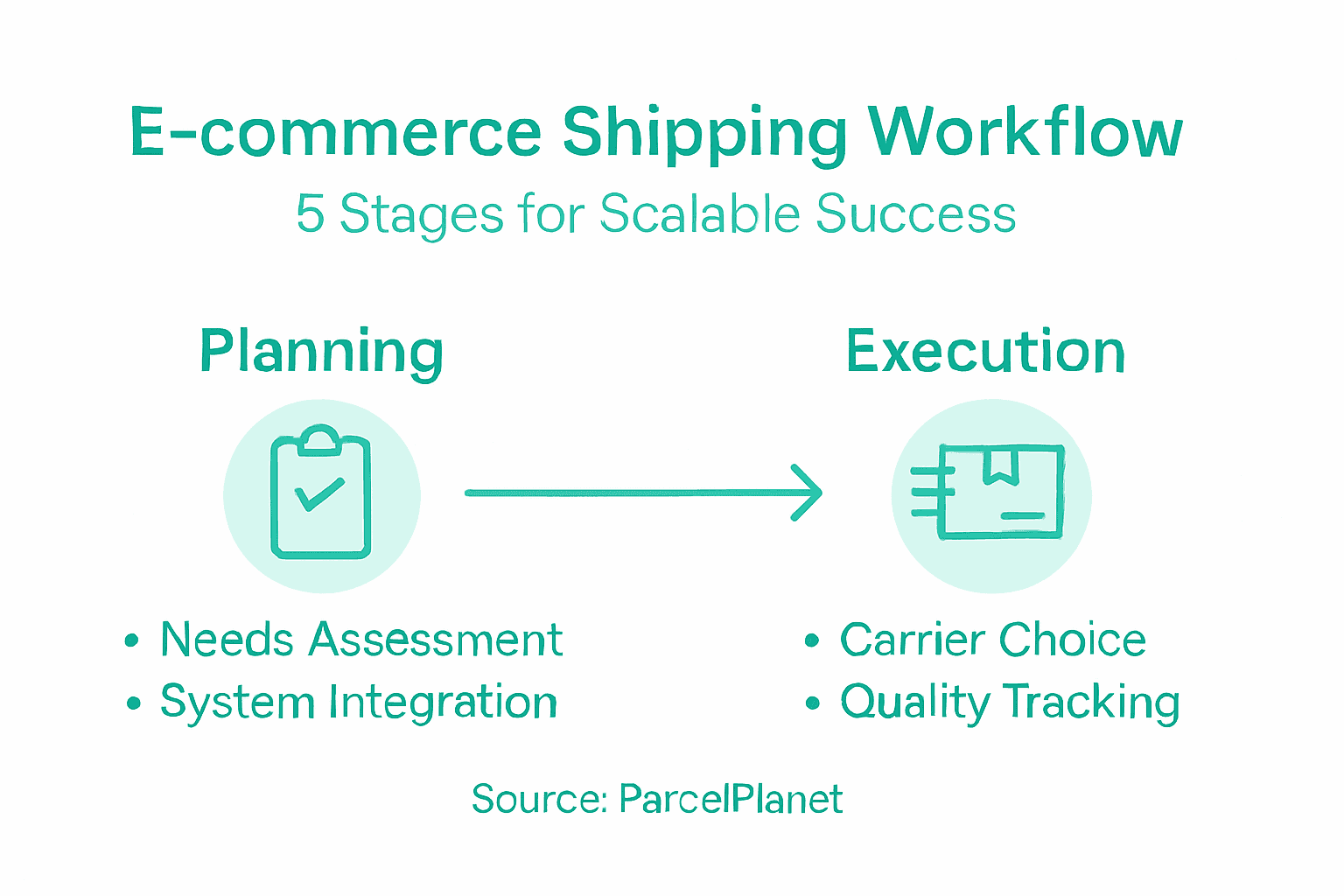
Quick Summary
| Key Insight |
Explanation |
| 1. Assess shipping needs thoroughly |
Conduct a detailed analysis of product characteristics and customer distribution for optimal logistics. |
| 2. Integrate fulfilment systems smoothly |
Use software that connects e-commerce platforms for real-time stock and order management. |
| 3. Optimise carrier selection strategically |
Compare carriers on transit times and costs; a dynamic routing system can enhance delivery efficiency. |
| 4. Implement rigorous tracking protocols |
Establish systems for real-time shipment visibility and quality checks to improve customer satisfaction. |
| 5. Monitor performance continuously |
Regularly analyse shipping data to identify issues and improve strategies; cultivate a culture of improvement. |
Stage 1: Assess shipping needs and regional demands
Successfully scaling your e-commerce shipping strategy begins with comprehensive regional assessment. Understanding your specific shipping requirements demands a strategic approach that considers multiple interconnected factors.
Start by conducting a detailed analysis of your current product range and customer distribution. Evaluating logistics provider capabilities means examining shipping volume, preferred transportation methods, and specific product characteristics. Consider elements like temperature sensitivity, potential hazardous material classifications, and weight variations. Map out your existing customer regions and anticipate potential expansion territories, which will help determine whether you require air, sea, or road freight solutions.
Your assessment should include quantitative research on shipping frequency, average order weight, package dimensions, and potential international regulatory requirements. Create a comprehensive spreadsheet tracking these metrics, allowing you to compare different logistics providers and their service capabilities. Pay special attention to destination country regulations, customs procedures, and potential import restrictions that might impact your shipping workflow.
Top tip: Invest time in creating a dynamic shipping needs assessment spreadsheet that can be updated quarterly to reflect changing market conditions and business growth.
Here’s a summary of regional shipping assessment factors and their business impact:
| Factor |
Description |
Potential Business Impact |
| Product characteristics |
Consider fragility, temperature, and weight |
Affects shipping costs, handling needs |
| Customer distribution |
Analyse current and target regions |
Influences provider and route choice |
| Regulatory requirements |
Review customs and import regulations |
Prevents delays and compliance issues |
| Shipping frequency |
Quantify order frequency and type |
Optimises scheduling and provider selection |
| Logistics provider capabilities |
Assess carrier coverage and methods |
Enhances reliability and scalability |
Stage 2: Integrate fulfilment systems with sales channels
Successfully scaling your e-commerce operations requires seamless integration between your fulfilment systems and sales platforms. This critical stage ensures that your inventory management, order processing, and shipping workflows operate as a cohesive, efficient mechanism.
Begin by selecting software integration solutions that support direct connections between your e-commerce platforms, inventory management systems, and order processing tools. Look for platforms that offer robust API capabilities, allowing real-time synchronisation of stock levels, order details, and shipping information across multiple sales channels. This approach eliminates manual data entry, reduces human error, and provides a centralised view of your entire operational ecosystem.

Prioritise integration points that cover key operational aspects such as automated inventory updates, instant order routing to appropriate warehouses, and seamless tracking information transmission to customers. Implement middleware solutions if necessary to bridge potential gaps between different software systems, ensuring smooth communication and data flow. Test each integration thoroughly to confirm accurate information transfer and identify potential bottlenecks before full deployment.
Professional tip: Conduct a comprehensive systems compatibility audit before implementing integrations to prevent potential technical conflicts and ensure smooth operational workflow.
Stage 3: Optimise carrier selection and delivery methods
Optimising carrier selection represents a critical strategy for enhancing your e-commerce shipping performance and customer satisfaction. Your goal is to create a robust delivery ecosystem that balances speed, reliability, and cost effectiveness.
Begin by comparing shipping strategies that align with your specific business requirements. Evaluate potential carriers based on multiple dimensions including transit times, geographical coverage, pricing structures, and reliability metrics. Consider developing a hybrid shipping model that allows you to leverage multiple carriers depending on specific order characteristics such as destination, package weight, and urgency. This approach provides flexibility and helps mitigate risks associated with relying on a single transportation provider.
Dive deeper into carrier performance by analysing key performance indicators like on time delivery rates, damaged package percentages, and customer feedback. Implement a dynamic carrier selection process that automatically routes orders to the most appropriate shipping partner based on predefined criteria. This might involve creating a sophisticated routing algorithm that considers factors like shipping zone, package dimensions, customer location, and current carrier performance metrics. Regularly review and recalibrate your carrier selection strategy to ensure you are consistently offering the most competitive and reliable shipping options to your customers.
Professional tip: Develop a quarterly carrier performance scorecard to systematically track and compare shipping partner effectiveness across multiple key metrics.
Here’s a comparison of shipping carrier selection strategies:
| Strategy |
Key Features |
Suitable Use Case |
Main Benefit |
| Single carrier |
One provider for all shipments |
Simple or local supply chains |
Streamlined operations |
| Multi-carrier |
Mix of providers by order type |
Diverse geographic reach |
Improved flexibility |
| Dynamic carrier routing |
Algorithms assign carrier by criteria |
High-volume, multi-region business |
Cost and speed optimisation |
Stage 4: Implement quality assurance and tracking protocols
Quality assurance and robust tracking protocols are essential foundations for building customer trust and maintaining operational excellence in your e-commerce shipping strategy. By implementing comprehensive monitoring systems, you can transform potential shipping challenges into opportunities for superior customer experience.
Begin by establishing comprehensive delivery tracking methods that provide real time visibility across your entire logistics network. This involves creating standardised packaging guidelines, implementing systematic quality checks at each stage of order processing, and developing clear performance benchmarks for your shipping partners. Focus on developing a multi tier verification process that examines package integrity, accurate labelling, proper handling, and timely dispatch. Your tracking protocols should include detailed documentation of each shipment, enabling rapid identification and resolution of potential issues before they impact customer satisfaction.
Integrate advanced tracking technologies that offer end to end visibility, including automated notifications for customers at critical shipment milestones. Design your tracking system to capture granular data points such as package location, estimated delivery times, handling conditions, and courier performance metrics. Establish a centralised dashboard that allows your team to monitor shipping performance in real time, enabling proactive intervention and continuous improvement of your logistics workflow. Regular analysis of tracking data will help you identify recurring patterns, potential bottlenecks, and opportunities for optimising your shipping strategy.
Professional tip: Implement an exception management framework that automatically flags and escalates unusual shipping events for immediate review and resolution.
Continuous performance monitoring represents the critical final phase of your e-commerce shipping strategy, enabling your business to remain adaptive and responsive in a dynamic marketplace. Your goal is to transform raw shipping data into actionable insights that drive operational improvements.
Begin by developing performance assessment frameworks that systematically track key shipping metrics across multiple dimensions. Establish a comprehensive dashboard that captures essential performance indicators including on time delivery rates, shipping costs, customer satisfaction scores, and carrier reliability. Create detailed monthly reports that highlight trends, anomalies, and potential areas for strategic intervention. Focus on identifying patterns that might indicate systemic challenges or opportunities for optimisation, such as recurring delays in specific shipping zones or consistent performance variations among different carriers.
Implement a proactive adjustment strategy that responds quickly to performance data insights. This involves regularly reviewing your shipping protocols, reassessing carrier relationships, and dynamically updating your logistics approach based on empirical evidence. Develop a flexible decision making process that allows for rapid pivoting when performance metrics suggest potential improvements. Cultivate a culture of continuous improvement where shipping strategy is viewed as an evolving system rather than a static set of procedures. Engage your team in regular performance review sessions, encouraging collaborative problem solving and innovative thinking about logistics optimization.
Professional tip: Create a quarterly strategic review process that combines quantitative performance data with qualitative feedback from customers and internal teams.
Accelerate Your Growth with Scalable E-commerce Fulfilment Solutions
Scaling your e-commerce shipping strategy demands precise alignment of logistics and technology to overcome challenges such as complex carrier selection, real-time tracking, and seamless integration across sales channels. If you have felt the pressure of managing diverse regional demands and maintaining quality assurance while trying to keep costs under control, you are not alone. These pain points are exactly why optimising your shipping workflow with a reliable 3PL partner can make all the difference.
At ParcelPlanet, we specialise in helping growing brands like yours streamline warehousing, picking, packing, and shipping operations. We provide tailored fulfilment services that integrate effortlessly with your e-commerce platforms and courier services. With our focus on flexibility and real-time tracking, you gain complete visibility and control to enhance customer satisfaction and fuel your international expansion.
Unlock the full potential of your shipping strategy today and leave the logistics complexities behind.
Discover how our fulfilment solutions can support your scalable e-commerce ambitions. Visit ParcelPlanet now and request a tailored quote to start transforming your logistics workflow with expert guidance and dedicated service.
Frequently Asked Questions
How do I assess my e-commerce shipping needs?
To assess your e-commerce shipping needs, conduct a detailed analysis of your product range, customer distribution, and logistics provider capabilities. Map out existing customer regions and potential expansions while considering factors like shipping frequency and regulatory requirements.
What software should I use to integrate my fulfilment systems with sales channels?
Select software integration solutions that offer robust API capabilities for real-time synchronisation of inventory, orders, and shipping details across your platforms. Aim to eliminate manual data entry and ensure a cohesive operational workflow.
How can I choose the right shipping carriers for my business?
To choose the right shipping carriers, compare potential providers based on transit times, geographical coverage, pricing structures, and reliability metrics. Implement a dynamic carrier selection process that routes orders based on predefined criteria to enhance cost-effectiveness and delivery speed.
What tracking protocols should I implement for my shipping process?
Implement comprehensive delivery tracking methods that provide real-time visibility across your logistics network. Establish a multi-tiered verification process and integrate advanced tracking technologies to monitor package location and performance metrics at critical shipment milestones.
How often should I monitor and adjust my shipping strategy?
You should monitor your shipping strategy continuously, analysing key performance metrics monthly to identify trends and areas for improvement. Establish a flexible adjustment process that responds quickly to insights, allowing your operations to remain agile in a dynamic marketplace.
Recommended