TL;DR:
- Logistics directly influences brand growth by ensuring delivery reliability, customer trust, and loyalty. OTIF is a critical metric that aligns supply chain performance with commercial success, and integrating logistics with marketing enhances retention and revenue. Strategic inventory placement and international cost modelling further optimize margins and support scalable expansion.
Logistics is the operational backbone of brand growth, determining whether your customer promise is kept or broken at the moment it matters most. For e-commerce entrepreneurs and brand managers, supply chain management is not a back-office function. It is the mechanism through which your brand either earns loyalty or loses it. Delivery reliability shapes customer trust and repurchase behaviour in ways that no marketing campaign can compensate for. This guide covers the metrics, strategies, and decisions that connect logistics performance directly to brand reputation, retention, and international expansion.
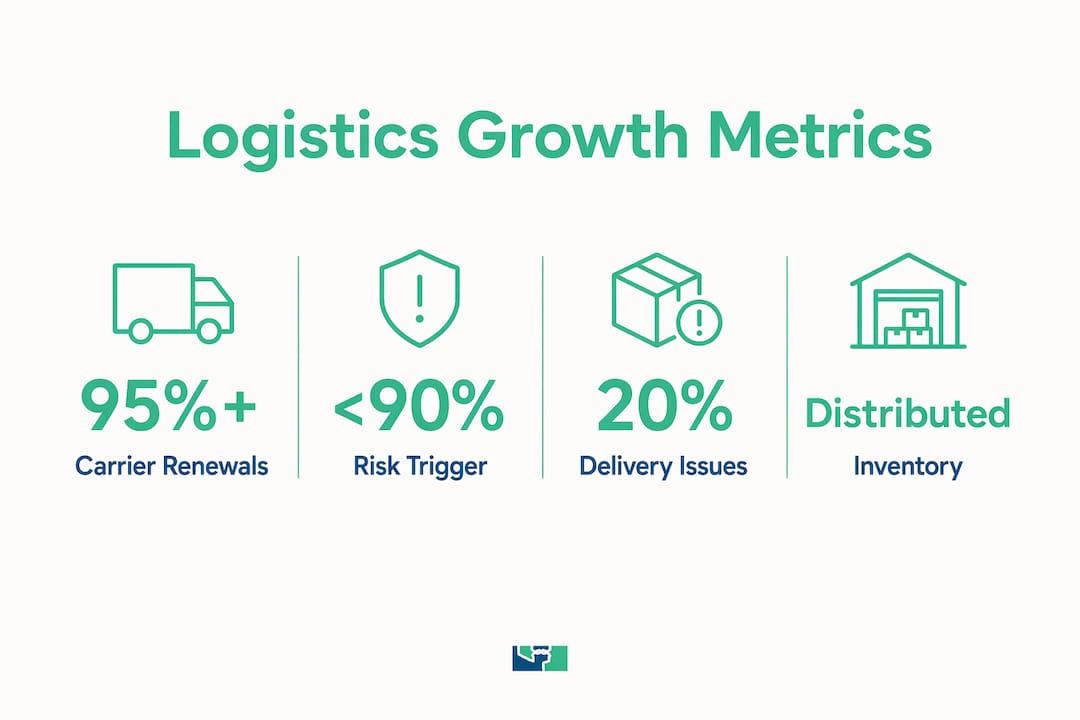
On Time In Full, known as OTIF, is the single most consequential metric in logistics for brand growth. It compresses your entire supply chain performance into one number and links it directly to commercial outcomes. OTIF above 95% secures carrier renewals and preferred partner status, while scores below 90% trigger financial penalties and erode retailer relationships. That gap between 90% and 95% is not a minor operational detail. It is the difference between a brand that grows and one that stagnates.
“OTIF is not just a lagging indicator. It is an upstream operational benchmark that exposes systemic failures and delivers strategic growth advantage when optimised.” — Maponomy, 2026
What makes OTIF particularly powerful is its all-or-nothing framing. A shipment that arrives on time but incomplete counts as a failure. This forces your logistics, warehousing, and procurement teams to align around a shared standard rather than optimising their individual functions in isolation. OTIF’s all-or-nothing structure unites supply chain functions to prevent partial successes that quietly damage customer trust over time.
To use OTIF as a growth lever rather than a compliance checkbox, dissect your failure modes. Late deliveries, incomplete shipments, and slow exception resolution are three distinct problems requiring three distinct fixes. Brands that treat OTIF as a north star metric build continuous improvement loops into their logistics operations, which compounds into measurable brand equity over time.
Why logistics and marketing must work as one system
Logistics is part of the customer experience, not a separate department that hands off after checkout. When your marketing team promises next-day delivery and your fulfilment operation cannot consistently deliver it, the result is not just a missed SLA. It is a broken brand promise that generates support tickets, negative reviews, and lost repeat purchases.
Aligning marketing with logistics improves conversion, retention, and support efficiency because delivery reliability shapes the post-purchase experience directly. Brands with strong omnichannel service capabilities see retention improve by up to 89% year over year and annual revenue increase by 9.5%. That figure reflects what happens when logistics reliability removes friction from the customer journey rather than adding to it.
The practical implications for your brand are significant:
- Delivery speed sets the expectation your customer carries into every future order. Overpromising and underdelivering once is enough to break the cycle of repeat purchase.
- Delivery predictability matters more than raw speed for most product categories. Customers tolerate a five-day delivery window they can plan around. They do not tolerate a two-day promise that arrives on day four.
- Returns ease is a purchase driver, not just a post-sale concern. Brands with frictionless return processes convert browsers into buyers because the perceived risk of purchase drops.
- Support volume is a direct cost of logistics failure. Every missed delivery or incorrect order that generates a customer contact represents a marketing investment wasted on retention rather than acquisition.
Pro Tip: Map your customer support tickets by root cause monthly. If more than 20% trace back to delivery exceptions or fulfilment errors, your logistics operation is actively undermining your marketing spend.
How omnichannel logistics decisions affect returns and demand
Managing logistics across multiple sales channels introduces a complexity that single-channel brands rarely encounter. Delivery time and service effort jointly affect product return risk and demand in omnichannel supply chains, and treating them as independent variables is a common and costly mistake.
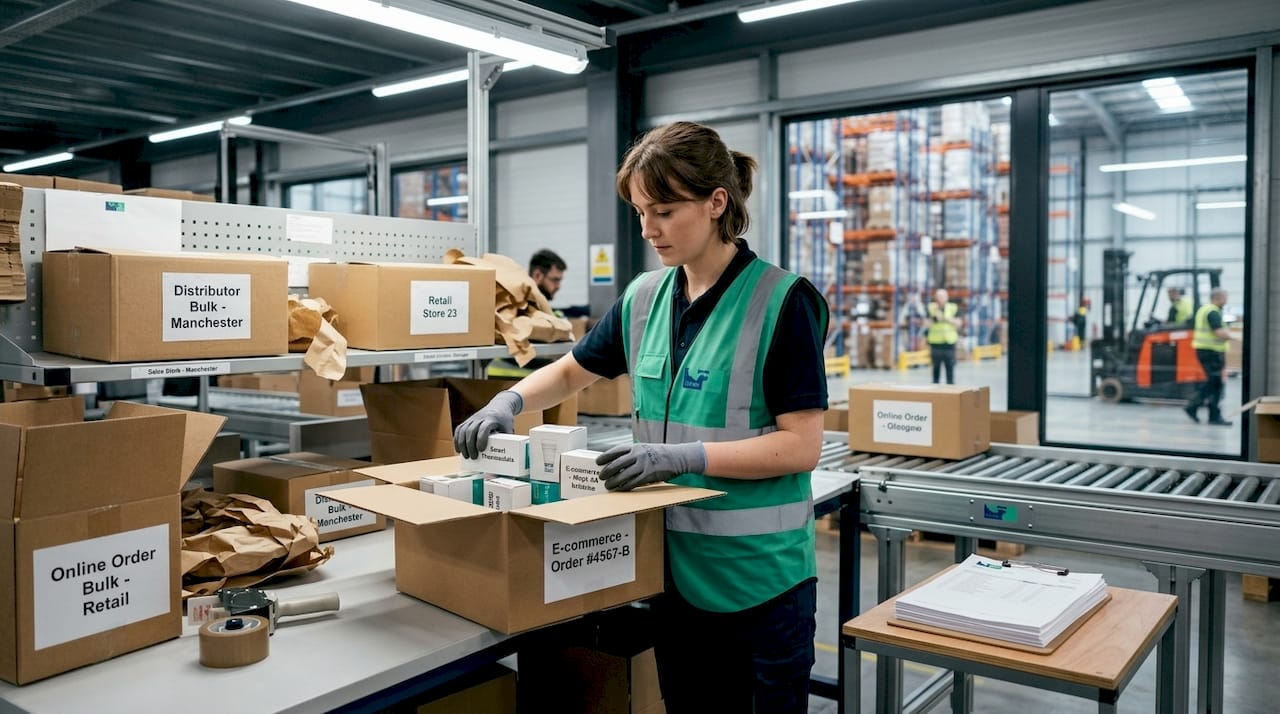
The research is clear: when you shorten delivery windows without investing in the service effort required to maintain accuracy and condition, return rates rise. The cost saving on faster shipping is offset by the cost of processing more returns, handling more customer contacts, and absorbing more lost margin on returned goods. Coordinated supply chain contracts that align pricing, service effort, and delivery time across channels outperform decentralised approaches where each channel optimises independently.
For brands managing both direct-to-consumer and wholesale or marketplace channels, the practical steps are:
- Audit your return attribution data. Separate customer-initiated returns from retailer-attributed returns caused by fulfilment errors, damaged goods, or incorrect items. These require entirely different interventions.
- Set channel-specific service level agreements. Your marketplace fulfilment standard and your DTC standard should reflect the actual cost and margin profile of each channel, not a single blanket policy.
- Invest in reverse logistics infrastructure. Retailer-attributed returns reduce future purchase likelihood, making reverse logistics a direct investment in repurchase behaviour rather than a cost to minimise.
- Coordinate pricing and delivery promises. If a promotional campaign drives a spike in orders, your logistics capacity must be pre-aligned to absorb it without degrading delivery performance across other channels.
For brands using omnichannel fulfilment strategies, the ability to coordinate these variables across channels is what separates brands that scale from those that plateau.
What does international logistics complexity mean for brand growth?
The role of logistics in global brand expansion is often underestimated until a brand encounters its first significant margin erosion from a market it thought it understood. The most common failure point is not customs clearance or carrier selection. It is the absence of SKU-level landed cost modelling before the brand commits to a market.
Skipping landed cost modelling by SKU and destination, including trade agreement and duty scenario planning, leads to pricing mistakes that impair margins and working capital. A product priced competitively in the UK may become uncompetitive in Germany once import duties, VAT, and last-mile costs are factored in at the SKU level. Brands that discover this after launch face an unpleasant choice between absorbing the margin hit or repricing and losing market position.
| Routing model |
Best suited for |
Key trade-off |
| Centralised European hub |
Brands with high SKU diversity and moderate volumes |
Lower per-unit cost, longer last-mile transit times |
| Direct-to-market routing |
High-volume, low-SKU brands in single markets |
Faster delivery, higher fixed infrastructure cost |
| 3PL partner network |
Growing brands testing new markets |
Flexibility and speed to market, less control over brand experience |
Coordinated inbound logistics with SKU visibility, duty control, and compliance documentation reduces border holds and margin leakage. Brands that invest in compliance orchestration upstream, before goods move, protect both their reputation and their cash flow in new markets.
Pro Tip: Before entering a new international market, model your landed cost for your top 10 SKUs across three duty scenarios: standard tariff, preferential trade agreement rate, and worst-case tariff escalation. If the margin holds in all three, the market is viable.
Distributed inventory: the advanced logistics strategy for cost and speed
Distributed inventory placement is the practice of splitting stock across multiple fulfilment nodes positioned closer to your customers geographically. Distributed inventory algorithms reduce per-shipment costs by approximately 34% while maintaining fast delivery speeds by reducing zone-based carrier pricing. For e-commerce brands competing on delivery speed, this is one of the highest-leverage logistics decisions available.
The mechanics work because carrier pricing is zone-based. A parcel travelling from a single central warehouse to a customer five zones away costs significantly more than the same parcel travelling one zone from a regional node. By placing stock closer to demand clusters, you reduce the average zone distance per shipment and cut carrier costs without sacrificing speed.
| Inventory model |
Average zone distance |
Estimated cost per shipment |
Delivery speed |
| Single central warehouse |
4.2 zones |
High |
3 to 5 days |
| Two-node distributed |
2.8 zones |
Medium |
2 to 3 days |
| Multi-node distributed |
1.6 zones |
Low |
1 to 2 days |
The operational complexity beneath these savings is real. Over-splitting inventory inflates carrying costs and complicates stock reconciliation workflows, threatening margin if not managed tightly. The key variables to balance are:
- SKU velocity: Only your fastest-moving SKUs justify multi-node placement. Slow-moving stock distributed across five nodes ties up working capital without generating proportional speed benefits.
- Safety stock levels: Each node requires its own safety stock buffer. The aggregate safety stock across a distributed network is higher than in a centralised model, which increases working capital requirements.
- Replenishment triggers: Automated replenishment based on real-time sell-through data at each node prevents stockouts without requiring manual oversight across multiple locations.
For brands exploring scalable logistics models, distributed inventory is worth modelling against your current carrier cost data before committing to additional fulfilment nodes.
Key takeaways
Logistics is a direct driver of brand growth, and OTIF, returns management, and distributed inventory placement are the three operational levers with the greatest commercial impact.
| Point |
Details |
| OTIF as a growth metric |
Scores above 95% secure carrier renewals; below 90% triggers penalties and damages brand trust. |
| Marketing and logistics alignment |
Delivery reliability directly affects conversion, retention, and support costs across all channels. |
| Omnichannel returns coordination |
Treating delivery time and service effort as interdependent reduces return rates and protects repurchase behaviour. |
| International landed cost modelling |
SKU-level duty and cost modelling before market entry prevents margin erosion and pricing mistakes. |
| Distributed inventory trade-offs |
Multi-node stock placement cuts per-shipment costs significantly but requires tight safety stock and replenishment management. |
Logistics as brand strategy: what the data has taught me
Most brand managers I speak with treat logistics as a cost to control rather than a capability to invest in. That framing is the single biggest strategic mistake I see in growing e-commerce businesses. The data is unambiguous: OTIF performance, returns attribution, and inventory placement decisions do not just affect operational efficiency. They determine whether your customer buys from you again.
What strikes me most about OTIF as a metric is how it forces organisational alignment. When marketing, operations, and logistics teams share a single north star number, the internal politics around who owns the customer experience largely disappear. The metric makes the answer obvious. I have seen brands cut their support ticket volume by a third simply by fixing the fulfilment errors that OTIF data exposed, without changing a single marketing message.
The uncomfortable truth about logistics and brand growth is that most brands invest heavily in acquiring customers and almost nothing in the operational reliability that retains them. A 34% reduction in per-shipment costs through distributed inventory, or an 89% improvement in retention through omnichannel service consistency, represents a return on investment that most marketing channels cannot match. The brands that understand this are the ones building durable competitive advantages, not just growing revenue.
— Lukasz
How Parcelplanet supports your brand’s logistics growth
Growing brands need a fulfilment partner that scales with them, not one that creates new operational headaches as order volumes rise. Parcelplanet’s order fulfilment services are built specifically for e-commerce and omnichannel brands that need reliable, accurate, and scalable logistics without the overhead of managing their own warehousing and dispatch operations.

Parcelplanet integrates directly with leading e-commerce platforms and courier networks, giving your brand real-time inventory visibility and tracking across every sales channel. Whether you are managing a single market or beginning to expand internationally, Parcelplanet’s team handles warehousing, picking, packing, and shipping so your operations keep pace with your growth ambitions. You can also explore practical ways to reduce fulfilment costs as your volumes increase. Get in touch with Parcelplanet to discuss a tailored fulfilment solution for your brand.
FAQ
What is the role of logistics in brand growth?
Logistics drives brand growth by determining whether delivery promises are kept consistently, which directly shapes customer trust, repeat purchase rates, and brand reputation. Reliable supply chain management reduces support costs, improves retention, and enables expansion into new markets.
What is OTIF and why does it matter for brands?
OTIF stands for On Time In Full and measures whether orders are delivered completely and on schedule. Scores above 95% secure preferred carrier status and renewals, while scores below 90% trigger commercial penalties and erode customer loyalty.
How does logistics affect customer retention in e-commerce?
Delivery reliability is a primary driver of repeat purchase behaviour. Brands with strong omnichannel logistics capabilities see retention rates improve by up to 89% year over year, directly linked to consistent and accurate fulfilment performance.
What logistics challenges arise during international expansion?
The most significant challenge is landed cost opacity at the SKU level. Without modelling duties, taxes, and last-mile costs by product and destination market, brands risk pricing mistakes that erode margins and damage their competitive position abroad.
How does distributed inventory reduce shipping costs?
Distributing stock across multiple fulfilment nodes closer to customers reduces the average carrier zone distance per shipment. This approach cuts per-shipment costs by approximately 34% while maintaining fast delivery speeds, though it requires careful safety stock management to avoid inflating working capital.
Recommended


