TL;DR:
- Goals for 2026 include speed, resilience, cost efficiency, visibility, and customer satisfaction.
- Hybrid fulfilment models offer cost savings and flexibility, suitable for varying order volumes.
- Advanced AI, data integration, and distributed networks enhance adaptability and protect against disruptions.
E-commerce fulfilment in 2026 is under more pressure than ever. Rising customer expectations, supply chain volatility, and tightening margins mean that choosing the wrong fulfilment strategy can cost you far more than a few delayed parcels. Whether you manage ten orders a day or ten thousand, the decisions you make around warehousing, picking, packing, and shipping directly shape your brand’s reputation and profitability. This guide breaks down the key criteria, compares the leading fulfilment models, and highlights the technology and network strategies that are genuinely moving the needle for e-commerce businesses this year. You’ll leave with a clear framework to evaluate your current approach and identify where to improve.
Table of Contents
Key Takeaways
| Point |
Details |
| Criteria-driven selection |
Focus your fulfilment strategy on speed, resilience, cost, integration, and customer satisfaction. |
| Hybrid models save costs |
Combining in-house and 3PL can cut fulfilment costs by up to 31% for scaling businesses. |
| AI boosts efficiency |
AI-driven workflows drastically reduce delays and manual processing in fulfilment operations. |
| Resilience over speed |
Shifting to smaller, smarter fulfilment networks helps manage risks in volatile conditions. |
Key criteria for fulfilment success in 2026
With the challenges set, let’s explore what matters most when evaluating fulfilment strategies. Before comparing models or technologies, you need a clear set of benchmarks. Not all fulfilment challenges are equal, and the criteria that matter most to a high-growth fashion brand differ from those facing a niche B2B seller.
Here are the five criteria every fulfilment strategy must address in 2026:
- Speed: Customers now expect next-day or same-day delivery as standard. Meeting this without overspending requires smart carrier selection, strategic warehouse positioning, and accurate cut-off time management.
- Resilience: A single-point-of-failure network is a liability. Flexibility in your fulfilment setup, particularly with smaller, distributed networks, protects you when disruptions hit.
- Cost efficiency: Your cost per order is the number that matters. Technology adoption, particularly automation and reducing fulfilment costs through smarter processes, is where most brands find margin gains.
- Visibility and integration: A fragmented view of your orders is dangerous. Unified order management systems (OMS) and warehouse management systems (WMS) give you cross-channel control in real time.
- Customer satisfaction: Speed alone doesn’t win loyalty. Proactive communication, accurate dispatch, and a smooth returns process all contribute to repeat purchases.
One of the most significant shifts in 2026 is how AI and data strategies are redefining operational decision-making. AI-driven predictive analytics now enable real-time optimisation of labour, waves, and inventory, reducing decision latency from hours to minutes. That’s not a marginal gain. That’s a structural advantage.
Pro Tip: Audit your current cost per order before choosing a fulfilment model. Without this baseline, any comparison you make will be guesswork.
In-house, 3PL, and hybrid fulfilment: strengths and pitfalls
With these criteria in mind, we can better evaluate the top fulfilment structures available. There is no universally correct model. Each has genuine strengths and real limitations, and the right choice depends on your order volume, growth trajectory, and operational priorities.
In-house fulfilment gives you maximum control over branding, packaging, and quality checks. It suits businesses with lower volumes or highly specialised products. However, the cost per order typically runs between £4 and £8 at low volumes, and scaling requires significant capital investment in space and staff.
3PL fulfilment becomes compelling at higher volumes. The benefits of 3PL include lower per-order costs, established carrier relationships, and no warehouse overhead. At 2,000 or more orders per month, per-order costs typically drop to the £3 to £6 range. The trade-off is reduced direct control and potential inflexibility for highly customised operations.
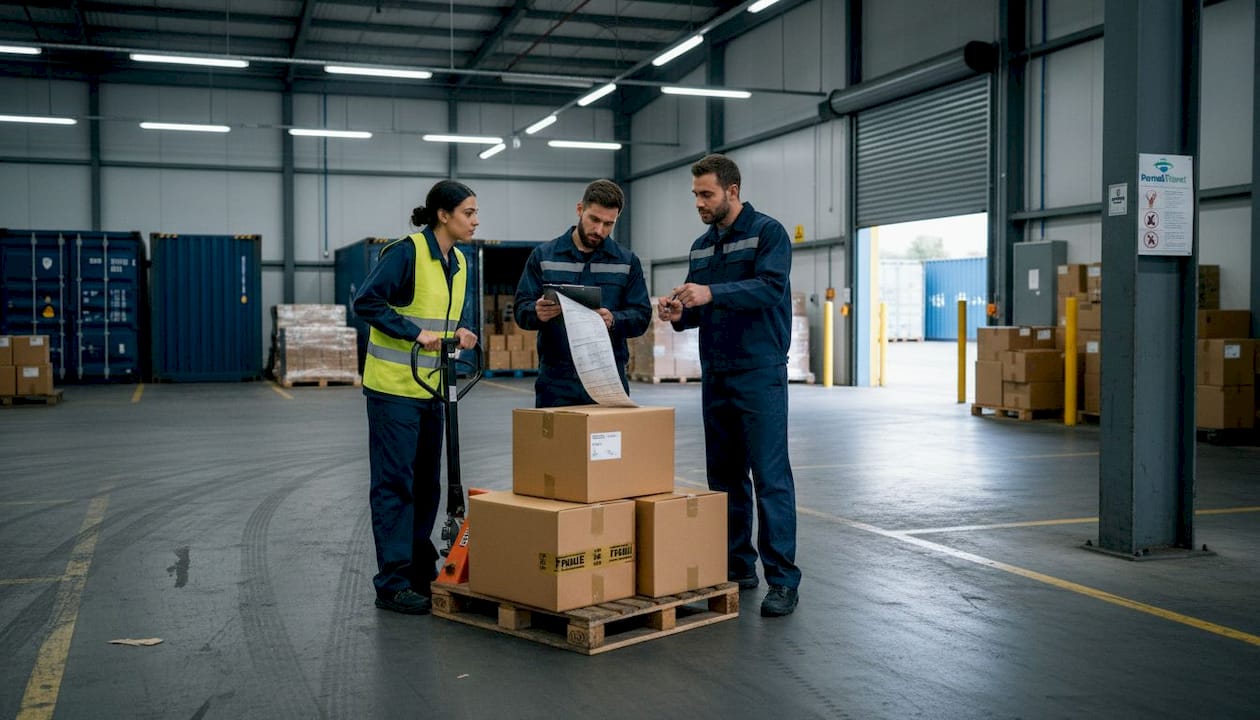
Hybrid fulfilment blends both approaches. You retain in-house capability for premium or complex orders while outsourcing standard fulfilment to a 3PL partner. This model can reduce costs by 31% compared to purely in-house operations.
| Model |
Cost per order |
Ideal monthly volume |
Key risk |
| In-house |
£4 to £8 |
Under 1,000 |
Scaling costs |
| 3PL |
£3 to £6 |
2,000 and above |
Reduced control |
| Hybrid |
Variable |
500 to 5,000+ |
Management complexity |
Use a partner selection guide to assess 3PL providers against your specific criteria before committing.
Pro Tip: Hybrid fulfilment is frequently overlooked by seasonal and growth-stage brands. If your order volumes spike significantly at certain times of year, a hybrid model could protect your margins without sacrificing quality.
Tech-enabled fulfilment: AI, data integration, and automation
Beyond fulfilment models, technology makes or breaks efficiency and accuracy today. The brands pulling ahead in 2026 are not simply those with the fastest warehouses. They are the ones using data intelligently to anticipate demand, reduce errors, and respond to disruption faster than their competitors.
Here is how leading technologies are being applied right now:
- AI-powered inventory forecasting: Predictive models analyse sales velocity, seasonal trends, and supplier lead times to prevent stockouts and overstock situations before they occur.
- Dynamic labour scheduling: Automation in logistics allows warehouse managers to adjust staffing in real time based on order flow, reducing both idle time and costly overtime.
- Unified OMS and WMS platforms: Fragmented tech stacks hinder efficiency; unified systems with real-time cross-channel visibility are now considered essential, not optional.
- Automated pick-and-pack: Robotics and conveyor systems reduce human error rates and increase throughput during peak periods without proportional headcount increases.
| Technology |
Primary benefit |
Best fit |
| AI forecasting |
Reduces stockouts and overstock |
3PL and hybrid |
| Unified OMS/WMS |
End-to-end order visibility |
All models |
| Robotic pick-and-pack |
Faster throughput, fewer errors |
High-volume 3PL |
| Dynamic labour tools |
Cost-efficient staffing |
Warehouse-heavy operations |
“The brands that eliminate manual decision bottlenecks before peak season don’t just survive the rush. They use it to gain market share while competitors scramble.”
Flexible fulfilment solutions that integrate with your existing platforms are the practical starting point for most growing e-commerce businesses. You don’t need to overhaul everything at once. Start with visibility, then layer in automation.
Building resilient networks for volatile times
Powerful tech is essential, but long-term survival means resilience is built in. In 2026, the most forward-thinking brands are no longer designing their fulfilment networks purely around speed. They are designing them around stability.
The shift is clear: brands are trading speed for stability amid rising costs and tariffs, with smaller, smarter networks prioritising resilience over expansion. Central mega-hubs made sense when conditions were predictable. Today, distributed fulfilment with regional nodes offers far better protection against port disruptions, carrier failures, and demand spikes.
Here are practical steps to build resilience into your fulfilment network:
- Use multiple fulfilment sites: Distributing stock across two or more locations reduces your exposure to any single point of failure.
- Work with alternative couriers: Relying on one carrier is a risk. Maintain active relationships with at least two or three options.
- Dual source your key SKUs: Where possible, have more than one supplier for your top-selling products to protect against supply disruptions.
- Map your risk points: Scalable logistics planning starts with identifying where your supply chain is most vulnerable, then building contingencies around those nodes.
- Review carrier SLAs regularly: Carrier performance changes. What worked last year may not be your best option today.
“Resilience is not a cost centre. It is the competitive advantage that keeps your brand operational when others are sending apology emails.”
If you are considering outsourcing fulfilment to a 3PL partner, resilience should be a key question in your evaluation process. Ask how they handle carrier failures, demand surges, and warehouse disruptions before you sign anything.
Pro Tip: Resilient networks do not always mean slower shipping. Smart routing across distributed sites often delivers faster delivery times than a single central hub, particularly for regional orders.
Our take: don’t chase speed – outlast it
Looking beyond tactics, let’s step back for an honest perspective on what truly works in fulfilment. Many e-commerce brands have spent the last few years in an arms race around delivery speed. Next-day became standard. Same-day became a differentiator. And in chasing those promises, a significant number of businesses quietly eroded their margins and built supply chains that could not absorb any shock.
The brands we see thriving in 2026 are not the fastest. They are the most adaptable. They invested in data infrastructure, built relationships with multiple logistics partners, and made decisions based on cost-per-order reality rather than headline delivery promises.
Speed matters. We are not dismissing it. But speed without resilience is a liability waiting to surface. The brands that combine shipping strategy insights with robust, data-driven processes are the ones building genuine competitive advantages. The true edge in 2026 is not how fast you can ship on a good day. It is how well you perform when conditions are difficult.
Streamline your fulfilment with expert support
Ready to put these strategies into practice? Here’s how expert help can accelerate your results.
Navigating fulfilment model choices, technology integration, and network resilience simultaneously is a significant undertaking. Getting it right in 2026 means having the right partner alongside you, not just a warehouse provider.
ParcelPlanet’s fulfilment services are built specifically for e-commerce and omnichannel brands that need scalable, integrated, and reliable operations. Whether you are evaluating whether to compare 3PL and 4PL options or looking for smarter inventory planning, our team brings the expertise and technology to support your growth. Use our InventoryPlanner tool to get a clearer picture of your stock needs and start building a more resilient, cost-efficient fulfilment operation today.
Frequently asked questions
What is the most cost-effective fulfilment strategy for e-commerce in 2026?
Hybrid models reduce costs by up to 31% compared to purely in-house operations, but the right choice depends on your order volume and specific operational goals.
How does AI optimise fulfilment operations in 2026?
AI-driven predictive analytics enable real-time optimisation of labour, inventory, and order waves, cutting decision delays from hours down to minutes for e-commerce businesses.
Why are smaller, smarter networks trending in 2026?
Brands are prioritising resilient networks to limit disruption from rising costs, tariffs, and supply chain volatility rather than focusing purely on expansion and speed.
Unified OMS and WMS platforms provide real-time cross-channel visibility and are considered essential for streamlined, accurate e-commerce fulfilment operations in 2026.
Recommended