E-commerce brands face mounting pressure to scale logistics operations without sacrificing order accuracy or delivery speed. Choosing the right scalable logistics solution directly impacts your ability to meet customer expectations while controlling costs. This guide presents a structured list of logistics models and technologies, complete with criteria to evaluate each option and match solutions to your business growth stage.
Table of Contents
Key takeaways
| Point |
Details |
| Real-time inventory integration |
Reduces stockouts by 30% and improves customer satisfaction scores by 15% |
| 3PL vs 4PL models |
3PLs handle specific functions like warehousing and transport; 4PLs manage entire supply chain networks |
| Automation technologies |
Robotics and automated systems increase picking speed by up to 50% whilst reducing errors |
| Selection criteria |
Flexibility, cost, integration capabilities, and service quality determine optimal logistics fit |
Criteria for selecting scalable logistics solutions
Scalability in logistics means your fulfilment operations can handle surging order volumes without compromising efficiency or service quality. As your brand expands, your logistics partner must adapt seamlessly to fluctuating demand, seasonal peaks, and new market entries.
Several critical factors determine whether a logistics solution will scale effectively with your business. Flexibility stands paramount, you need providers who adjust warehouse space, labour, and technology resources based on your actual order patterns. Cost effectiveness matters equally, transparent pricing structures that scale proportionally prevent budget surprises as volumes grow.
Integration capabilities directly affect operational smoothness. Your logistics solution must connect with your e-commerce platforms, courier services, and inventory systems in real time. Technology integration, particularly real-time inventory data, reduces fulfilment errors and speeds up order processing.
Service quality encompasses accuracy rates, delivery speeds, and returns handling. Logistics model choice impacts efficiency and customer service levels. Consider these selection criteria:
- Business size and current order volume
- Growth trajectory over the next 12 to 24 months
- Supply chain complexity and number of sales channels
- Capital available for infrastructure investment
- Required level of operational control versus outsourcing
- Geographic reach and international expansion plans
Pro Tip: Map your peak season order volumes against your current capacity. If peak demand exceeds 150% of average monthly orders, prioritise logistics partners with proven flexibility during high-volume periods.
Your business stage influences which criteria matter most. Early-stage brands prioritise cost and quick implementation, whilst established businesses with complex supply chains focus on integration depth and strategic oversight.
Top scalable logistics solutions for e-commerce
Third-party logistics providers offer the fastest path to scalable fulfilment without capital investment. 3PLs handle specific services including warehousing, inventory management, order picking, packing, shipping, and returns processing. You retain control over strategic decisions whilst outsourcing operational execution.
3PL providers excel when you need immediate scale without building warehouse infrastructure. They absorb seasonal fluctuations, manage labour requirements, and maintain relationships with multiple courier services. Most 3PLs offer technology platforms providing real-time visibility into inventory levels, order status, and delivery tracking.
Fourth-party logistics providers take a different approach by managing entire supply chains and coordinating multiple 3PLs simultaneously. 4PLs act as strategic partners, designing and optimising your complete logistics network. They provide a single point of contact whilst orchestrating warehousing, transport, and fulfilment across regions.
4PL solutions suit brands with complex, multi-channel operations spanning multiple countries. If you sell through retail partnerships, your own website, and marketplaces whilst managing international shipments, a 4PL brings unified oversight. They typically invest more heavily in analytics and supply chain optimisation than 3PLs.
Automated fulfilment technologies represent the cutting edge of scalable logistics. Robotics systems like Evo Shuttle and Pick-it-Easy Robots dramatically increase picking speed and accuracy. These solutions work alongside human workers, handling repetitive tasks whilst staff focus on complex orders requiring judgement.
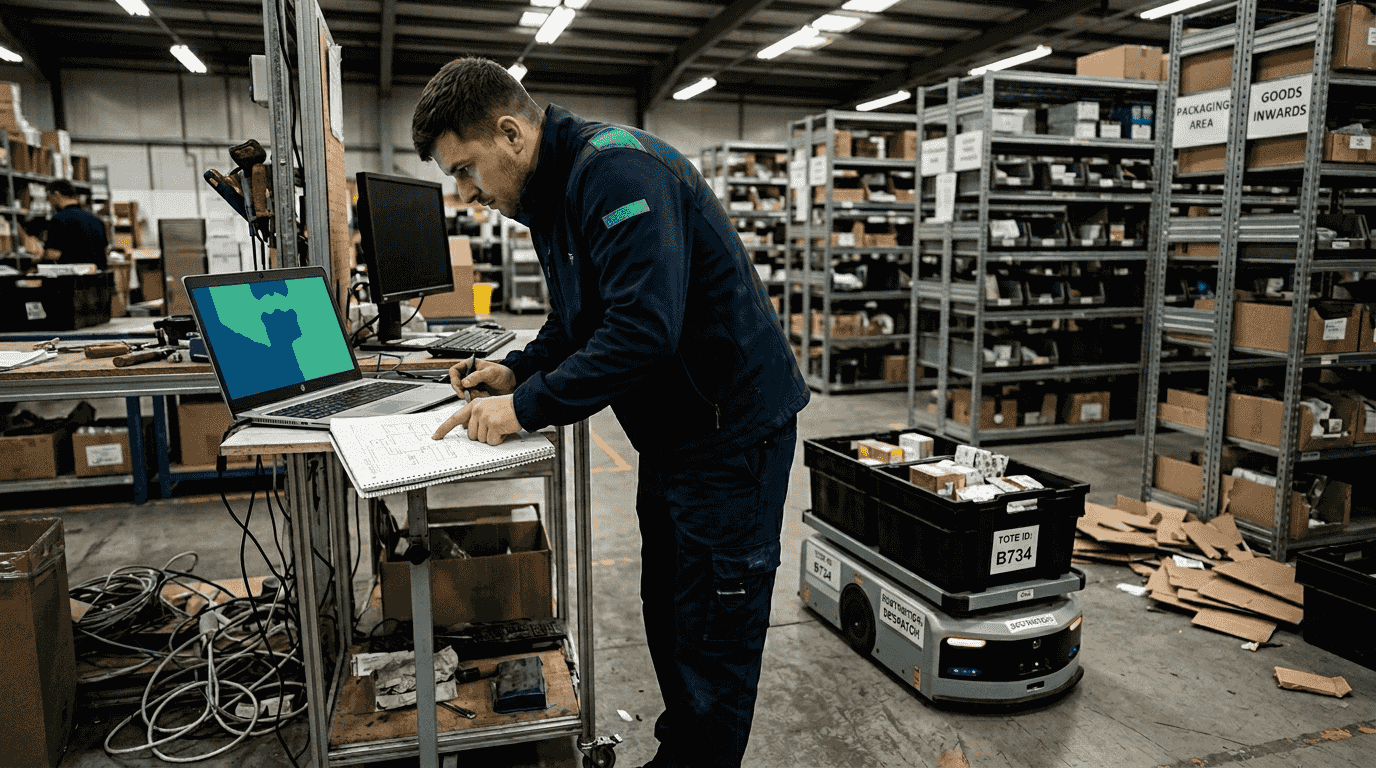
Automated bagging machines streamline packing operations, adjusting package sizes automatically and reducing material waste. Conveyor systems with automated sorting route orders to correct shipping lanes without manual intervention. When integrated with warehouse management systems, automation reduces labour costs per order by 20 to 35% whilst maintaining consistency.
Real-time inventory management systems form the backbone of scalable logistics, regardless of whether you use 3PL, 4PL, or in-house operations. These platforms sync inventory across all sales channels, preventing overselling and stockouts. Integration with your logistics provider ensures accurate fulfilment and faster order processing.
Cloud-based warehouse management systems offer scalability without server infrastructure. They connect seamlessly with e-commerce platforms like Shopify, WooCommerce, and Magento, updating stock levels instantly after each sale. Advanced systems use predictive analytics to forecast demand and optimise inventory distribution across multiple warehouses.
Comparison of logistics solutions: 3PL, 4PL and automation technologies
Evaluating logistics options requires comparing how each model addresses scalability, cost structure, technology integration, operational control, and customer responsiveness. Different solutions excel in different scenarios based on your business complexity and growth stage.
| Solution |
Scalability |
Cost structure |
Technology integration |
Operational control |
Best suited for |
| 3PL |
High, absorbs volume spikes |
Variable per order |
Platform integrations |
Moderate, strategic decisions |
Rapid growth without capital investment |
| 4PL |
Very high, multi-region |
Fixed management fee plus variable |
Deep integration across network |
Low operational, high strategic |
Complex multi-channel operations |
| Automation |
Extremely high consistency |
High upfront, lower per-unit |
Requires WMS integration |
High, full infrastructure control |
High volume with predictable demand |
| Real-time inventory |
Scales with channels |
Subscription based |
Native e-commerce connections |
High, data ownership |
Multi-channel selling |
Third-party logistics delivers cost effectiveness for brands scaling quickly without infrastructure investment. You pay only for space and services used, making 3PLs ideal when order volumes fluctuate seasonally. However, you sacrifice some operational control and rely on the provider’s technology stack.
4PLs offer comprehensive supply chain oversight suited for businesses with complex logistics networks. Integrating real-time inventory systems with logistics providers reduces stockouts by 30% and improves satisfaction scores by 15%. The trade-off involves higher management fees and less direct operational involvement, though strategic control remains strong.
Automation technologies provide the highest long-term efficiency gains for businesses with steady, high-volume order flow. KNAPP’s solution increased capacity by 50% for Woolworths’ Western Sydney operations. Initial capital requirements are substantial, but per-order costs decrease significantly at scale.
Pro Tip: Calculate your break-even point for automation by dividing upfront investment by monthly savings from reduced labour and increased throughput. If break-even occurs within 18 months and your order volumes are stable, automation typically delivers superior ROI compared to 3PL fees.
Real-time inventory systems complement any logistics model, whether you manage fulfilment in-house or outsource to 3PLs. The automation benefits in 2026 extend beyond warehouse operations to customer-facing experiences through accurate stock visibility and faster delivery promises.
How to choose the best scalable logistics solution for your business
Matching logistics solutions to your business requires honest assessment of current capabilities, growth projections, and operational priorities. Follow this framework to identify your optimal approach.
-
Evaluate current order volume and growth trajectory. Calculate average monthly orders, peak season volumes, and projected growth over 24 months. Companies choose 3PLs to scale quickly without physical infrastructure investment when growth is rapid but unpredictable.
-
Assess infrastructure investment willingness. Determine available capital for warehouse facilities, automation equipment, and technology systems. If capital is limited but growth is immediate, 3PL partnerships provide instant capacity. If you have investment budget and predictable volumes exceeding 5,000 orders monthly, automation delivers better unit economics.
-
Analyse supply chain complexity. Count your sales channels, warehouse locations, and international markets. Businesses with complex chains benefit from 4PL’s single contact point and end-to-end visibility. Simple operations with one or two channels suit 3PL partnerships or in-house fulfilment with automation.
-
Review technology integration requirements. List all platforms requiring logistics connectivity, including e-commerce systems, marketplaces, and accounting software. Ensure your chosen solution offers native integrations or robust APIs. Poor integration creates manual work that negates scalability benefits.
-
Consider automation potential based on SKU complexity and order patterns. High-volume operations with limited SKU variations benefit most from robotics and automated systems. Businesses with diverse product catalogues requiring custom packaging may need human flexibility despite automation’s speed advantages.
-
Establish review cycles for logistics performance. Schedule quarterly assessments of fulfilment accuracy, delivery speeds, and cost per order. Review logistics partners regularly to ensure alignment with evolving business needs. Switch providers when performance metrics deteriorate or better options emerge.
Your logistics solution choice isn’t permanent. Many successful brands start with 3PL partnerships during rapid growth phases, then migrate to hybrid models combining 3PL for overflow capacity with owned automation for base volume. Others begin with automation and add 4PL coordination as they expand internationally.
Scalable logistics solutions from ParcelPlanet
Growing your e-commerce brand demands logistics partners who scale seamlessly alongside your ambitions. ParcelPlanet specialises in flexible fulfilment solutions tailored to businesses navigating rapid growth and increasing order complexity.
Our 3PL services handle warehousing, inventory management, and order fulfilment whilst you focus on expanding your customer base. Whether you need to reduce logistics costs or explore 4PL coordination for complex supply chains, we adapt our services to your specific requirements.
Real-time tracking, multi-channel integration, and flexible capacity ensure your operations scale smoothly during peak periods without sacrificing delivery speeds. Partner with us to optimise your order fulfilment processes and elevate customer satisfaction as you grow.
Frequently asked questions
What are scalable logistics solutions?
Scalable logistics solutions are systems and service providers designed to handle increasing order volumes without proportional increases in costs or delivery times. They adapt capacity, technology, and processes to match your business growth trajectory whilst maintaining service quality.
How do 3PL and 4PL differ in supporting business scale?
3PLs execute specific logistics functions like warehousing and shipping, offering immediate capacity without infrastructure investment. 4PLs manage your entire supply chain network, coordinating multiple 3PLs and providing strategic oversight suited to complex, multi-region operations.
What role does automation play in scaling logistics operations?
Automation increases picking speed, reduces fulfilment errors, and lowers per-order labour costs at high volumes. Robotics and automated systems handle repetitive tasks consistently, allowing businesses to process more orders without proportional staff increases.
How does integrated inventory management support scalability?
Real-time inventory systems synchronise stock levels across all sales channels, preventing stockouts and overselling. Integration with logistics providers enables faster order processing and more accurate fulfilment, directly improving customer satisfaction as order volumes grow.
What factors should I evaluate when choosing logistics partners?
Assess flexibility during demand spikes, technology integration capabilities, transparent pricing structures, geographic coverage, and track record with businesses similar to yours. Review common fulfilment challenges to identify which provider best addresses your specific pain points.
Recommended