Many e-commerce brands believe logistics scalability simply means adding more warehouse space or hiring extra staff when order volumes spike. This misconception leads to inefficient operations and spiralling costs. True logistics scalability involves adapting capacity and processes to meet fluctuating demand effectively, not just throwing resources at growth. This guide clarifies what logistics scalability genuinely entails for fast-growing online businesses, why it matters in 2026, and how to implement strategies that optimise your supply chain for sustainable expansion. You will gain practical insights to transform your fulfilment operations from reactive to strategically scalable.
Table of Contents
Key takeaways
| Point |
Details |
| True scalability definition |
Logistics scalability means adaptable, efficient growth through flexible processes and technology, not merely increasing capacity. |
| Core business benefits |
Scalable logistics enhances delivery consistency, reduces operational costs, and improves customer satisfaction during growth phases. |
| Common implementation challenges |
Brands face inventory mismanagement, inflexible partners, and automation gaps when scaling logistics operations. |
| 2026 strategic priorities |
Leveraging data analytics, automation tools, and choosing flexible 3PL partners are critical for scalable logistics this year. |
| Performance monitoring |
Regular tracking of key metrics ensures logistics systems maintain efficiency and responsiveness as demand fluctuates. |
Understanding logistics scalability: definition and components
Logistics scalability in e-commerce contexts refers to your supply chain’s ability to expand or contract operations efficiently in response to changing demand without compromising service quality or profitability. It encompasses far more than simply handling higher order volumes. Scalable logistics solutions require strategic integration of multiple components working harmoniously to support business growth.
Four key pillars underpin genuine logistics scalability. First, capacity scalability ensures your warehousing, inventory management, and fulfilment operations can flex up or down based on seasonal peaks, promotional campaigns, or sustained growth trajectories. Second, process flexibility allows you to adapt workflows, handling procedures, and distribution strategies to accommodate diverse product ranges, order complexities, and delivery requirements. Third, technology integration provides the digital infrastructure for real-time visibility, automation, and data-driven decision making across your supply chain. Fourth, cost management maintains profitability by optimising resource allocation and preventing wasteful spending during expansion phases.
Many e-commerce brands mistakenly equate scalability with size, assuming bigger facilities and larger teams automatically solve growth challenges. This approach often creates rigid, expensive operations that struggle during demand fluctuations. True scalability focuses on optimisation, building systems that efficiently handle 100 orders today and 10,000 orders tomorrow without proportional cost increases or service degradation.
Challenges emerge when businesses scale logistics without proper strategy. Inventory accuracy deteriorates, picking errors multiply, delivery times extend, and customer complaints surge. These issues stem from inadequate planning, outdated technology, or partnerships with inflexible logistics providers unable to support dynamic growth patterns.
Scalable logistics transforms supply chain operations from a growth constraint into a competitive advantage, enabling brands to seize market opportunities confidently.
The distinction between reactive capacity addition and strategic scalability determines whether your logistics operations propel or hinder business expansion. Understanding these foundational components helps you build supply chain infrastructure that genuinely supports sustainable e-commerce growth in 2026 and beyond.
How scalable logistics benefits fast-growing e-commerce brands
Implementing scalable logistics delivers tangible advantages that directly impact your bottom line and customer relationships. These benefits become increasingly pronounced as your business expands and market demands intensify.
Efficiency gains represent the most immediate benefit. Scalable systems handle increasing order volumes without proportional increases in processing time or labour costs. Automated picking, intelligent inventory placement, and optimised packing workflows enable your operations to process 500 daily orders as efficiently as 50. This efficiency prevents the operational bottlenecks that plague businesses experiencing rapid growth.
Scalable logistics enhances supply chain responsiveness and reduces errors, directly boosting your brand reputation. Customers receive orders faster and more accurately, regardless of whether you are experiencing peak season demand or typical trading periods. Consistent delivery speeds and quality become achievable even during promotional surges or unexpected demand spikes that would cripple less flexible operations.
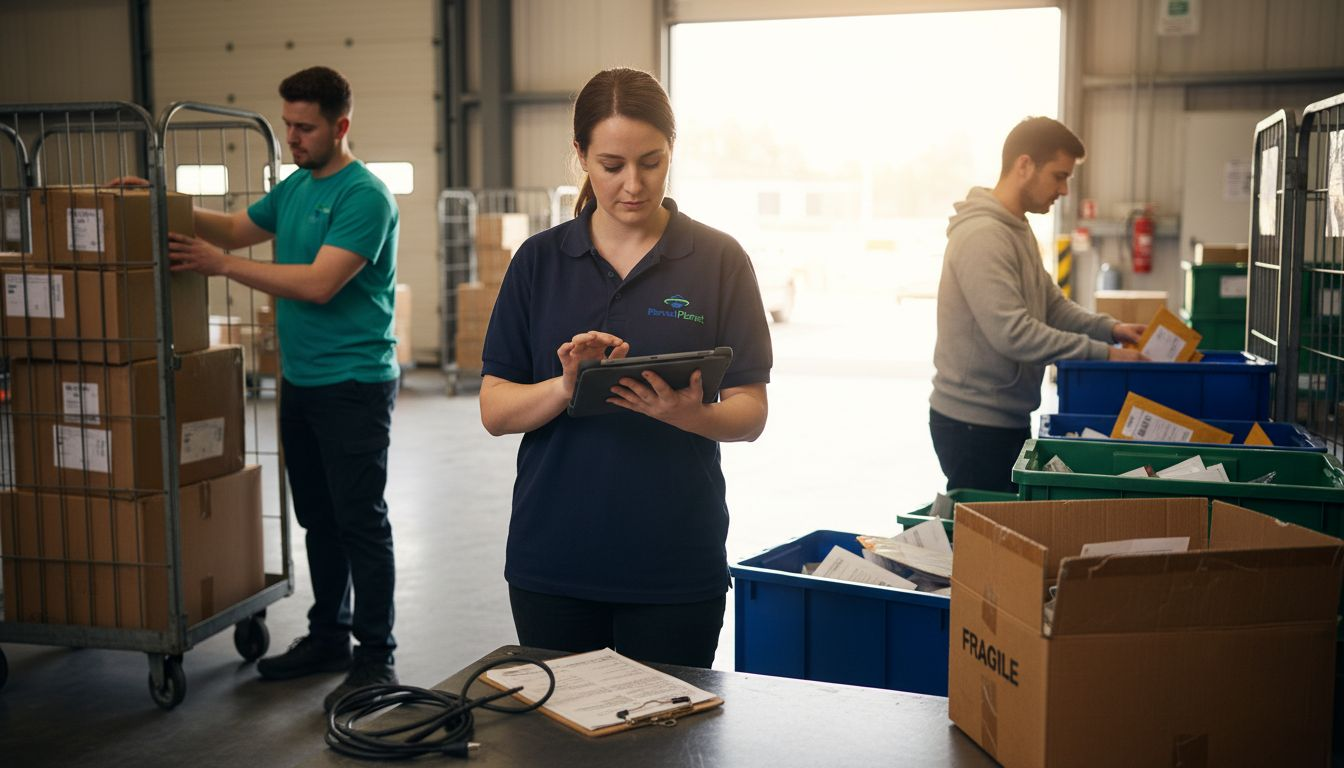
Cost savings emerge through optimised resource utilisation and flexible capacity management. Rather than maintaining excess warehouse space, staff, and inventory year-round to handle occasional peaks, scalable logistics allows you to access additional resources precisely when needed. This approach eliminates the fixed costs associated with traditional logistics infrastructure whilst ensuring capacity availability during critical trading periods.
Customer satisfaction improves measurably when your logistics scale effectively with demand. Orders ship promptly, tracking information updates reliably, and delivery promises are consistently met. These factors reduce cart abandonment, increase repeat purchase rates, and generate positive reviews that attract new customers. Your brand avoids the reputation damage caused by stockouts, delayed shipments, or communication gaps during busy periods.
The following factors contribute to scalable logistics effectiveness:
- Real-time inventory visibility across all sales channels and storage locations
- Flexible warehousing arrangements that expand or contract with seasonal demand patterns
- Automated order processing systems that eliminate manual data entry and reduce human error
- Strategic carrier partnerships providing capacity guarantees during peak shipping periods
- Integrated technology platforms connecting your e-commerce systems with fulfilment operations
Pro Tip: Monitor order accuracy rates, average fulfilment times, and cost per order monthly to identify scalability issues before they impact customer experience or profitability.
These benefits compound over time, creating competitive advantages that become increasingly difficult for rivals to replicate. Brands with genuinely scalable logistics capture market opportunities faster, enter new regions more confidently, and weather demand volatility more successfully than competitors relying on traditional, inflexible supply chain models.
Key challenges and solutions in achieving logistics scalability
Fast-growing e-commerce brands encounter predictable obstacles when developing scalable logistics operations. Recognising these challenges early and implementing proven solutions prevents costly disruptions during critical growth phases.
Common issues include inventory mismanagement, inflexible logistics partners, and lack of automation. Inventory mismanagement manifests as stockouts of popular items alongside excess stock of slow-moving products, tying up capital and warehouse space inefficiently. Inflexible logistics partners impose rigid minimum volumes, limited service options, or poor technology integration that constrains your ability to adapt quickly. Lack of automation forces reliance on manual processes that become increasingly error-prone and expensive as volumes grow.
Addressing these challenges requires targeted solutions:
- Implement demand forecasting tools that analyse historical sales data, seasonal patterns, and market trends to optimise inventory levels and prevent stockouts or overstock situations.
- Establish relationships with logistics partners offering flexible capacity agreements, allowing you to scale warehouse space and fulfilment resources up or down with minimal notice periods.
- Invest in warehouse management systems and order management platforms that automate routine tasks, provide real-time visibility, and integrate seamlessly with your e-commerce channels.
- Develop contingency plans including backup carriers, alternative warehousing locations, and emergency inventory buffers to handle unexpected demand surges or supply chain disruptions.
- Create standardised processes and documentation that enable rapid onboarding of temporary staff or additional logistics partners during peak periods without sacrificing quality.
The following table contrasts traditional manual approaches with automated scalable logistics:
| Aspect |
Manual logistics |
Automated scalable logistics |
| Order processing speed |
15-20 orders per hour per person |
100+ orders per hour with automation |
| Error rate |
3-5% picking and packing errors |
Below 0.5% with barcode scanning |
| Capacity flexibility |
Weeks to scale up operations |
Days to increase throughput |
| Real-time visibility |
Limited, often delayed reporting |
Instant dashboard access to all metrics |
| Cost structure |
High fixed costs, limited scalability |
Variable costs aligned with volume |
Pro Tip: When evaluating potential order fulfilment partners, prioritise those offering flexible pricing models and technology platforms that integrate directly with your existing e-commerce systems.
Technology gaps represent another significant barrier. Many growing brands operate with disconnected systems where inventory, orders, and shipping data exist in separate platforms requiring manual reconciliation. This fragmentation prevents the real-time visibility essential for scalable operations and creates opportunities for costly errors.
Overcoming these challenges transforms logistics from a growth constraint into an enabler. Brands that address scalability obstacles systematically build supply chain capabilities that support sustainable expansion whilst maintaining the service quality that drives customer loyalty and repeat business.
Practical strategies to implement scalable logistics in 2026
Developing genuinely scalable logistics operations requires methodical implementation of proven strategies tailored to e-commerce growth patterns. The following practical steps guide you through building supply chain infrastructure that supports sustainable expansion.
Begin with a comprehensive logistics audit assessing your current capabilities, identifying bottlenecks, and quantifying scalability gaps. Evaluate warehouse capacity utilisation, order processing speeds, inventory accuracy rates, and technology integration levels. This baseline measurement establishes clear improvement targets and helps prioritise investments.
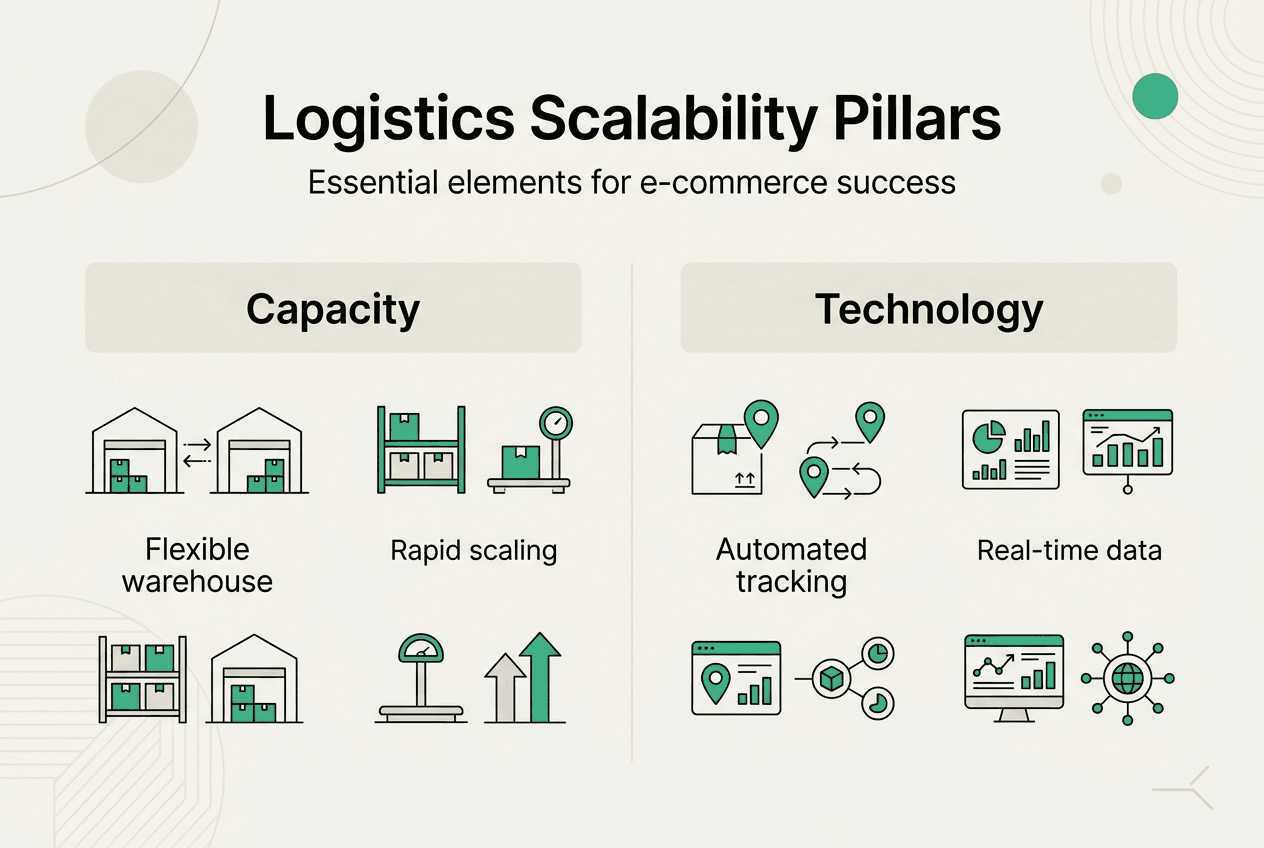
Leveraging data analytics and automation tools is critical for logistics scalability in 2026. Modern warehouse management systems, inventory optimisation platforms, and predictive analytics tools provide the intelligence needed to make informed decisions about capacity planning, stock allocation, and resource deployment. These technologies transform logistics from reactive firefighting into proactive strategic management.
Implement the following checklist systematically:
- Integrate your e-commerce platform with warehouse management and order management systems for seamless data flow
- Establish automated reorder points and safety stock calculations based on demand forecasting algorithms
- Deploy barcode scanning and automated sorting systems to accelerate order processing and reduce errors
- Create standardised operating procedures documented clearly for rapid staff training during scaling periods
- Negotiate flexible capacity agreements with warehousing and fulfilment partners allowing volume adjustments with minimal notice
- Implement multi-carrier shipping strategies providing backup options and competitive rate access
- Establish key performance indicators tracking order accuracy, fulfilment speed, and cost efficiency
Choosing scalable warehousing and fulfilment partners represents a critical decision. Prioritise providers offering distributed inventory options, advanced technology platforms, and proven experience supporting e-commerce growth. Evaluate their capacity to handle your projected peak volumes, not just current averages. Request detailed service level agreements specifying performance guarantees and scalability commitments.
The impact of automation on logistics efficiency becomes clear when examining concrete metrics:
| Metric |
Before automation |
After automation |
Improvement |
| Average order processing time |
12 minutes |
3 minutes |
75% reduction |
| Daily throughput capacity |
500 orders |
2,000 orders |
300% increase |
| Picking accuracy rate |
96% |
99.7% |
3.7 percentage points |
| Labour cost per order |
£4.20 |
£1.80 |
57% reduction |
Data-driven optimisation enables continuous improvement of scalable logistics operations. Regular analysis of fulfilment metrics identifies emerging bottlenecks before they impact customer experience. Monitor trends in order processing times, carrier performance, inventory turnover rates, and cost per order to spot opportunities for refinement.
Maintain scalability through ongoing monitoring and adjustment. Schedule quarterly reviews of logistics performance against growth projections, updating capacity plans and technology investments accordingly. Market conditions, customer expectations, and competitive pressures evolve constantly, requiring your logistics operations to adapt continuously rather than remaining static after initial implementation.
Building genuinely scalable logistics requires patience and sustained investment, but the competitive advantages gained justify the effort. Brands that implement these strategies systematically position themselves to capture market opportunities confidently, knowing their supply chain operations can support whatever growth trajectory emerges.
How parcelplanet helps you scale your logistics
Navigating the complexities of logistics scalability becomes significantly easier when you partner with specialists who understand e-commerce fulfilment challenges intimately. ParcelPlanet provides tailored solutions designed specifically for fast-growing online brands seeking to optimise their supply chain operations without the capital investment and operational burden of building in-house infrastructure.

Our comprehensive services address the core scalability challenges explored throughout this guide. We offer flexible warehousing capacity that expands or contracts with your demand patterns, eliminating the fixed costs and capacity constraints that limit growth. Advanced technology integration connects seamlessly with your existing e-commerce platforms, providing the real-time visibility and automation essential for efficient scaling. Our role as a 3PL provider focuses specifically on reducing logistics costs whilst enhancing service quality, allowing you to redirect resources towards customer acquisition and product development.
Explore our order fulfilment services to discover how we support brands at every growth stage. Whether you are processing 100 orders monthly or 10,000 daily, our scalable infrastructure adapts to your requirements. Understanding 3PL versus 4PL fulfilment options helps you select the partnership model that aligns best with your strategic objectives and operational preferences.
Pro Tip: Partnering with experienced logistics specialists accelerates your scaling timeline whilst reducing implementation risks, allowing you to focus on core business activities that drive revenue growth.
What is logistics scalability?
What exactly does logistics scalability mean for e-commerce businesses?
Logistics scalability refers to your supply chain’s capacity to efficiently handle fluctuating order volumes without proportional cost increases or service quality degradation. It encompasses flexible warehousing, adaptable processes, integrated technology, and optimised resource allocation. Genuinely scalable logistics supports both rapid expansion and seasonal contraction smoothly.
When should my business prioritise developing scalable logistics?
Prioritise scalable logistics when you experience frequent stockouts, struggle to fulfil orders during promotional periods, or notice rising costs per order as volumes increase. Early investment prevents the operational crises and customer dissatisfaction that emerge when growth outpaces logistics capabilities. Ideally, build scalability before rather than after encountering capacity constraints.
How does technology enhance logistics scalability?
Technology provides the automation, visibility, and intelligence essential for scalable operations. Warehouse management systems coordinate inventory and order processing efficiently. Predictive analytics forecast demand patterns accurately. Integration platforms connect disparate systems, eliminating manual data entry and enabling real-time decision making across your entire supply chain.
What should I look for when selecting 3PL providers supporting scalability?
Evaluate potential partners on flexible capacity agreements, advanced technology platforms, multi-channel integration capabilities, and proven experience supporting e-commerce growth. Request references from clients who have scaled successfully with their support. Ensure service level agreements specify performance guarantees during peak periods, not just average conditions.
How does automation enhance logistics scalability?
Automation streamlines repetitive tasks like order processing, inventory tracking, and shipping label generation, dramatically increasing throughput capacity without proportional labour cost increases. It reduces human error rates from 3-5% to below 0.5%, improving customer satisfaction and reducing costly returns. Automated systems scale effortlessly, handling 10 times the order volume without requiring 10 times the staff.
What are the signs that your logistics need to scale?
Common warning signs include frequent stockouts of popular products, consistently delayed deliveries, rising customer complaints about fulfilment issues, and increasing costs per order despite stable volumes. Inability to accommodate promotional surges or seasonal peaks without service degradation indicates your current logistics lack the flexibility essential for sustainable growth.
Should I switch 3PL providers for better scalability?
Switching 3PL providers becomes necessary when your current partner cannot support projected volume growth, lacks required technology integration, or delivers inconsistent service quality. Evaluate provider performance quarterly against agreed metrics. If scalability, speed, or costs no longer meet competitive standards, exploring alternatives protects your business from logistics-driven growth constraints that damage customer relationships and limit market opportunities.
Recommended


