TL;DR:
- Managing orders across multiple channels with centralized fulfillment can boost sales, reduce overselling, and improve customer satisfaction. Implementing real-time inventory sync, choosing the right technology, and working with 3PL providers enable scalable, efficient operations that support growth. Early adoption of multi-channel logistics strategies helps brands differentiate by delivering consistent, reliable service across all sales platforms.
Many e-commerce entrepreneurs assume that managing orders across multiple sales channels will create more problems than it solves. More channels, more chaos, right? The reality is the opposite. Understanding why choose multi-channel fulfilment comes down to one core truth: selling on Amazon, Shopify, your own website, and marketplaces simultaneously does not have to mean running separate, disconnected operations. When you unify fulfilment behind a single system, you gain inventory control, faster delivery, and the kind of customer experience that earns repeat business. This article walks you through exactly how it works, what the real benefits are, and how to make it work for your business.
Table of Contents
Key takeaways
| Point |
Details |
| Centralised inventory control |
A single inventory source prevents overselling and stockouts across all your sales channels. |
| Sales growth potential |
Businesses selling across three or more channels see up to 200% more sales than single-channel sellers. |
| Real-time sync is non-negotiable |
Inventory update delays of even 15 minutes create dangerous overselling windows across channels. |
| 3PL services reduce complexity |
Outsourcing to a specialist provider lets you scale without proportionally increasing operational overhead. |
| Fulfilment is a growth lever |
Treated as a strategic asset, multi-channel fulfilment directly supports customer satisfaction and retention. |
What is multi-channel fulfilment?
Multi-channel fulfilment, formally known as multichannel order management, is the process of receiving, processing, and dispatching orders from multiple sales channels through a single, unified back-end system. Instead of managing separate stock pools, separate couriers, and separate workflows for each channel, everything runs from one central operation.
It is worth distinguishing this from omnichannel fulfilment. Multi-channel and omnichannel are technically different: multi-channel focuses on centralised physical fulfilment across sales channels, while omnichannel integrates the customer experience and back-end systems more tightly, often allowing customers to buy online and collect in-store. For most small e-commerce businesses, multi-channel fulfilment is the practical starting point.
In practice, your sales channels might include:
- Your own Shopify or WooCommerce website
- Amazon (including Fulfilled by Merchant or third-party MCF options)
- eBay, Etsy, or other marketplaces
- Social commerce channels such as TikTok Shop or Instagram Shopping
- Wholesale or B2B portals
When a customer places an order on any of these channels, the multichannel fulfilment process routes that order automatically to the appropriate warehouse or fulfilment centre. A central order management system (OMS) coordinates this routing, while a warehouse management system (WMS) handles the physical pick, pack, and despatch. The result is that your team no longer needs to manually check individual channel dashboards or chase stock figures across spreadsheets.
For a deeper look at how this fits into broader logistics strategy, the Parcelplanet guide on multi-channel logistics covers the transport and routing layer in useful detail.
Advantages of multi-channel fulfilment
The advantages of multi-channel fulfilment go well beyond convenience. They translate directly into revenue, cost savings, and customer loyalty.
Centralised inventory visibility. When all your channels draw from one shared inventory pool, you eliminate the risk of overselling the same unit twice. You also get accurate stock counts in real time, which means smarter reordering decisions and fewer costly stockouts during peak periods.

Reduced operational complexity. Automated order routing removes the manual effort of deciding which warehouse to pick from for each order. You set the rules once, and the system executes them consistently. This matters more than it sounds: operational overhead increases dramatically after three channels, and without orchestration, teams spend more time managing systems than actually growing the business.
Lower shipping costs and faster delivery. Distributed inventory across multiple warehouse nodes reduces average shipping zones, cutting shipping costs by 20 to 40% and delivery time by one to three days at scale. That is a significant competitive advantage when customers increasingly expect next-day or two-day delivery as standard.
Scalability without proportional cost growth. Adding a new sales channel to an integrated multi-channel system is far simpler than building separate fulfilment workflows from scratch. You absorb more volume without a corresponding spike in headcount or infrastructure.
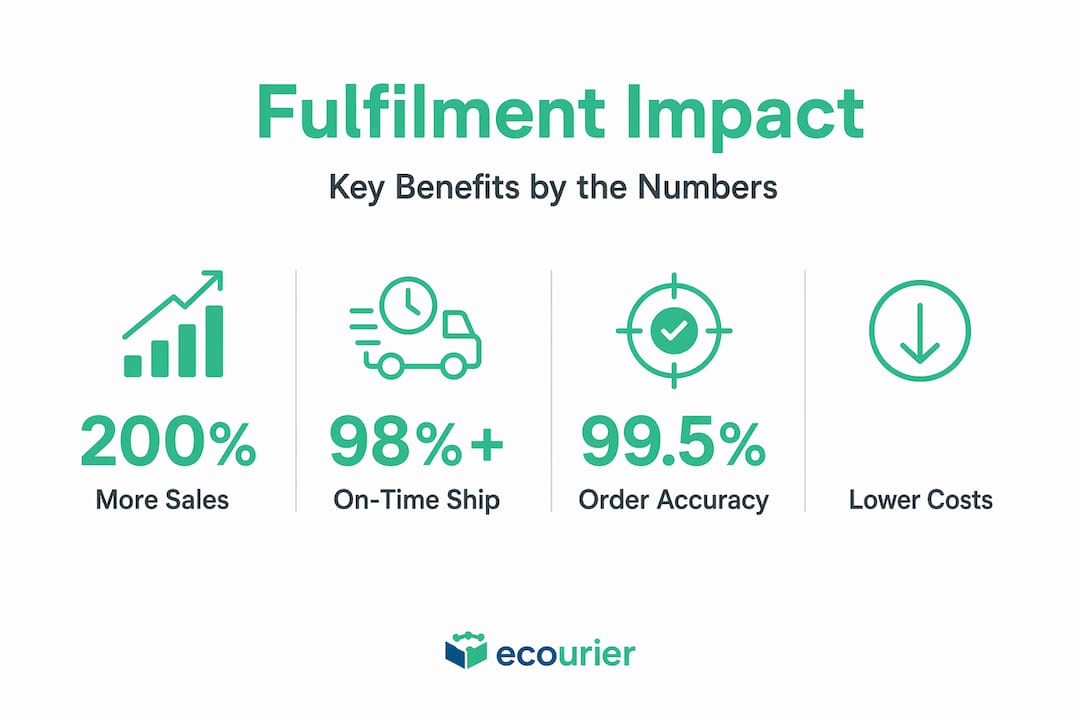
Measurable sales growth. The numbers here are compelling. Businesses with strong multi-channel strategies see up to 200% more sales when selling across three or more channels compared to single-channel businesses. That gap does not come purely from being on more platforms; it comes from the consistent, reliable fulfilment that keeps customers coming back.
Pro Tip: Before you expand to a new sales channel, confirm your inventory sync and order routing rules are configured for it first. Launching on a new platform with a disconnected back-end is one of the fastest ways to generate negative reviews.
Managing multi-channel fulfilment: common pitfalls
Getting the operations right is where many small businesses struggle. The benefits are real, but so are the failure points if you do not set the foundation properly.
Inventory drift is the most common and most damaging issue. It happens when individual channel systems hold their own stock counts rather than reading from a single source of truth. Over time, those counts diverge. Inventory drift caused by systems lacking a single source of truth is a recognised operational failure pattern in multi-channel selling, and it is more common than most sellers realise until it has already cost them orders.
Real-time synchronisation is not optional. Batch syncing inventory every 15 minutes or more creates dangerous overselling windows, particularly during flash sales or peak trading. Reducing inventory update latency to seconds dramatically lowers oversell rates and order cancellations. Some modern sync integrations operate at 50 to 350 milliseconds per update, which is a meaningful difference when you are processing hundreds of concurrent orders.
Order routing complexity grows with each warehouse and channel you add. You need clear rules about which warehouse serves which region, what happens when stock is unavailable at the closest node, and how priority orders are handled. Without documented routing logic, your team will default to manual intervention, which defeats the purpose entirely.
Returns management is often an afterthought in multi-channel setups. Each channel may have different return policies, but your physical returns process needs to be consistent. A centralised order management platform provides real-time order data access and orchestrated returns management, which reduces customer service friction and keeps your stock counts accurate after returns are processed.
Technology integration between your OMS, WMS, marketplaces, and carriers is the backbone of the whole operation. If these systems do not talk to each other in real time, every gap becomes a manual task.
Pro Tip: Track three KPIs consistently: order accuracy rate (target 99.5%+), on-time ship rate (target 98%+), and inventory accuracy (target 99%+). If any of these slip, it signals a system integration issue before it becomes a customer complaint.
In-house vs 3PL: choosing your approach
Not all businesses should take the same path to multi-channel fulfilment. Your choice depends on your order volume, product range, and growth ambitions.
| Feature |
In-house fulfilment |
3PL multi-channel service |
| Upfront cost |
High (warehouse, staff, systems) |
Low to medium (pay per use) |
| Scalability |
Limited by physical capacity |
Scales with your order volume |
| Technology |
You build and maintain it |
Provider handles integrations |
| Shipping rates |
Standard carrier rates |
Negotiated bulk rates |
| Flexibility |
High control over processes |
Dependent on provider capabilities |
| Best suited for |
High-margin, bulky, or specialist products |
Growing brands with mixed SKU volumes |
In-house fulfilment gives you full control, which matters for businesses with unusual products, strict quality checks, or highly customised packaging. The downside is cost. Warehousing, picking staff, technology licences, and courier contracts all require significant investment and management attention.
A 3PL provider specialising in multi-channel fulfilment removes most of that complexity. You connect your sales channels to their systems, and they handle storage, pick and pack, despatch, and often returns. The trade-off is that you are working within their technology and process frameworks, which means choosing the right partner matters enormously.
A hybrid approach can make sense for growing brands. Handling bulky items in-house while routing smaller accessories through a 3PL is a practical model when orchestrated by a central OMS. You get the cost benefits of outsourcing high-volume, low-complexity items while retaining control where it genuinely adds value.
For more on reducing the cost side of this equation, Parcelplanet’s resource on reducing fulfilment costs is worth reviewing before making any infrastructure decisions.
How to implement multi-channel fulfilment
If you are ready to move forward, these steps will save you significant time and rework.
-
Audit your current fulfilment state. Map every sales channel, every stock location, and every system you currently use. Identify where inventory counts are held and where they diverge. This baseline tells you exactly what needs to change.
-
Choose your technology stack. At minimum, you need an OMS that integrates with all your sales channels and a WMS that connects to your physical operation. If you are using a 3PL, their system may handle both. Prioritise providers with pre-built integrations for your specific platforms rather than building custom connections.
-
Set your order routing rules. Define which warehouse or fulfilment centre handles orders from each region, what the fallback logic is when stock is unavailable, and how split shipments are handled. Document these rules and review them every quarter as your operations change.
-
Establish returns workflows upfront. Decide how returns from each channel are received, inspected, restocked, or disposed of. Build this into your technology configuration from the start rather than handling it manually.
-
Monitor performance from day one. Set up dashboards for your core KPIs before you go live. Catching a 1% drop in order accuracy early is far less costly than discovering it in customer reviews three weeks later.
-
Scale thoughtfully. Adding channels or warehouses increases complexity non-linearly. Validate that your current setup is performing well before expanding. A well-orchestrated hybrid approach allows you to blend self-fulfilment and outsourced operations as your needs evolve.
Pro Tip: When evaluating a 3PL partner, ask specifically about their inventory sync frequency and which OMS platforms they integrate with natively. These two questions will tell you more about operational fit than any sales presentation.
My take on multi-channel fulfilment
I have worked with enough growing e-commerce brands to know that most of them underestimate fulfilment complexity until it is already causing problems. The business is growing, orders are coming in from three or four channels, and then suddenly the team is spending every morning reconciling stock counts and fielding customer complaints about missing orders. It is a pattern I have seen repeatedly.
What I have found is that the businesses that treat fulfilment as a strategic asset from the beginning outperform those that treat it as a cost to be minimised. Multi-channel order management is not just a logistics problem. It is a customer experience problem. When a customer orders from you on a marketplace and the order is delayed or oversold, they do not blame the marketplace. They blame your brand.
The operational argument for adopting centralised fulfilment early is strong. But the brand argument is stronger. Consistent, reliable delivery across every channel you sell on is one of the clearest ways to differentiate in a crowded market. Automation and good technology make this achievable even for small teams.
My honest advice: do not wait until you are overwhelmed to sort out your fulfilment infrastructure. The cost of fixing it reactively is always higher than the cost of building it right the first time.
— Lukasz
How Parcelplanet supports your multi-channel growth
If the operational picture described in this article sounds familiar, Parcelplanet is built to help you move past it. As a specialist 3PL and order fulfilment services provider, Parcelplanet handles warehousing, picking, packing, and despatch across multiple sales channels from a single, integrated operation.
Parcelplanet’s platform connects directly with major e-commerce platforms and marketplaces, giving you real-time inventory visibility and automated order routing without the overhead of building your own technology stack. Whether you are selling on Shopify, Amazon, or a combination of channels, Parcelplanet’s team configures the workflows to match your business. For businesses exploring what professional order fulfilment actually involves, the Parcelplanet order fulfilment overview is a useful starting point. Get in touch with Parcelplanet for a tailored quote and see how quickly your fulfilment operation can be up and running.
FAQ
What is multi-channel fulfilment?
Multi-channel fulfilment is the process of managing and despatching orders from multiple sales channels through a single, centralised back-end system, including a shared inventory pool and automated order routing.
Why choose multi-channel fulfilment over single-channel fulfilment?
Businesses selling across three or more channels see up to 200% more sales than single-channel sellers, and centralised fulfilment prevents the inventory drift and overselling that typically holds growth back.
How does real-time inventory sync prevent overselling?
Batch syncing inventory every 15 minutes or more creates windows where the same stock unit can be sold on multiple channels simultaneously. Reducing sync latency to seconds eliminates this risk.
When does it make sense to use a 3PL for multi-channel fulfilment?
A 3PL becomes advantageous when your order volume outgrows what your in-house team can manage cost-effectively, typically when managing three or more channels with significant daily order volumes.
What KPIs should I track in a multi-channel fulfilment operation?
The three core metrics are order accuracy rate (99.5%+), on-time ship rate (98%+), and inventory accuracy (99%+). These three figures surface the most common fulfilment problems before they escalate.
Recommended