TL;DR:
- Customer expectations for delivery have shifted, with 86% expecting two days or less. Reliability and transparency are more important than speed for customer retention and loyalty. Implementing strategic fulfilment methods and balancing costs can meet fast shipping demands sustainably and effectively.
E-commerce delivery has improved dramatically in recent years, yet most businesses are still losing customers over it. Average delivery reached 3.7 days in 2024, a genuine achievement. But here is the uncomfortable truth: that progress has barely kept pace with what shoppers now expect. Speed alone will not save you. This guide breaks down why fast shipping matters, where reliability and transparency outperform raw speed, and how to build a delivery strategy that actually drives retention and growth. Whether you are an established omnichannel retailer or a scaling e-commerce brand, you will find practical frameworks and evidence-based tactics here.
Table of Contents
Key Takeaways
| Point |
Details |
| Customer standards soared |
Most shoppers now view two-day delivery as the minimum expectation for fast shipping. |
| Reliability over speed |
Customers value on-time and consistent delivery even more than the absolute fastest shipping. |
| Smart strategies required |
Tactics like ship-from-store and distributed inventory help achieve speed and efficiency. |
| Balance costs and emissions |
Fast shipping initiatives must consider impacts on profit margins and sustainability goals. |
How delivery expectations have evolved
The gap between what retailers deliver and what customers expect has never been more challenging to close. From 2020 to 2024, average delivery times improved by more than a third across e-commerce. That sounds impressive until you consider that 86% of shoppers now define ‘fast shipping’ as two days or fewer. The goalposts moved faster than the logistics.
This shift was not accidental. Amazon Prime normalised two-day delivery years ago, and every retailer now operates in that shadow. Customers do not compare your delivery times to your direct competitors. They compare them to the fastest experience they have ever had. That is a high bar, and it applies to every seller regardless of size.
Here is a snapshot of how the landscape has shifted:
| Year |
Average delivery time |
% expecting ≤2 days |
| 2020 |
~5.8 days |
~38% |
| 2022 |
~4.5 days |
~61% |
| 2024 |
3.7 days |
86% |
The data tells a clear story. Delivery performance has improved, but consumer expectations have outpaced it at every stage.
What does this mean for your business? A few key implications stand out:
- Slow shipping is now a conversion killer, not just an inconvenience
- Free shipping offers lose their appeal if the speed is not competitive
- Customers abandon carts when estimated delivery dates feel too far away
- Post-purchase experience shapes whether a buyer returns, not just the product itself
You can explore shipping optimisation tips to start closing the gap between your current performance and customer expectations. For a broader view of how logistics feeds into business growth, the guide on optimising logistics for scalable growth is worth your time.
The bottom line: fast shipping is no longer a differentiator. It is the entry requirement.
The real impact of speed: satisfaction, retention, and loyalty
Speed gets the attention, but reliability is what keeps customers coming back. This distinction matters enormously for how you invest your logistics budget.
Research from Bringg reveals that 72% of shoppers prioritise on-time reliability over raw speed. Even more striking: 55% stop purchasing from a retailer after just one poor delivery experience. That is not a recoverable situation for most brands. One missed promise can permanently end a customer relationship.
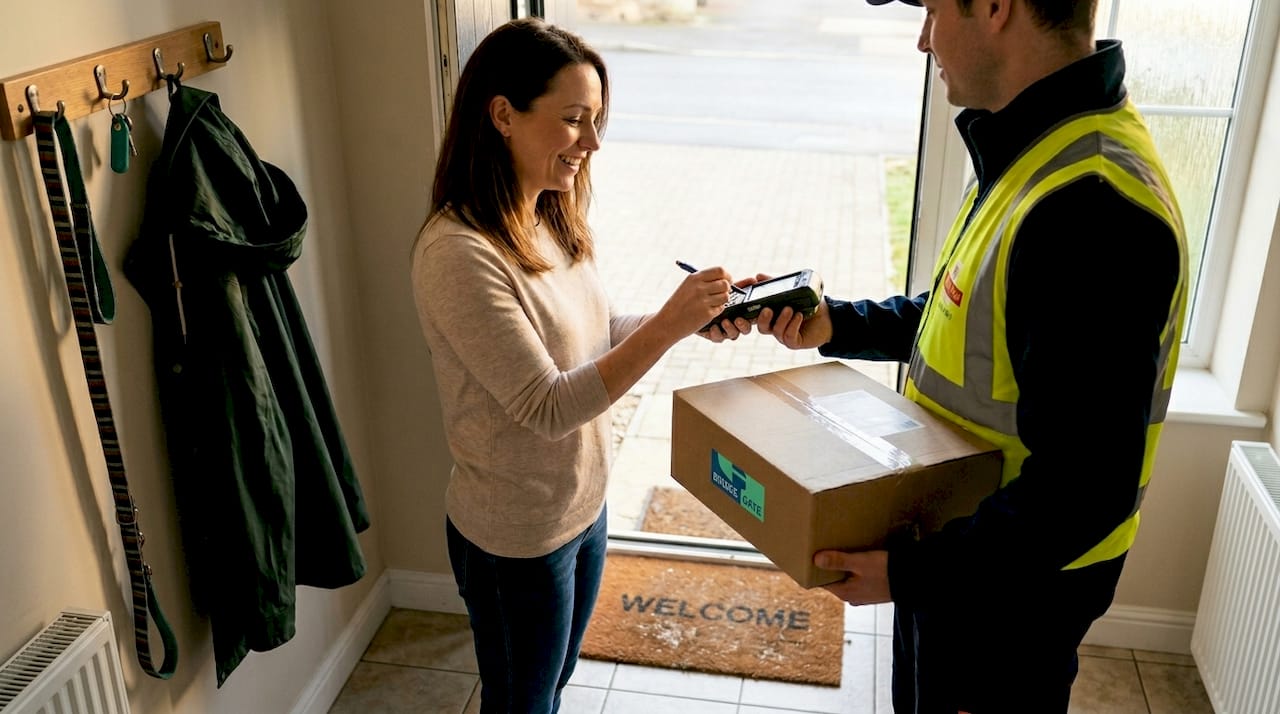
At the same time, speed does drive measurable results when it is executed well. Empirical data shows 25% higher retention with two-day shipping compared to slower alternatives. The opportunity is real, but it only materialises when speed and reliability work together.
Here is how speed and reliability compare across key customer outcomes:
| Factor |
Impact on first purchase |
Impact on repeat purchase |
| Fast delivery (≤2 days) |
High positive impact |
Moderate impact |
| On-time delivery |
Moderate impact |
Very high impact |
| Proactive tracking updates |
Low impact |
High impact |
| Flexible delivery options |
Moderate impact |
High impact |
“Reliable delivery beats free shipping” is not just a catchy phrase. It reflects a fundamental shift in what customers value once the novelty of fast delivery wears off.
Power shoppers, those who buy frequently and spend more, often care less about speed and more about flexibility. They want to choose a delivery window, redirect a parcel, or collect from a convenient location. Giving them control builds more loyalty than shaving a day off transit time.
Pro Tip: Before investing in faster shipping across the board, segment your customer base. Identify which buyers respond to speed and which respond to flexibility or reliability. You may find that targeted improvements outperform a blanket upgrade.
Focusing on shortening lead times is one of the most effective ways to improve both speed and reliability simultaneously, since shorter processing windows reduce the chance of delays before a parcel even leaves your warehouse.
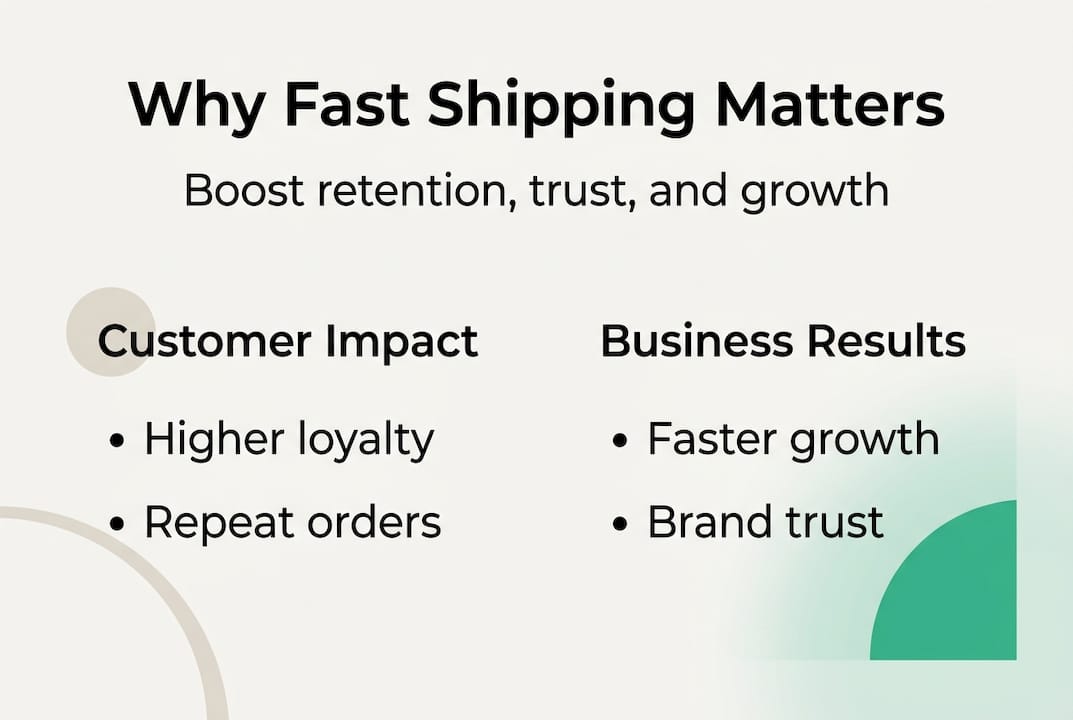
Fast shipping strategies for omnichannel retailers
Knowing why speed and reliability matter is one thing. Knowing how to achieve both profitably is another. Here are the strategies that work.
1. Ship from store
Retailers like Walmart and Target have made ship-from-store a cornerstone of their fulfilment model. By using store stock for online orders, they reduce the distance between product and customer dramatically. Same-day and next-day delivery become achievable without building new infrastructure.
2. Distribute your inventory strategically
Storing stock in multiple locations, closer to your key customer clusters, cuts transit times and carrier costs. This is not just for enterprise retailers. Growing e-commerce brands can achieve similar results by working with a 3PL (third-party logistics provider) that operates multiple fulfilment centres.
3. Offer delivery choice, not just speed
Consumers want options. A two-day standard option, a same-day premium option, and a free four-day option give customers control. That sense of control increases satisfaction even when they choose the slower option.
4. Use technology to optimise routes and inventory
Real-time inventory visibility and route optimisation software reduce both delivery times and operational costs. Integrations between your e-commerce platform and your warehouse management system are essential here.
| Strategy |
Delivery time improvement |
Cost impact |
| Ship from store |
Up to 60% faster |
Lower carrier costs |
| Distributed inventory |
30-50% faster |
Moderate setup cost |
| Route optimisation |
10-20% faster |
Reduces fuel and time |
| Delivery choice |
Perceived improvement |
Minimal additional cost |
Pro Tip: If you are not yet ready to invest in distributed warehousing, partnering with a 3PL that already has the network in place is a faster and lower-risk route to the same outcome.
For practical guidance on day-to-day operations, the resources on improving fulfilment efficiency and improving eCommerce delivery times offer actionable steps you can implement immediately.
Hidden costs and environmental trade-offs of fast shipping
Fast shipping is not free, and the costs go beyond your carrier invoice. Many businesses discover this only after margins have already been squeezed.
The most obvious cost is financial. Expedited shipping rates can be two to four times higher than standard services. If you are absorbing those costs to offer free fast shipping, the maths can turn negative quickly, especially on lower-value orders.
The environmental cost is less obvious but increasingly important to your customers. A Wayfair experiment found that removing fast shipping badges from product listings actually led to a 2.5% rise in delivery emissions. Why? Because customers who were not nudged towards fast options chose slower, consolidated deliveries less often. Speed messaging inadvertently shapes purchasing behaviour in ways that affect your carbon footprint.
Here are the hidden costs most businesses underestimate:
- Increased packaging waste from rushed, single-item shipments
- Higher return rates when customers order multiple sizes or variants expecting quick returns
- Carrier surcharges for residential delivery and fuel
- Operational pressure that increases picking errors and damages
Customers consistently view a discount for choosing slower shipping as fairer than a surcharge for choosing faster shipping, according to UCLA Anderson research. Framing matters as much as the offer itself.
This insight has real commercial value. If you offer a small incentive, such as a discount or loyalty points, for customers who choose a standard delivery window, you can reduce costs, lower emissions, and improve customer sentiment all at once. It is a rare win on multiple fronts.
Pro Tip: Test a ‘green delivery’ option at checkout. Many customers will choose it, especially if you explain the environmental benefit clearly. It costs you less and builds brand affinity with environmentally conscious shoppers.
For a detailed look at where savings are available without compromising service, the guide on reducing fulfilment costs is a practical starting point.
Our take: speed is vital, but reliability and transparency win trust
After working with e-commerce brands and omnichannel retailers across a range of sectors, we have seen the same pattern repeat itself. Businesses invest heavily in getting faster, then wonder why customer satisfaction scores do not improve proportionally.
The reason is almost always the same: they improved speed but neglected communication. A parcel that arrives in two days with no tracking updates creates more anxiety than one that arrives in three days with proactive notifications at every stage.
Our view is that most brands should prioritise reliability and transparency before chasing speed. Keep your promises. Send clear, timely updates. Give customers a way to manage their delivery. These actions build trust in a way that raw speed simply cannot.
Speed should absolutely be pursued where it creates a genuine competitive advantage, for example, in high-demand categories or during peak trading periods. But it should not come at the expense of consistency.
Every market is different, and every customer segment responds differently. We recommend testing where choice and reliability matter most before committing significant budget to speed improvements. The shipping strategy workflow we use with clients is a good framework for making those decisions systematically.
How ParcelPlanet can help you deliver on fast shipping promises
Meeting modern delivery expectations requires more than good intentions. It requires the right infrastructure, the right technology, and the right fulfilment partner.

At ParcelPlanet, we help e-commerce brands and omnichannel retailers build fulfilment operations that are fast, reliable, and scalable. Our order fulfilment services are designed to reduce lead times, improve accuracy, and give your customers the delivery experience they expect. Whether you are managing high SKU volumes, seasonal peaks, or cross-border growth, our team brings the expertise and network to support you. Find out how our 3PL solutions can become your logistics advantage. Get in touch today for a tailored quote.
Frequently asked questions
What is considered ‘fast shipping’ for e-commerce in 2026?
86% of consumers now define fast shipping as two days or fewer, making two-day delivery the widely accepted benchmark for e-commerce in 2026.
Does faster delivery always increase customer loyalty?
Not automatically. While fast delivery boosts retention, 72% of shoppers prioritise on-time reliability over speed, meaning consistent, promised delivery dates matter more for lasting loyalty.
How do omnichannel retailers cut delivery times?
By using ship-from-store and distributing inventory across multiple locations, omnichannel retailers get products closer to customers, making same-day or next-day fulfilment achievable without new infrastructure.
Is there a trade-off between fast shipping and sustainability?
Yes. Fast shipping can raise emissions when orders are fulfilled from distant warehouses or when speed messaging discourages customers from choosing consolidated, slower delivery options.
Recommended


