Scaling e-commerce fulfilment in-house sounds ideal until you face the reality of warehouse leases, staffing costs, and technology investments that drain capital before you see returns. Many growing brands discover that outsourcing warehousing, picking, packing, and shipping to third-party logistics providers unlocks growth without the financial burden of building infrastructure. This guide explains why 3PL partnerships deliver scalable, efficient, and cost-effective fulfilment solutions that improve customer satisfaction whilst freeing you to focus on product development and marketing. You’ll learn when to make the switch, what trade-offs matter, and how to choose the right partner for sustainable growth.
Table of Contents
Key Takeaways
| Point |
Details |
| Scalability via 3PL |
Outsourcing fulfilment converts fixed costs into variable expenses and enables capacity to expand with demand. |
| Automation driven efficiency |
Specialised 3PLs deploy warehouse management systems, barcode scanning and automated picking to reduce manual errors and speed up processing. |
| Cost and speed benefits |
Partnerships typically cut logistics costs by 11 to 15 per cent while boosting accuracy and processing speed. |
| Right partner selection |
The ideal 3PL balances scale and control to sustain growth while preserving visibility and service quality. |
How 3PL enables scalable e-commerce fulfilment
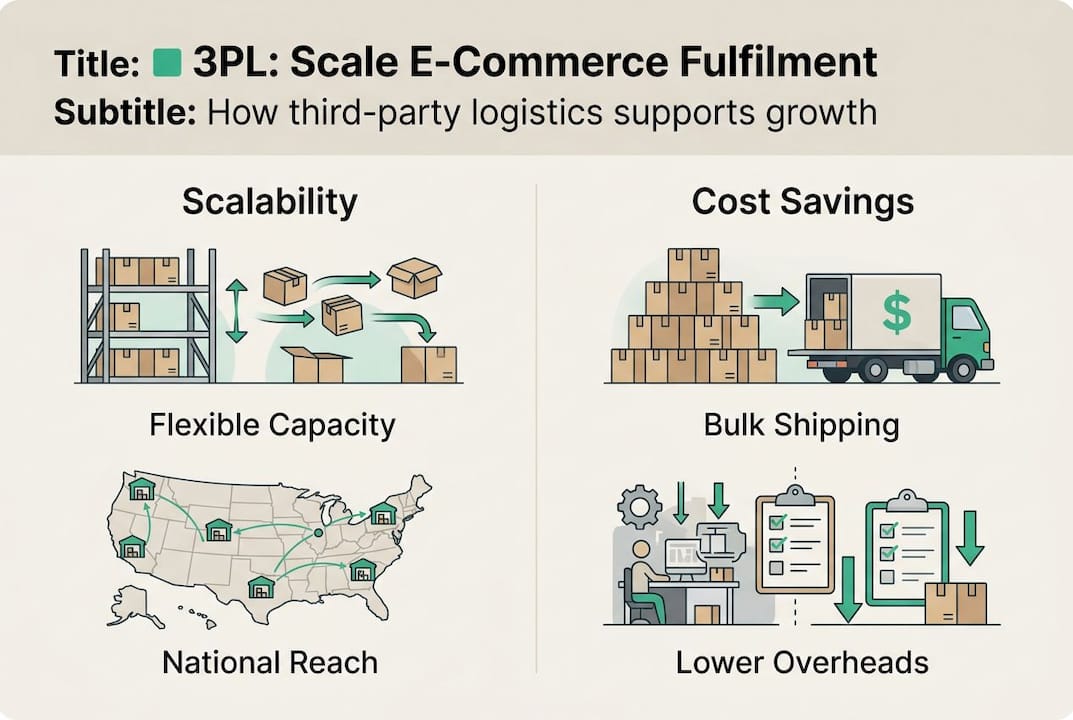
Growing e-commerce brands face a critical inflection point when order volumes climb beyond what small teams and limited storage can handle efficiently. E-commerce brands use 3PL to achieve scalability by outsourcing the entire fulfilment operation to specialists who already own the infrastructure, technology, and expertise. This approach transforms fixed costs into variable expenses that scale precisely with your sales volume.
Third-party logistics providers handle everything from receiving inventory to dispatching parcels, allowing you to serve customers across multiple channels without investing in warehouse space or hiring fulfilment staff. Most 3PLs accommodate businesses processing anywhere from 100 to several thousand orders monthly, making them suitable for brands at various growth stages. The flexibility proves especially valuable during seasonal peaks when order volumes surge beyond normal capacity.
Consider these scalability advantages:
- Warehouse space expands or contracts based on inventory needs without long-term lease commitments
- Labour scales automatically during peak periods without recruitment or redundancy costs
- Technology infrastructure provides real-time visibility across all sales channels
- Geographic expansion becomes feasible through distributed fulfilment networks
- Multi-SKU complexity gets managed through specialised warehouse management systems
The economics favour 3PL partnerships once you consistently process several hundred orders monthly. Providers achieve economies of scale by serving multiple clients, spreading infrastructure costs across a larger base. This shared model delivers professional fulfilment capabilities at a fraction of what building in-house would cost.
Pro tip: Track your monthly order volume trends for at least three months and project six months ahead. When you consistently exceed 200 orders monthly or face seasonal spikes above 500, evaluate 3PL options to maintain service quality whilst controlling costs.
Understanding logistics scalability in e-commerce helps you recognise when operational complexity outgrows in-house capabilities. The right 3PL partner adapts to your growth trajectory without requiring you to predict exact volumes years in advance.
Improving operational efficiency and reducing costs with 3PL
Third-party logistics providers bring operational advantages that extend far beyond simply storing and shipping products. Their specialised focus on fulfilment creates efficiencies that most e-commerce brands cannot replicate internally without substantial investment. 3PL partnerships reduce logistics costs by 11-15% on average whilst simultaneously improving accuracy and speed.
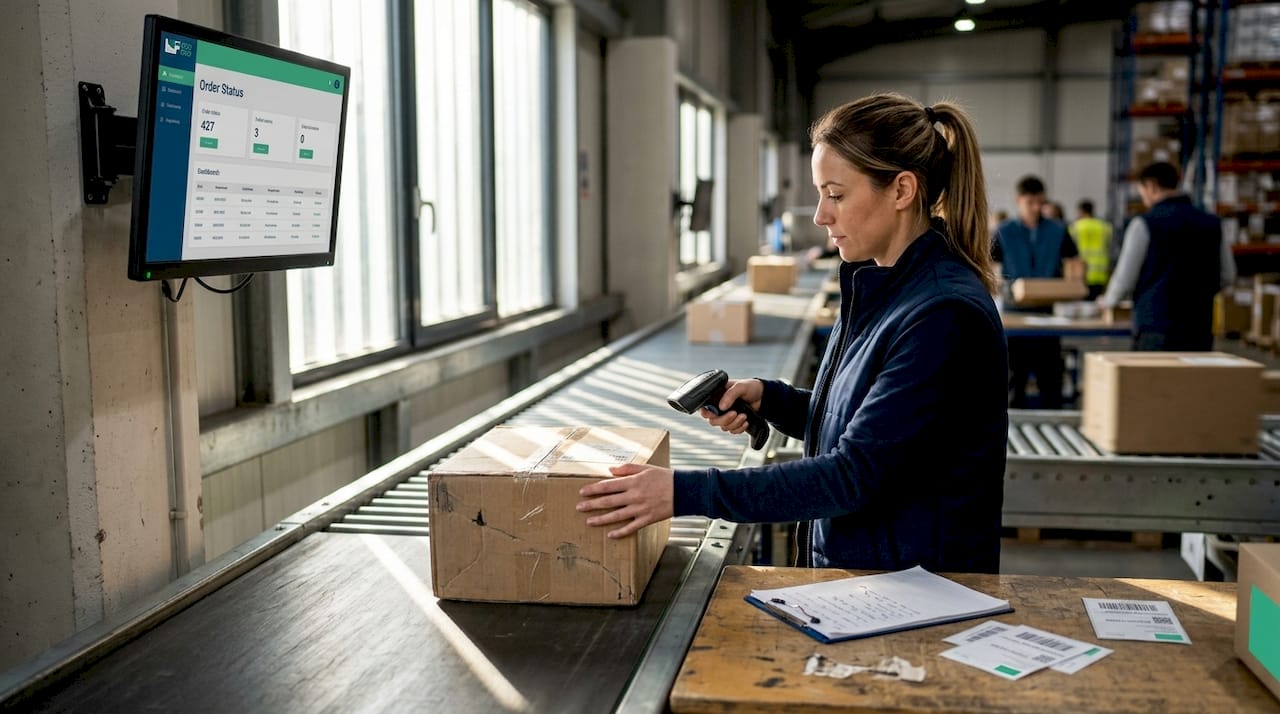
Automation plays a central role in these efficiency gains. Professional 3PLs deploy warehouse management systems, barcode scanning, automated picking technologies, and integrated shipping platforms that eliminate manual errors and accelerate processing. These systems update inventory in real-time across all your sales channels, preventing overselling and improving stock visibility.
Shipping costs represent a significant expense for e-commerce businesses, but 3PL providers negotiate preferential rates with carriers based on their aggregate volume. This collective bargaining power typically delivers savings between 15% and 40% compared to what individual brands can secure independently. The cost reduction compounds across thousands of shipments annually.
Order accuracy directly impacts customer satisfaction and operational costs. Returns due to picking errors create double the expense: processing the return plus reshipping the correct item. Professional 3PLs achieve order accuracy rates of 99.5-99.7% through systematic quality controls and experienced staff.
Key efficiency improvements include:
- Automated inventory tracking reduces stockouts and overstocking
- Batch picking and zone-based warehouse layouts accelerate order processing
- Integrated returns management streamlines reverse logistics
- Quality control checkpoints catch errors before dispatch
- Predictive analytics optimise inventory positioning and reorder points
The expertise 3PL teams bring proves equally valuable. Fulfilment specialists understand packaging optimisation, carrier service selection, and customs documentation for international shipping. This knowledge prevents costly mistakes and ensures compliance with regulations.
3PL partnerships can reduce logistics costs by up to 15% and achieve order accuracy near 99.7%, transforming fulfilment from a cost centre into a competitive advantage.
Beyond direct cost savings, operational efficiency frees internal resources to focus on core business activities. Your team can prioritise product development, marketing, and customer relationships rather than managing warehouse operations. This strategic reallocation often generates returns that far exceed the logistics savings alone.
Exploring saving costs with 3PL fulfilment reveals additional strategies for maximising the financial benefits of outsourced logistics whilst maintaining service quality.
Enhancing fulfilment speed and customer satisfaction
Customer expectations for fast, accurate delivery have intensified as major retailers set new standards for fulfilment speed. Meeting these expectations without 3PL support requires significant investment in technology, processes, and geographic distribution that most growing brands cannot justify. Professional logistics providers deliver 43% faster processing through optimised workflows and strategic warehouse locations.
Speed begins at the order management level. Advanced 3PLs integrate directly with e-commerce platforms through APIs and EDI connections, receiving orders within seconds of customer purchase. Automated routing sends orders to the optimal fulfilment location based on inventory availability and customer proximity. This seamless flow eliminates manual data entry and reduces processing delays.
Real-time tracking capabilities give customers visibility throughout the fulfilment journey. Updates flow automatically from warehouse picking through carrier handoff to final delivery. This transparency reduces customer service enquiries whilst building confidence in your brand. When customers can monitor their order status independently, satisfaction increases even before the parcel arrives.
On-time delivery performance separates exceptional fulfilment from merely adequate service. Industry averages hover around 88% for on-time delivery, but 3PL providers achieve 98.5% through carrier performance monitoring and contingency planning. This reliability translates directly into positive customer feedback and repeat purchases.
Omnichannel integration presents another critical advantage. Customers shopping across your website, marketplace listings, and retail partnerships expect consistent fulfilment regardless of purchase channel. 3PL systems aggregate orders from all sources, maintain unified inventory visibility, and apply consistent service standards. This integration prevents the fragmented customer experience that damages brand perception.
Fulfilment excellence drives measurable business outcomes:
- Faster dispatch times enable same-day or next-day delivery options
- Accurate order fulfilment reduces return rates and associated costs
- Consistent communication builds customer trust and loyalty
- Geographic distribution shortens delivery distances and transit times
- Flexible delivery options accommodate customer preferences
Customer feedback reflects fulfilment quality directly. Brands partnering with professional 3PLs report 30% increases in positive feedback related to delivery speed and accuracy. These improvements compound over time as satisfied customers become repeat buyers and brand advocates.
Pro tip: Prioritise 3PL providers offering real-time API or EDI integration with your specific e-commerce platform and marketplace channels. Seamless data flow prevents the delays and errors that occur when orders require manual processing or batch uploads.
Developing a comprehensive shipping strategy for e-commerce success requires understanding how fulfilment speed, accuracy, and communication combine to create exceptional customer experiences that drive sustainable growth.
Choosing the right 3PL partner: nuances and trade-offs
Selecting a third-party logistics provider involves evaluating factors beyond simple cost comparisons. The right partnership aligns with your business model, growth trajectory, and operational priorities whilst acknowledging inherent trade-offs between control and scalability. 3PL works best for businesses exceeding 500 orders monthly, though specific thresholds vary based on product characteristics and margin structures.
Order volume represents the primary decision factor. Brands processing fewer than 200 orders monthly often find in-house fulfilment more economical, as 3PL minimum fees may exceed the cost of basic warehouse space and part-time staff. Between 200 and 500 orders, the decision becomes nuanced, depending on growth rate, product complexity, and available capital. Beyond 500 monthly orders, 3PL economics typically favour outsourcing.
Control versus scalability creates the fundamental trade-off. In-house fulfilment offers complete oversight of packaging, quality checks, and customer communication. You can implement custom touches like handwritten notes or unique unboxing experiences. 3PL partnerships sacrifice some customisation flexibility for professional infrastructure and expertise. Hybrid models used by 40% of mid-market businesses attempt to balance these priorities by keeping some fulfilment in-house whilst outsourcing overflow or specific channels.
Vertical-specific requirements influence provider selection significantly. Beauty products may require climate-controlled storage, food items need specialised handling and compliance documentation, and fragile goods demand custom packaging solutions. Generic 3PLs handle standard products efficiently, but specialised verticals benefit from providers with relevant expertise and certifications.
Risks accompany any 3PL partnership. Poor system integration creates data delays and inventory discrepancies that frustrate customers. Long-term contracts with punitive exit clauses can lock you into underperforming relationships. Service quality varies between providers, and switching fulfilment partners mid-season risks operational disruption. Thorough due diligence mitigates these risks but cannot eliminate them entirely.
| Fulfilment model |
Advantages |
Disadvantages |
Best for |
| In-house |
Complete control, custom packaging, direct oversight |
High fixed costs, limited scalability, requires expertise |
<200 orders/month, high-touch products |
| 3PL |
Scalability, expertise, lower capital requirements |
Less control, dependency on provider, potential integration issues |
>500 orders/month, standard products, growth focus |
| Hybrid |
Flexibility, risk mitigation, custom + scale |
Operational complexity, higher management overhead |
200-500 orders/month, seasonal businesses |
Evaluating and selecting 3PL providers requires systematic assessment:
- Request detailed pricing structures including storage, pick/pack fees, and shipping markups
- Verify technology integration capabilities with your specific platforms
- Review service level agreements for accuracy rates, processing times, and issue resolution
- Assess geographic coverage and warehouse locations relative to your customer base
- Check references from current clients in similar verticals and volume ranges
- Understand contract terms, minimum commitments, and exit provisions
- Evaluate value-added services like kitting, returns processing, and international fulfilment
The selection process should include site visits to assess warehouse organisation, technology deployment, and staff professionalism. Observe how they handle similar products and ask detailed questions about their quality control procedures. The best 3PL partnership feels collaborative rather than transactional.
Understanding optimising logistics for scalable growth provides additional context for making strategic decisions that support long-term business objectives whilst maintaining operational flexibility.
Explore ParcelPlanet’s order fulfilment services
Finding a 3PL partner that understands e-commerce dynamics and delivers consistent, scalable fulfilment can transform your operational capabilities. ParcelPlanet specialises in providing order fulfilment services designed specifically for growing e-commerce brands and omnichannel retailers who need reliable, technology-driven logistics support.

Our fulfilment solutions integrate seamlessly with major e-commerce platforms and marketplaces, providing real-time inventory visibility and automated order processing across all your sales channels. We handle everything from receiving and storage through picking, packing, and dispatch, allowing you to focus on growing your business rather than managing warehouse operations. Whether you’re processing hundreds or thousands of orders monthly, our flexible infrastructure scales with your needs.
ParcelPlanet’s expertise in saving costs with 3PL fulfilment helps you optimise logistics expenses whilst maintaining the speed and accuracy your customers expect. Contact us to discuss how our tailored fulfilment solutions can support your growth objectives and enhance customer satisfaction.
Why use third-party logistics: frequently asked questions
When is it best to switch from in-house fulfilment to 3PL?
Most e-commerce brands benefit from switching to 3PL when monthly order volumes consistently exceed 200 to 500 orders, depending on product complexity and available capital. The transition makes sense when fulfilment costs, space constraints, or operational complexity begin limiting growth. Evaluate your current cost per order, available warehouse capacity, and growth projections to identify the optimal timing.
How does 3PL improve customer satisfaction?
3PL providers enhance customer satisfaction through faster order processing, higher accuracy rates, and real-time tracking across all sales channels. Professional fulfilment operations achieve on-time delivery rates near 98.5% compared to industry averages around 88%. These improvements translate directly into positive customer feedback, reduced return rates, and increased repeat purchases.
What risks should I watch for with 3PL providers?
Key risks include poor system integration causing inventory discrepancies, long-term contracts with restrictive exit clauses, and inconsistent service quality during peak periods. Inadequate communication and slow issue resolution can damage customer relationships. Mitigate these risks through thorough due diligence, detailed service level agreements, and regular performance reviews with clear escalation procedures.
Can I use more than one 3PL provider?
Yes, multi-3PL strategies help mitigate risk, optimise service across different regions, and prevent complete dependency on a single provider. Many brands use one 3PL for domestic fulfilment and another for international markets, or split inventory between providers to ensure business continuity. This approach adds management complexity but provides valuable operational flexibility and negotiating leverage.
What verticals need special 3PL expertise?
Beauty, cosmetics, and skincare products often require climate-controlled storage to maintain product integrity. Food and beverage items need specialised handling, compliance documentation, and temperature management. Fragile goods, electronics, and high-value items benefit from providers with enhanced security and custom packaging capabilities. Evaluate providers based on relevant certifications and experience in your specific vertical.
Recommended


